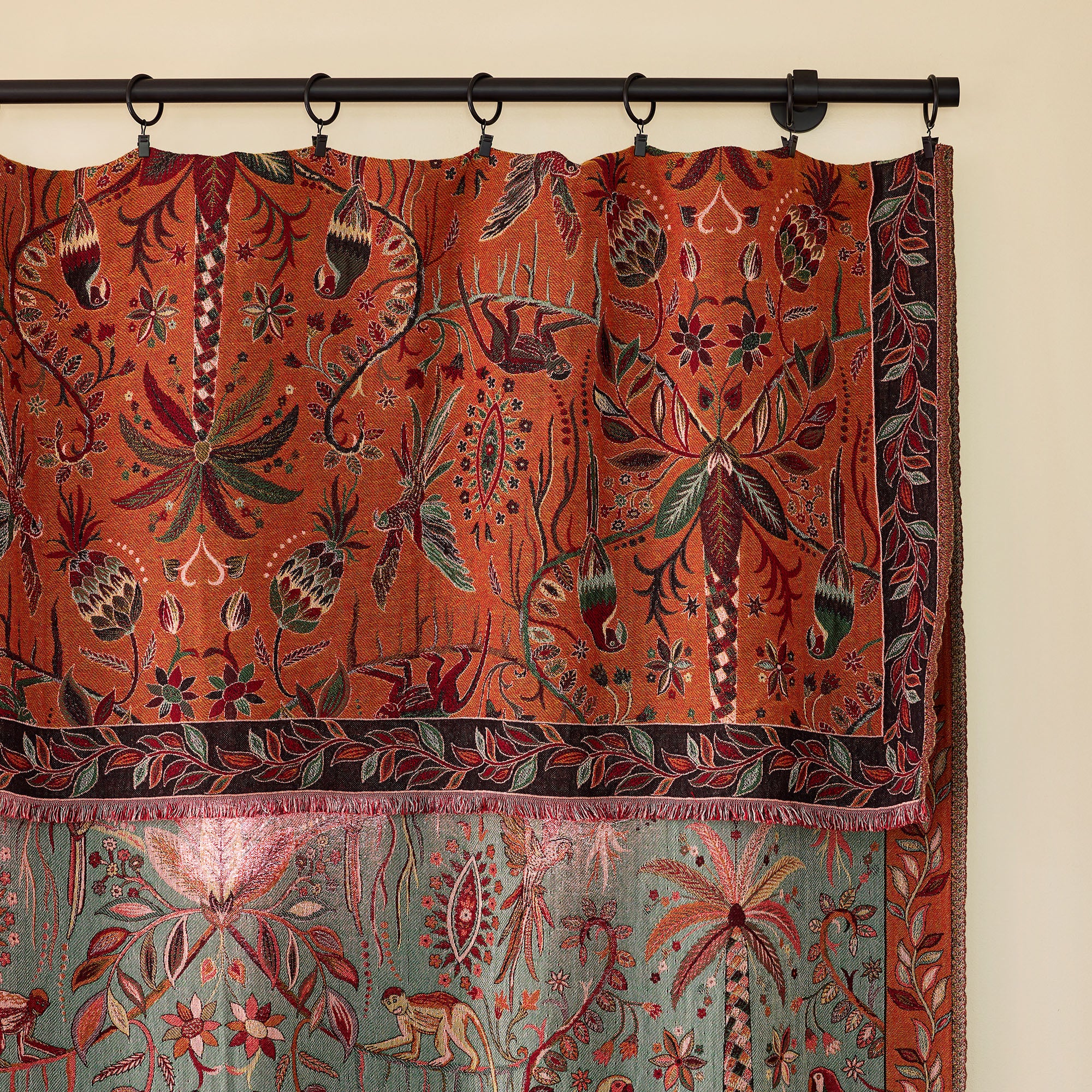



Conseils et astuces •8 min
How to properly measure for curtains?
Correctly measuring your curtains is the first step to achieving a neat and harmonious result. This guide explains how to...

Madura customer service
Available on WhatsApp, by chat or by phone at 01 42 34 99 59

All the tips and tricks from our team, just like in store, delivered straight to you.
All articlesMost searched articles
Conseils déco
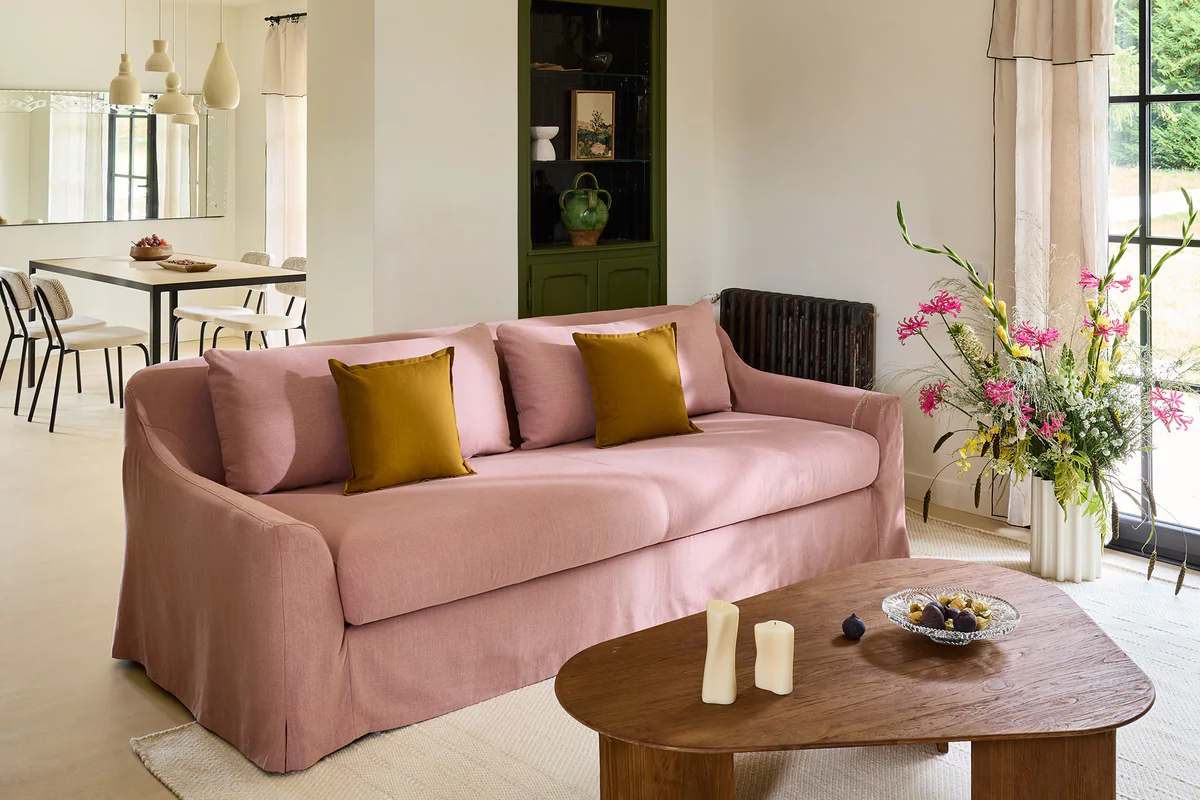
Choosing a sofa is an important decision: this piece of furniture must accompany you for ten years and offer a comfortable and durable point of support. To find a model that combines robustness and comfort, several criteria must be taken into account: the quality of the structure, the suspension, the foam density, the dimensions and the covering. This article deciphers these elements and offers practical advice for selecting a solid and comfortable sofa, while highlighting Madura’s textile expertise.

The structure is the backbone of the sofa. A quality frame is essential to guarantee its longevity. According to the manufacturer The Nona, high-end sofas use a frame made of solid wood (beech, oak, ash, walnut, etc.) assembled by mortise-tenons and dowels, sometimes reinforced by angles. These hardwoods, from slow-growing trees, offer exceptional robustness and can last more than twenty years. Soft woods (fir, pine) are less dense: a fir sofa remains economical but its lifespan is shorter (10–15 years).
In mid-range sofas, the structure combines solid wood battens and derived panels (plywood or OSB). A plywood multi-layered (at least 11 layers or 15 mm thick) is more resistant than particle boards. Particle panels remain the most economical solution, but their fragility reduces the lifespan of the sofa. Whatever the material, choose screwed and doweled assemblies rather than simple staples or glue: these reinforcements improve the stability of the chassis.
The suspensions ensure the flexibility and support of the seat. They must absorb your weight without a “hammock” effect. The Convertible guide of France reminds that Nosag springs (or steel zigzag springs) offer the best durability and provide a tonic seat. The elastic straps, 5–6 cm wide, represent a good price/quality compromise: intertwined and stapled to the structure, they retain their flexibility for a long time. Very inexpensive models sometimes use fixed panels without suspension; in this case, comfort and longevity are reduced.
Choosing a sofa is an important decision: this piece of furniture must accompany you for ten years and offer a comfortable and durable point of support. To find a model that combines robustness and comfort, several criteria must be taken into account: the quality of the structure, the suspension, the foam density, the dimensions and the covering. This article deciphers these elements and offers practical advice for selecting a solid and comfortable sofa, while highlighting Madura’s textile expertise.

The importance of a robust structure
The structure is the backbone of the sofa. A quality frame is essential to guarantee its longevity. According to the manufacturer The Nona, high-end sofas use a frame made of solid wood (beech, oak, ash, walnut, etc.) assembled by mortise-tenons and dowels, sometimes reinforced by angles. These hardwoods, from slow-growing trees, offer exceptional robustness and can last more than twenty years. Soft woods (fir, pine) are less dense: a fir sofa remains economical but its lifespan is shorter (10–15 years).
In mid-range sofas, the structure combines solid wood battens and derived panels (plywood or OSB). A plywood multi-layered (at least 11 layers or 15 mm thick) is more resistant than particle boards. Particle panels remain the most economical solution, but their fragility reduces the lifespan of the sofa. Whatever the material, choose screwed and doweled assemblies rather than simple staples or glue: these reinforcements improve the stability of the chassis.
Suspensions: springs or straps?
The suspensions ensure the flexibility and support of the seat. They must absorb your weight without a “hammock” effect. The Convertible guide of France reminds that Nosag springs (or steel zigzag springs) offer the best durability and provide a tonic seat. The elastic straps, 5–6 cm wide, represent a good price/quality compromise: intertwined and stapled to the structure, they retain their flexibility for a long time. Very inexpensive models sometimes use fixed panels without suspension; in this case, comfort and longevity are reduced.
What is density?
Density measures the weight of foam per cubic meter and determines the firmness of the seat. The higher the density, the firmer and more resistant the seat will be. Quality sofas generally use foams of 20 to 40 kg/m³ for the seat and slightly less for the backrest. Density is only an indicator: suspension, lift (ability to regain its shape) and covering (wadding, fibers, feathers) also influence comfort.
How to choose the right density?
Low densities (< 28 kg/m³) provide a soft welcome but deform quickly, being more suitable for backrests or occasional use. For the seat of a main sofa, a density around 30 kg/m³ represents a good compromise between comfort and durability. Between 30 and 35 kg/m³, the ideal density provides balanced support and is suitable for the majority of users. Beyond 35 kg/m³, the seat becomes firmer; high-end models reach 40 kg/m³ and offer great resistance to sagging.
The NV Gallery guide uses this classification: a density < 28 kg/m³ provides plush comfort but limited durability; 28 – 35 kg/m³ offers the best compromise for daily use; 35 – 40 kg/m³ suitable for large families or intensive use. Densities greater than 40 kg/m³ are reserved for professional or therapeutic uses.
Types of foam
The polyurethane foam is the most common for sofas. It allows you to make medium to high density seats, and can be covered with wadding for more softness. The polyether foam, less expensive, has a lower density (< 28 kg/m³) and limited durability. The high resilience (HR) foam offers excellent shape recovery and superior longevity, but has a higher price. For a very soft seat, some manufacturers use duck or goose feathers combined with foam. Finally, memory foam conforms to the contours of the body, but can lose dynamism over the long term.

The comfort of a sofa also depends on its dimensions: width, depth and height. A disproportionate model can visually weigh down the space and harm your posture.
Width
For a 2-seater sofa, the total width (seat + armrests) varies from 140 to 190 cm, or approximately 70 cm per person for comfortable seating. The 3-seater sofas measure 200–240 cm and the corner models reach 280–300 cm with a return of 170–200 cm. Be sure to leave at least 80 cm passage in front of the sofa for easy movement.
Seat depth
The total depth of a sofa is between 80 and 100 cm and the seat depth (from the front edge to the backrest) between 50 and 60 cm. The Décostock store specifies that less than 55 cm corresponds to a shallow seat, 55–65 cm to an average depth, and more than 65 cm at a deep seat. A deep sofa (65 cm and more) allows you to lie down comfortably but may be unsuitable for small people: it is recommended for people with a height of 1.80 m and over, while a medium depth is suitable for people of short stature or those who prefer an upright sitting position.
Seat height and back height
The standard seat height is between 40 and 50 cm. A low seat (40 cm) creates a relaxed atmosphere but can tire the knees, while a high seat (up to 50 cm) makes it easier to get up and is suitable for the elderly. The backrest must support the back and neck: a high backrest provides better support and allows you to lean back without neck tension. The Made In Meubles website reminds us that the depth and height of the seat are linked: a deep and high seat allows you to lie down, while a shallower and higher seat offers a more upright posture.

Fabric
Fabric sofas offer a soft, breathable feel and a wide variety of colors and patterns. They can be removable and machine washable, making maintenance easier. Some synthetic fabrics, such as polyester, are inexpensive and suitable for exterior use when coated with resin. The microfiber (alcantara) is a blend of polyester and polyurethane: this velvety fabric is light-resistant, easy to clean and withstands intensive use.
Velvet
Velvet, woven from cotton, linen or silk threads, has a soft and silky surface. It reflects the light differently depending on the direction of the hair and creates a luxurious atmosphere. However, velvet is more fragile: it marks easily and retains dust, which requires regular maintenance.
Leather
Leather is a noble, durable and easy-to-maintain material. According to Convertible de France, leather sofas (cow, calfskin, buffalo) do not retain dust or animal hair. They develop a patina over time but can be susceptible to scratches and heat. The different types of leather (full grain, nubuck, bycast) offer varying finishes and prices.
Linen and cotton
Natural fibers such as linen or cotton are prized for their pleasant feel and authentic appearance. They offer good breathability but can wrinkle and are often more expensive to maintain. They are more suitable for removable sofas with washable covers. Madura, a textile specialist, offers collections in washed linen and thick cotton that bring a natural touch to your living room.
Other comfort elements
Adjustable depth : some sofas have sliding seats which allow you to extend the depth to create an extra bed.
Relax mechanisms : motorized relaxation sofas tilt the backrest and extend the seat to provide an ergonomic posture.
Modular modules : modular sofas allow you to reconfigure the space and adapt the density of the different parts (softer chaise longue, firmer main seat).
Covering and cushions : adding a layer of fibers, feathers or memory foam improves the welcoming feeling. The backs filled with silicone hollow fibers or feathers provide soft support.

Define the use and number of places : a sofa used daily by a family must be robust; allow approximately 70 cm width per person. For occasional use or a guest room, you can opt for more compact models.
Check the structure : ask the seller the nature of the frame (solid wood, plywood or panels) and favor screwed and reinforced assemblies. A beech or oak frame guarantees a better lifespan.
Choose the right suspension : prefer Nosag springs or wide elastic straps to ensure elasticity and resistance.
Select the appropriate density : for a main sofa, opt for 30–35 kg/m³; for intensive use or for people with large builds, choose 35–40 kg/m³. For the backrest, lower densities (20–25 kg/m³) are sufficient.
Evaluate the seat depth and height : try the sofa in store: your feet must touch the ground and your back be well supported. A seat height of between 42 and 45 cm and a depth of around 65 cm is suitable for most users.
Choose the covering according to your lifestyle : for easy maintenance, choose removable fabrics or microfiber. Leather is suitable for families with children or pets, while velvet brings a chic touch but requires more attention.
Consider additional options : relax mechanisms, modular sofas or sliding seats increase the comfort and versatility of the sofa.
Measure your room and check access : mark the footprint on the floor with adhesive tape and check the width of doors and stairs. Ensure a circulation space of at least 80 cm in front of the sofa.
Let yourself be seduced solely by aesthetics : a designer but not very comfortable sofa will quickly become a disappointment. Always test for firmness and depth.
Neglecting structure : particle board frames that are too thin (< 15 mm) are fragile.
Choosing a density that is too low for intensive use : a seat at 28 kg/m³ is soft but sags quickly.
Underestimating clutter : a corner sofa that is too large can block traffic and not fit through the door.
Forget the interview : certain coverings require professional cleaning (velvet, full grain leather). Check the instructions and choose according to your lifestyle.
|
Material |
Advantages |
Disadvantages |
|
Fabric (cotton, polyester) |
Soft and breathable; wide choice of colors and patterns; possibility of removing and washing |
Can stain easily; some natural fabrics wrinkle and require delicate cleaning. |
|
Microfiber (alcantara) |
Resists light and intensive use; velvety touch; easy to clean |
Less natural to the touch; can retain static electricity. |
|
Velvet |
Luxurious and silky appearance; cocooning atmosphere |
Sensitive to marks and dust; requires regular maintenance. |
|
Leather (cow, calf, buffalo) |
Durable; develops a patina over time; does not retain dust or hair |
More expensive; sensitive to scratches and temperature variations. |
|
Linen / Natural cotton |
Authentic and breathable appearance; good hold over time |
May wrinkle and wear more quickly; delicate wash. |

Madura is above all a French house specializing in furnishing textiles. Since 1971, the brand has popularized the ready‑to‑install with a varied offering of curtains, sheers and cushions, developed in collaboration with artisans from around the world. Madura takes particular care in quality of materials : natural fibers (linen, cotton), luxurious velvet and technical weaves. Its textile know-how is also found in its collections of cushions, throws and sofa accessories. Choosing a solid and comfortable sofa also means knowing how to dress and maintain it. Madura cushions and throws provide extra comfort and color without compromising on quality. As a brand committed to sustainable creation and authenticity, Madura advises opting for noble materials and selecting timeless colors to prolong the life of your sofa. The brand also offers tailor-made solutions to coordinate curtain fabrics and cushions, thus creating a harmonious interior.
How do you know if a sofa is good quality?
A quality sofa is recognized by its robust structure (solid wood or plywood of at least 15 mm), screwed and doweled assemblies, Nosag suspensions or elastic straps, and high resilience foam with a density of 30–35 kg/m³. Do not hesitate to ask the seller for these details.
What foam density for a family sofa?
For daily use, choose a density between 30 and 35 kg/m³. This density offers a good compromise between comfort and durability. A density of 35–40 kg/m³ is suitable for large families or intensive use.
What seat depth to choose?
For an upright sitting position, a depth of 50–60 cm is ideal. If you like to lie down or if you are over 1.80 m tall, opt for a deep seat (≥ 65 cm). Always test the sofa to check that your feet are touching the floor and your back is well supported.
Which covering material is the most durable?
Leather has the best durability and resists stains and hair well. Velvet is luxurious but more fragile; microfiber is very durable and easy to maintain. Natural fabrics (linen, cotton) are breathable but require delicate maintenance.
How to maintain a sofa to extend its lifespan?
Maintain the covering regularly: vacuum fabric sofas weekly, treat stains promptly and wash covers according to the manufacturer's recommendations. Feed the leather with a special milk. Flip and tap the cushions to distribute the foam and prevent sagging. Finally, protect the sofa from direct sunlight to avoid fading.
Sommaire
Our last articles
Conseils et astuces •8 min
Correctly measuring your curtains is the first step to achieving a neat and harmonious result. This guide explains how to...
Conseils et astuces •8 min
Proper care for each material — linen, cotton, percale — helps preserve the softness, colors, and durability of your home...