


Conseils et astuces •8 min
How to properly measure for curtains?
Correctly measuring your curtains is the first step to achieving a neat and harmonious result. This guide explains how to...

Madura customer service
Available on WhatsApp, by chat or by phone at 01 42 34 99 59

All the tips and tricks from our team, just like in store, delivered straight to you.
All articlesMost searched articles
Conseils déco

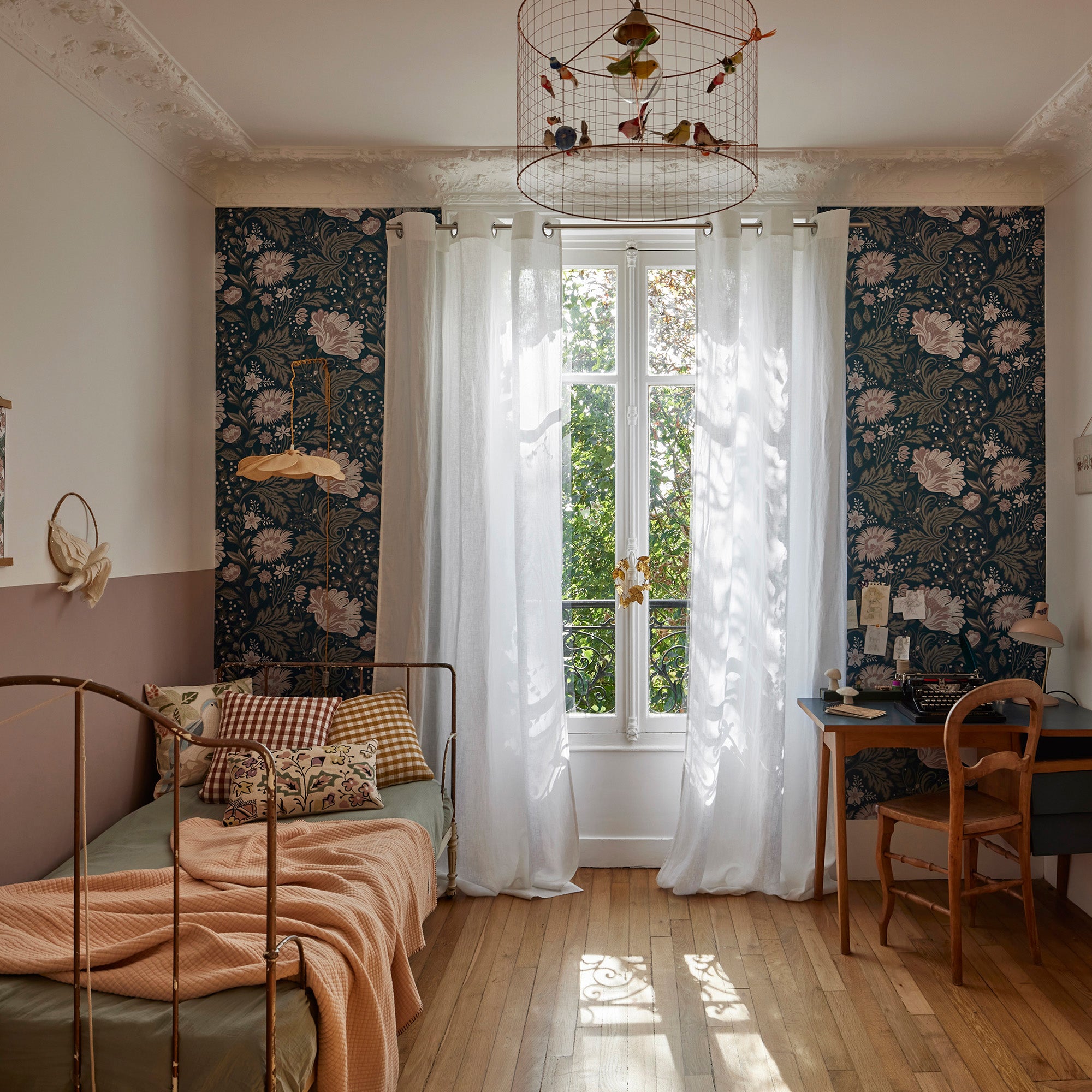
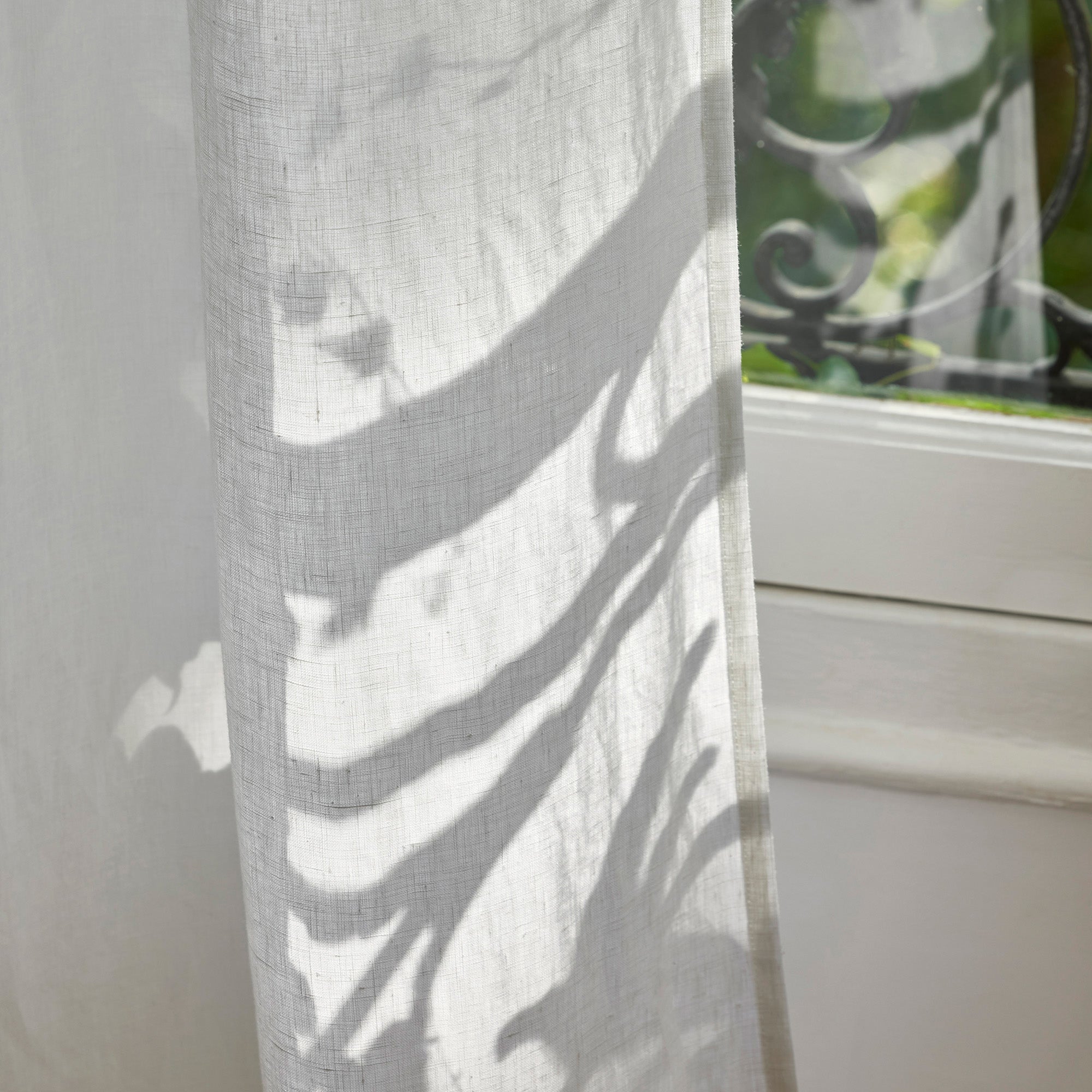
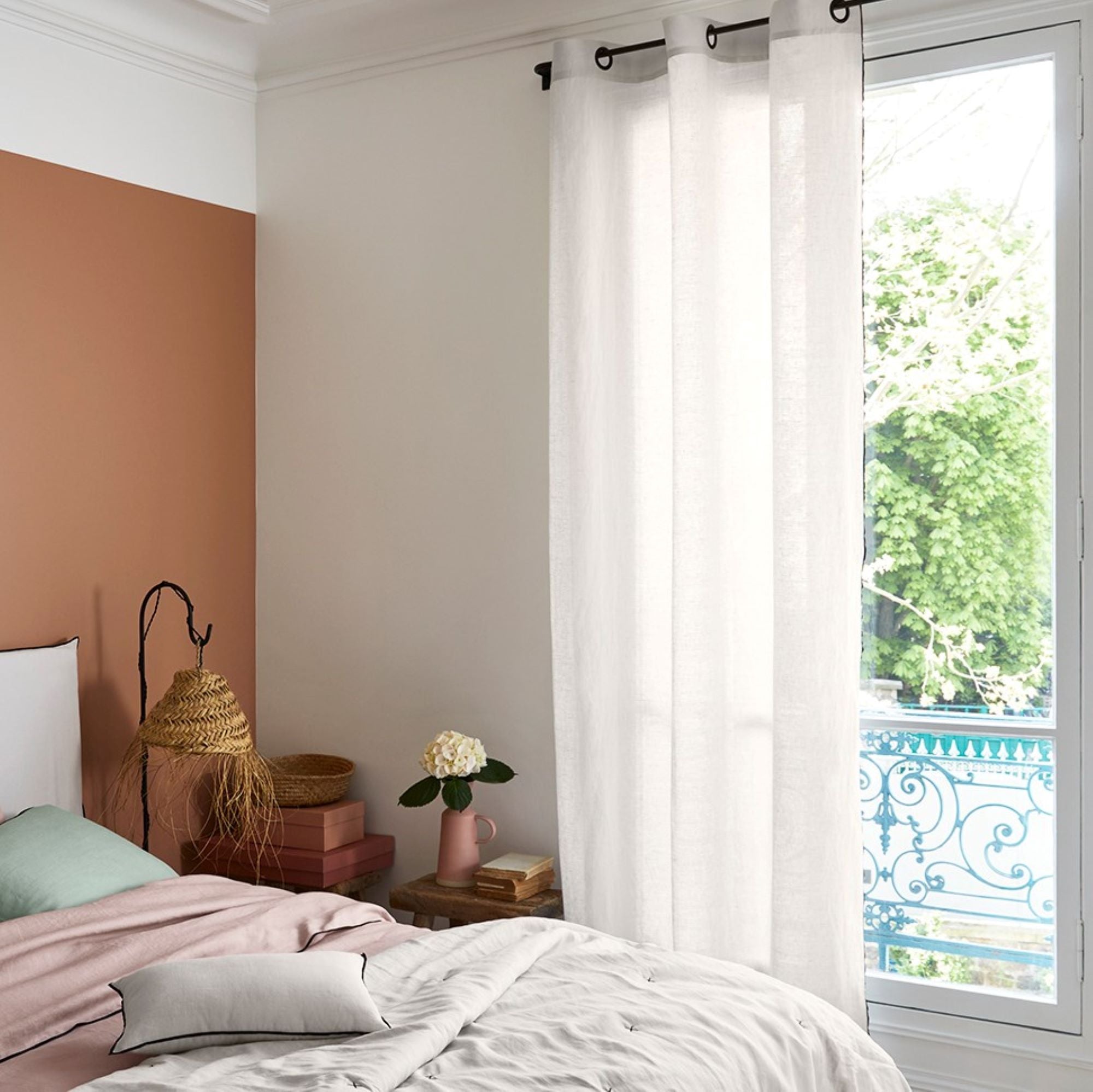
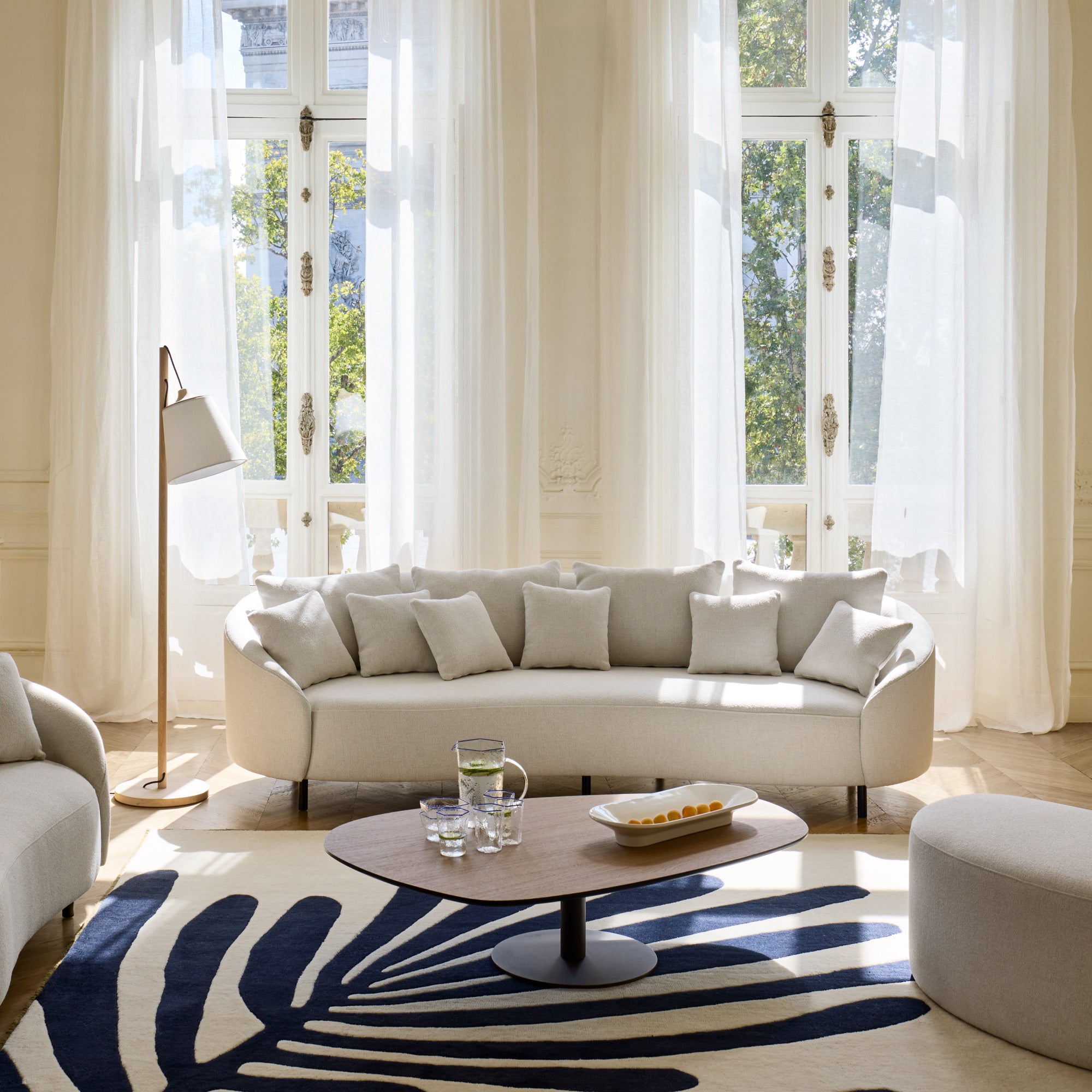
Choosing a curtain for a living room with white walls is like working on a neutral canvas. White walls visually enlarge the room and bring in lots of light, but they can also give an impression of coldness or emptiness if they are not counterbalanced by well-chosen textiles. To create a warm and harmonious atmosphere, we generally favor neutral shades such as beige or natural linen which prolong the light while adding relief. Warmer colors (terracotta, caramel, mustard) or deep tones (midnight blue, charcoal gray, olive green) can transform the window into a focal point and give character depending on the decorative style. The material of the curtain plays a key role: washed linen and woven cotton provide an authentic grain, velvet gives a cocooning effect and improves insulation, and sheers preserve light while providing softness. Finally, the right size (size and height) and the possible combination of sheer and curtain are essential to modulate the brightness and obtain a neat result.

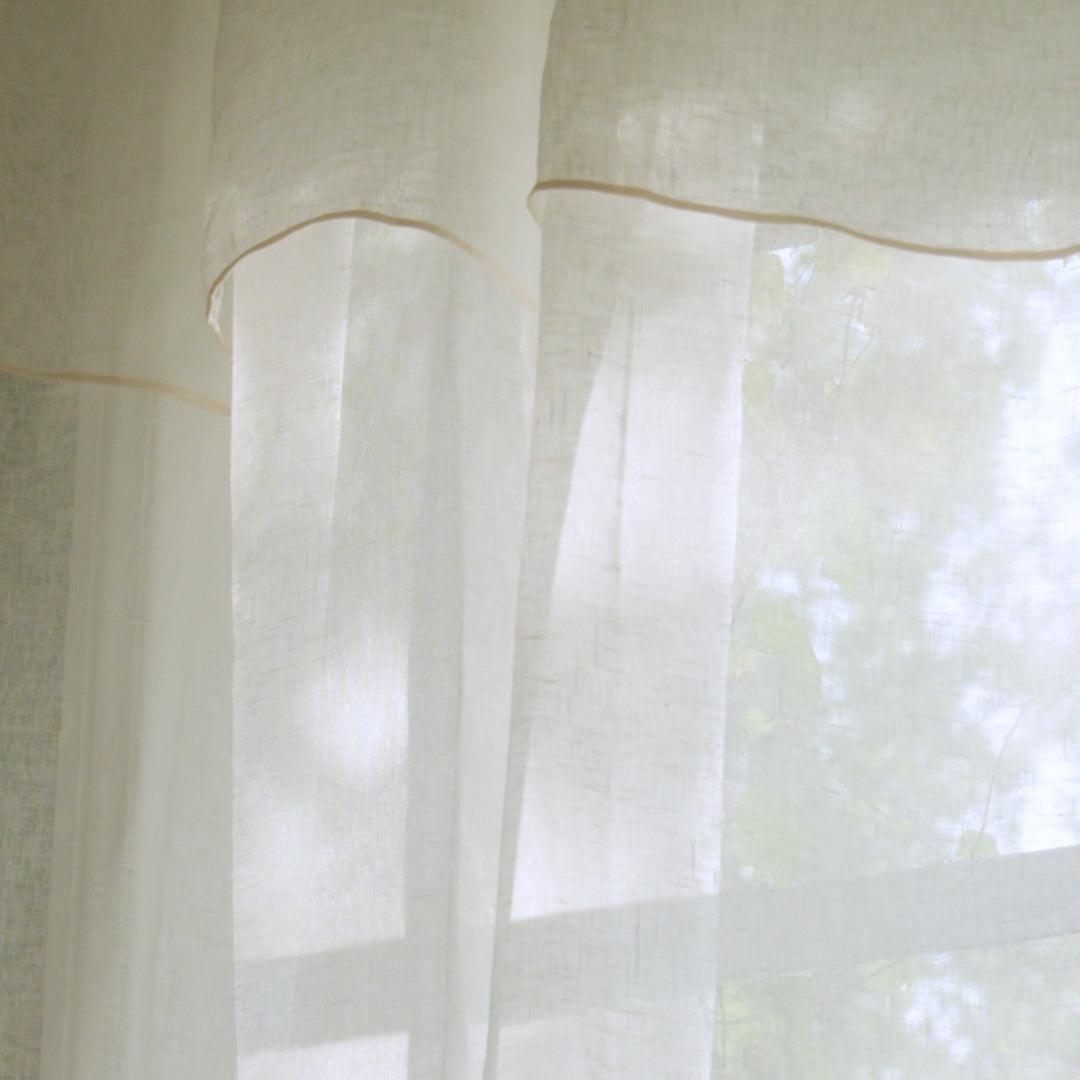
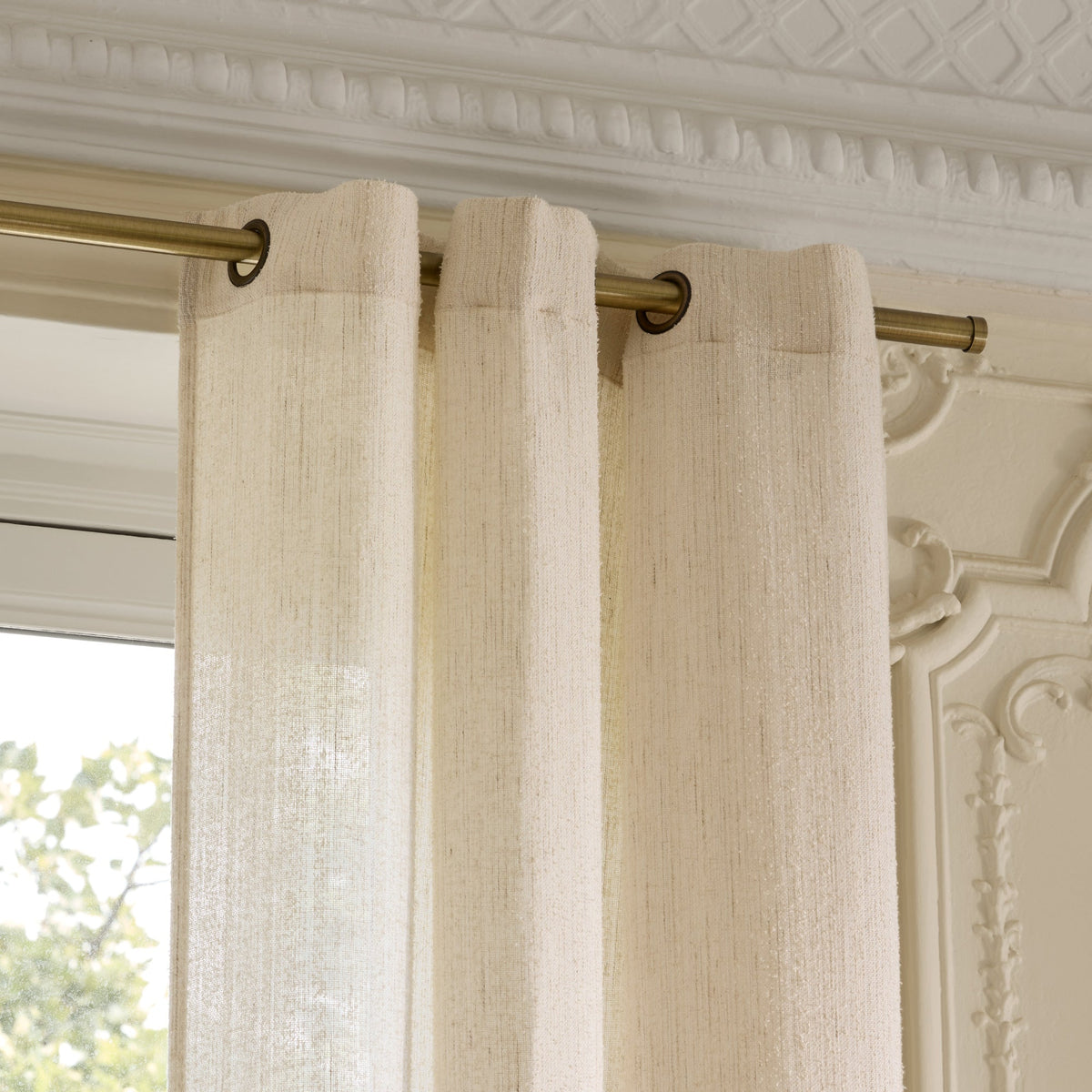
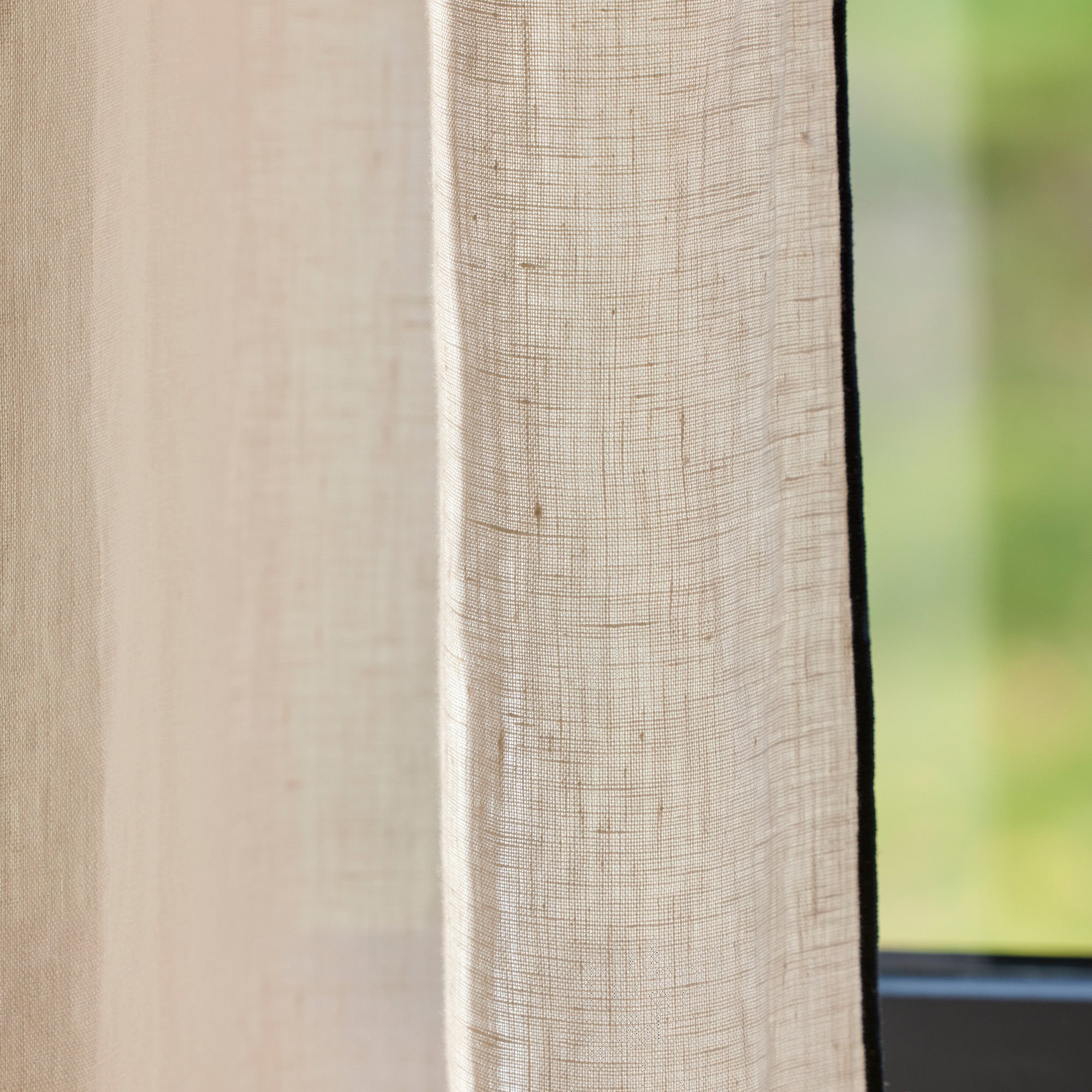
White walls reflect natural light and visually expand the space. This neutrality provides an ideal basis for expressing different styles, but it must be nuanced to avoid an overly cold atmosphere. This is why decorators often recommend avoiding pure white curtains and preferring ecru tones, light beige or natural linen: these light shades retain the brightness while creating a soft and warm atmosphere. They fit perfectly into Nordic interiors where simplicity and softness dominate.
If you want to structure the space and give depth, you can choose darker curtains. A midnight blue, charcoal gray or khaki curtain creates a stylish focal point on a white wall and works well in large living rooms or contemporary rooms. This approach contrasts the light of the walls and draws the eye towards the window, transforming it into an architectural element. In an industrial style, thick corduroy or heavy canvas curtains enhance contrast and also improve acoustics in large rooms.

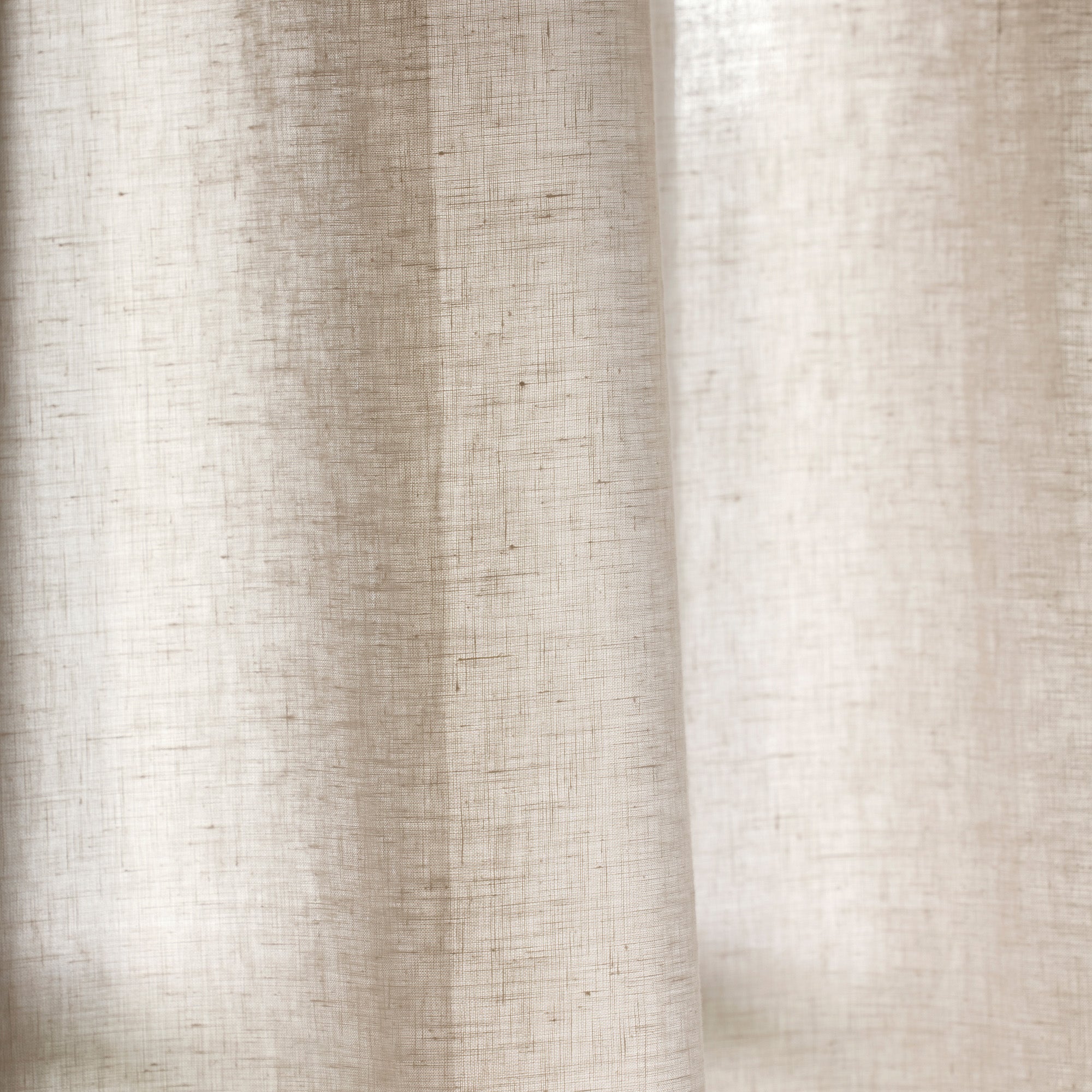
Neutral shades (natural linen, beige, light gray or taupe) are ideal for maintaining brightness and creating a calming atmosphere. In a Scandinavian living room, the white of the walls goes well with curtains in beige or washed linen. These shades accentuate clarity while introducing texture with a slightly irregular grain. They can be combined with blond wood furniture to reinforce the feeling of warmth. Taupe and sand tones provide a soft transition between wall and curtain and suit all styles, from industrial to bohemian.
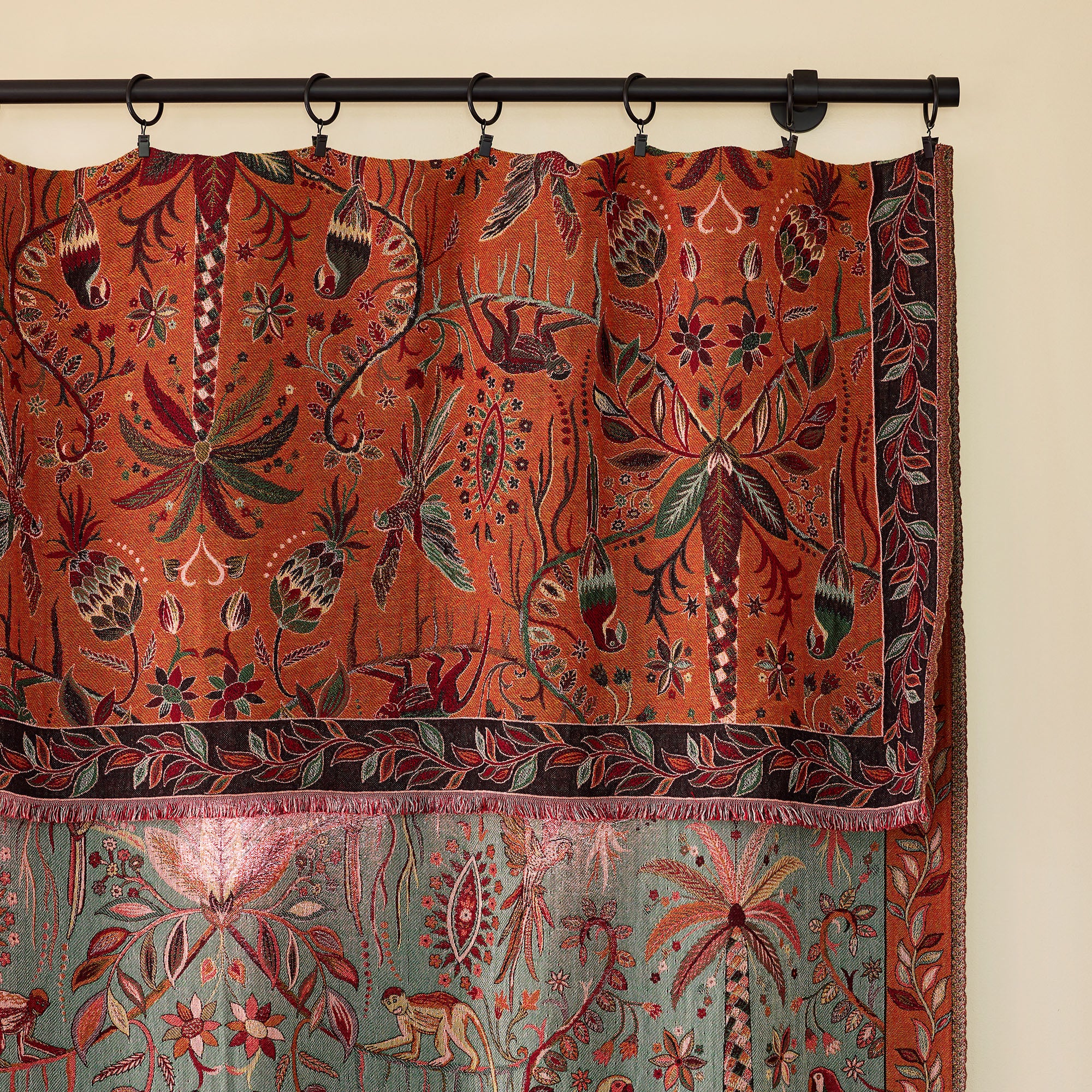
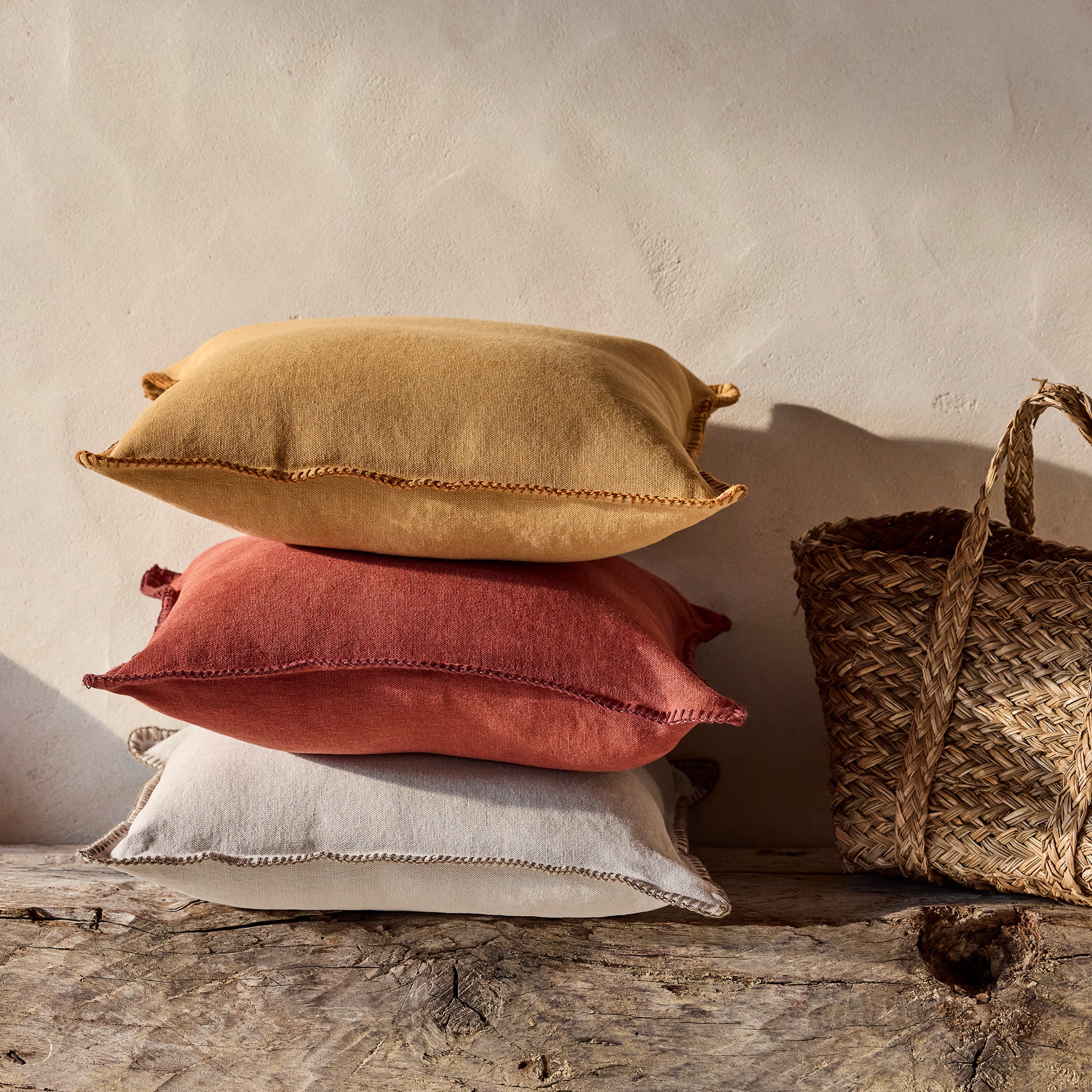
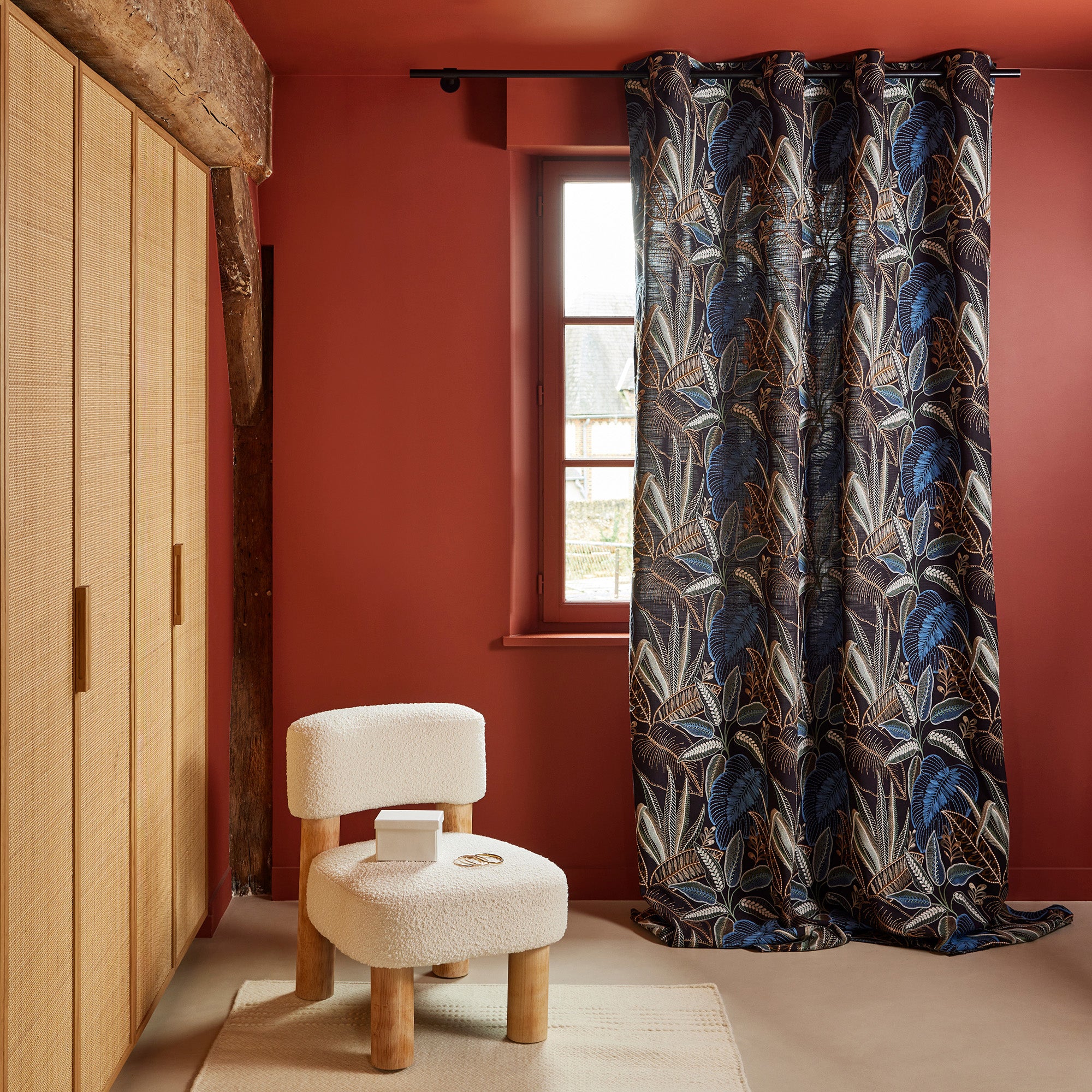
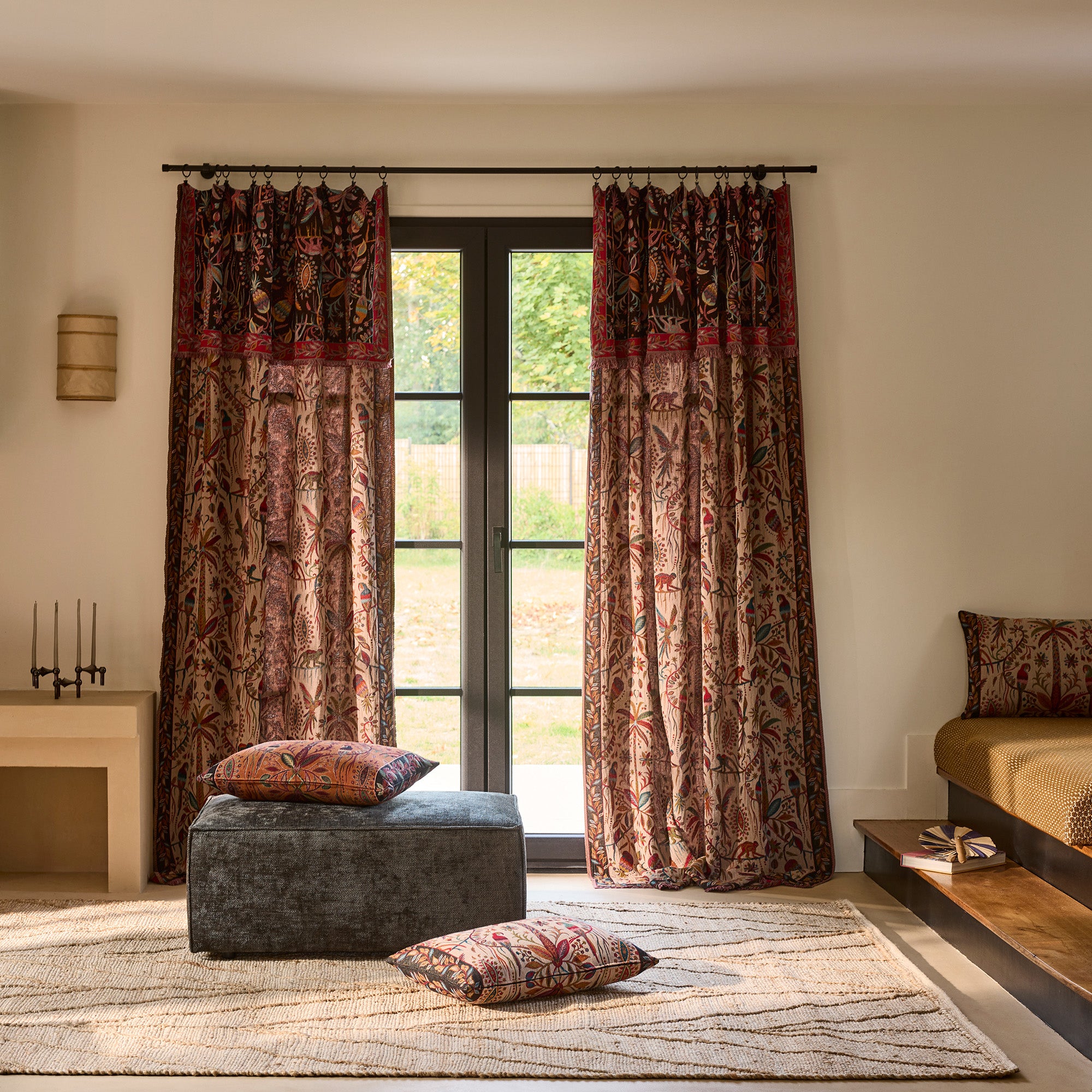
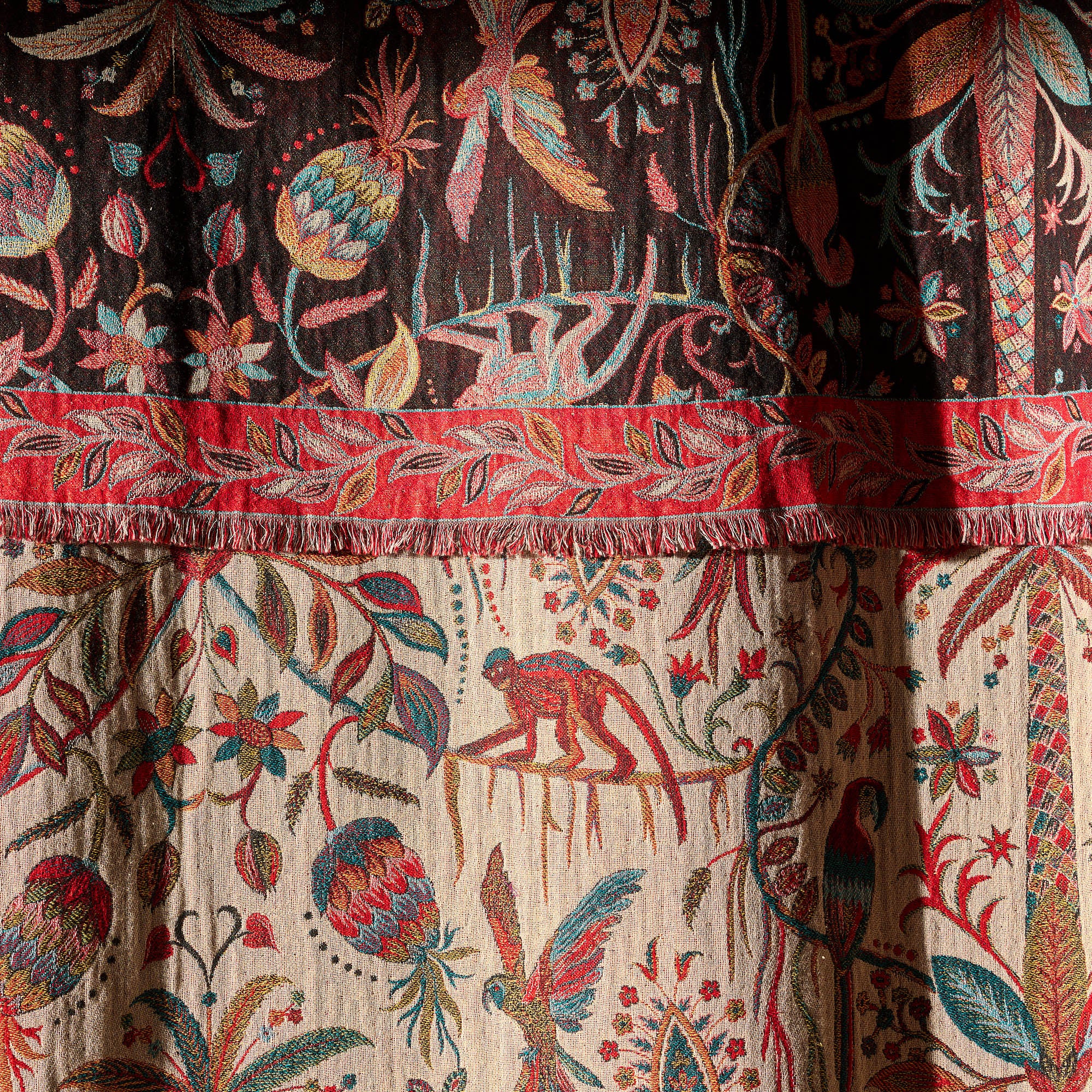
Warm colors (terracotta, ocher, caramel, mustard) bring conviviality and are very fashionable. Terracotta, an earthy, reddish shade, instantly warms the room and remains a trendy color in 2025. Combined with natural materials (linen, cotton) or corduroy, it creates a warm cocoon. Glazed brown or caramel velvet curtains add a luxurious and cocooning dimension. In a bohemian style, we combine these warm shades with ethnic or floral patterns while taking care not to overload the room: a single patterned curtain is enough, the rest of the decor using the colors in touches (cushions, rugs, accessories).
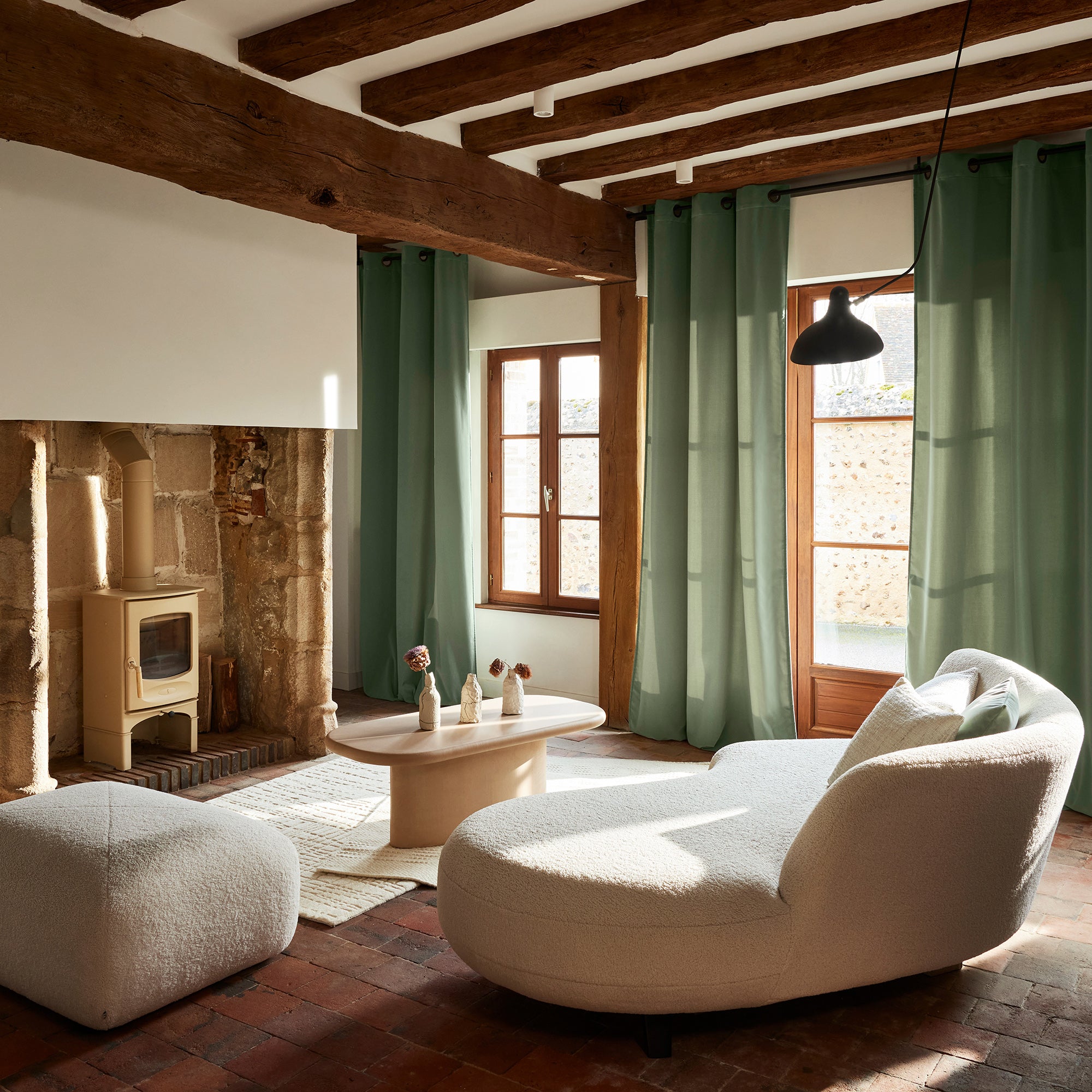
Cold colors structure the space and bring a serene atmosphere. An anthracite gray or deep blue curtain highlights the graphic spirit of an industrial or contemporary interior. Blues (glacier, duck, petrol) offer different atmospheres: an ice blue brings freshness and elegance, a petrol or duck blue is more daring and creates a touch of sophistication. Greens (sage, olive or khaki) evoke nature and relaxation and are well suited to living or dining rooms. To accentuate the effect, we choose heavy, textured fabrics to create a contrast with the white walls while modulating the light.
In living rooms where softness and harmony are sought, pastels are a discreet option. Powder pink, sky blue and mint green bring a refreshing and feminine note and go well with white and gray walls. These shades are ideal for minimalist or romantic interiors. On the contrary, if you want to energize the decoration, bright colors (pale yellow, turquoise, orange-red, electric blue) can transform the space in the blink of an eye. However, it is recommended to balance these strong shades with neutral elements such as white or gray furniture and minimalist accessories so as not to weigh the whole thing down. Using patterns (geometric, stripes, floral prints) is another way to add character: you can dress a single window with a patterned curtain and leave the other panels in neutral shades.
Light curtains enhance the brightness and give the impression of continuity with the walls. In small rooms or north-facing rooms, opting for curtains in beige linen, ecru cotton or off-white voile amplifies natural light and creates a soft transition between wall and furniture. Dark curtains, on the other hand, introduce depth and contrast that are best suited to spacious rooms or contemporary decors. They draw the eye towards the window and allow you to modulate the light when the room is very bright. The choice therefore depends on the size of the room, its exposure and the style you wish to assert.

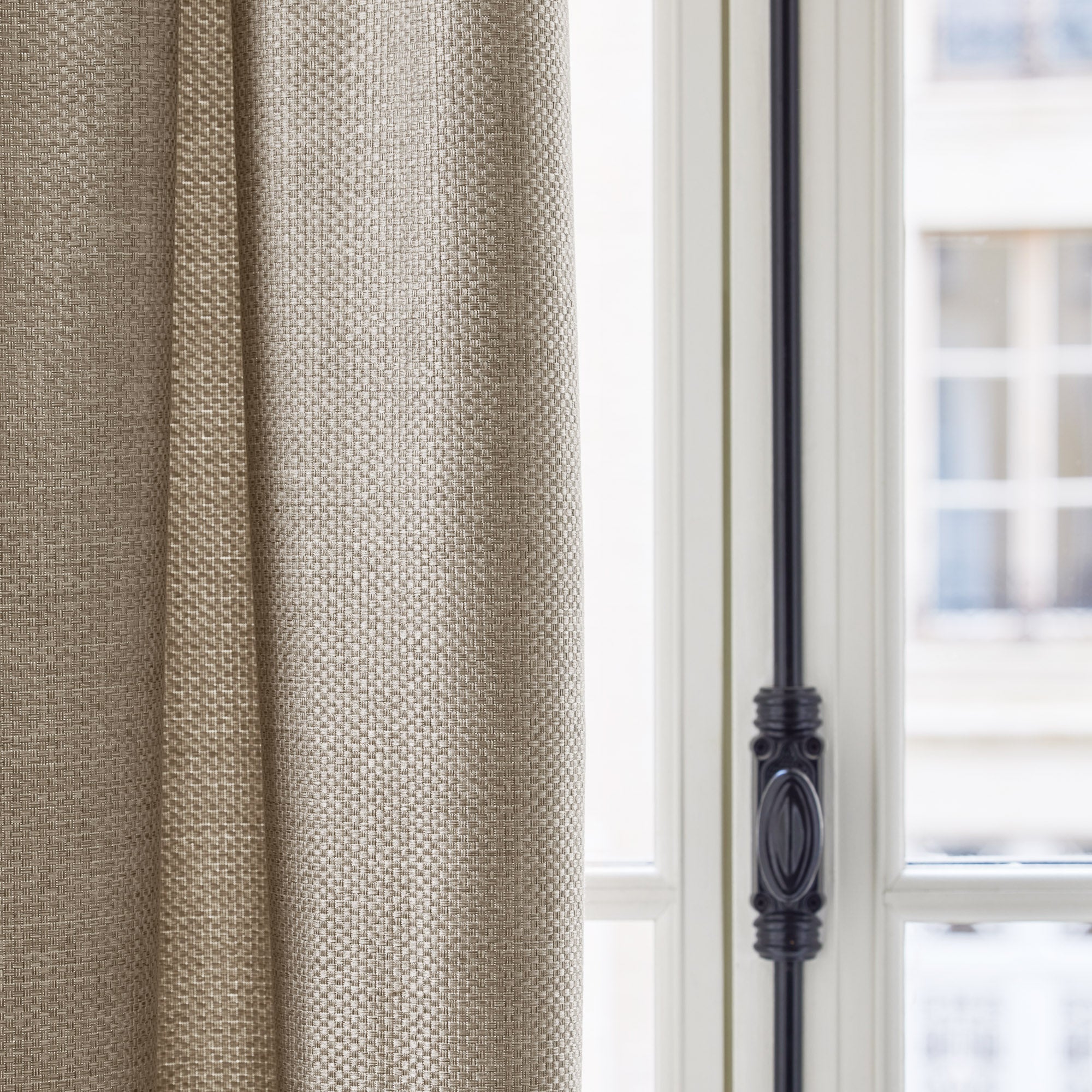
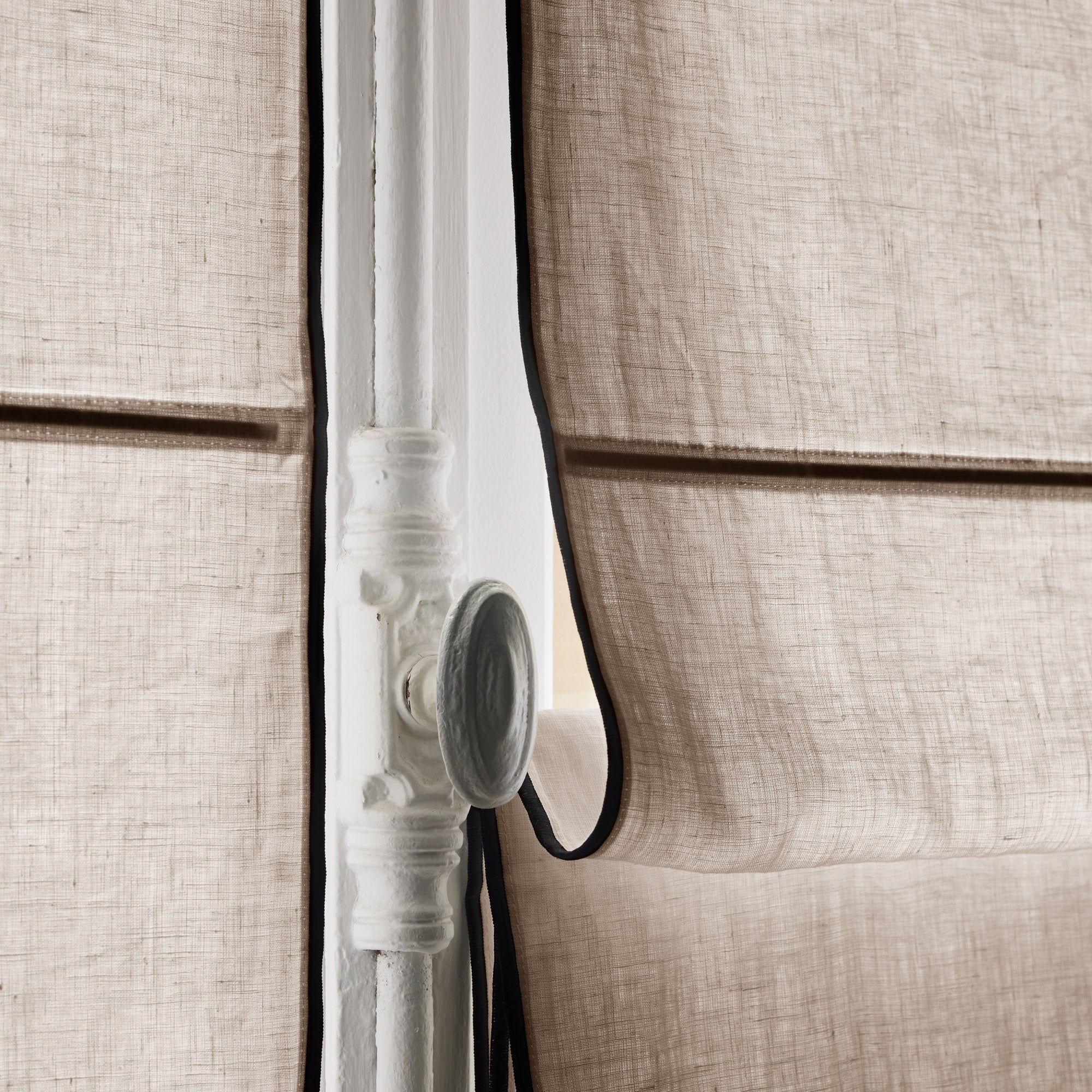
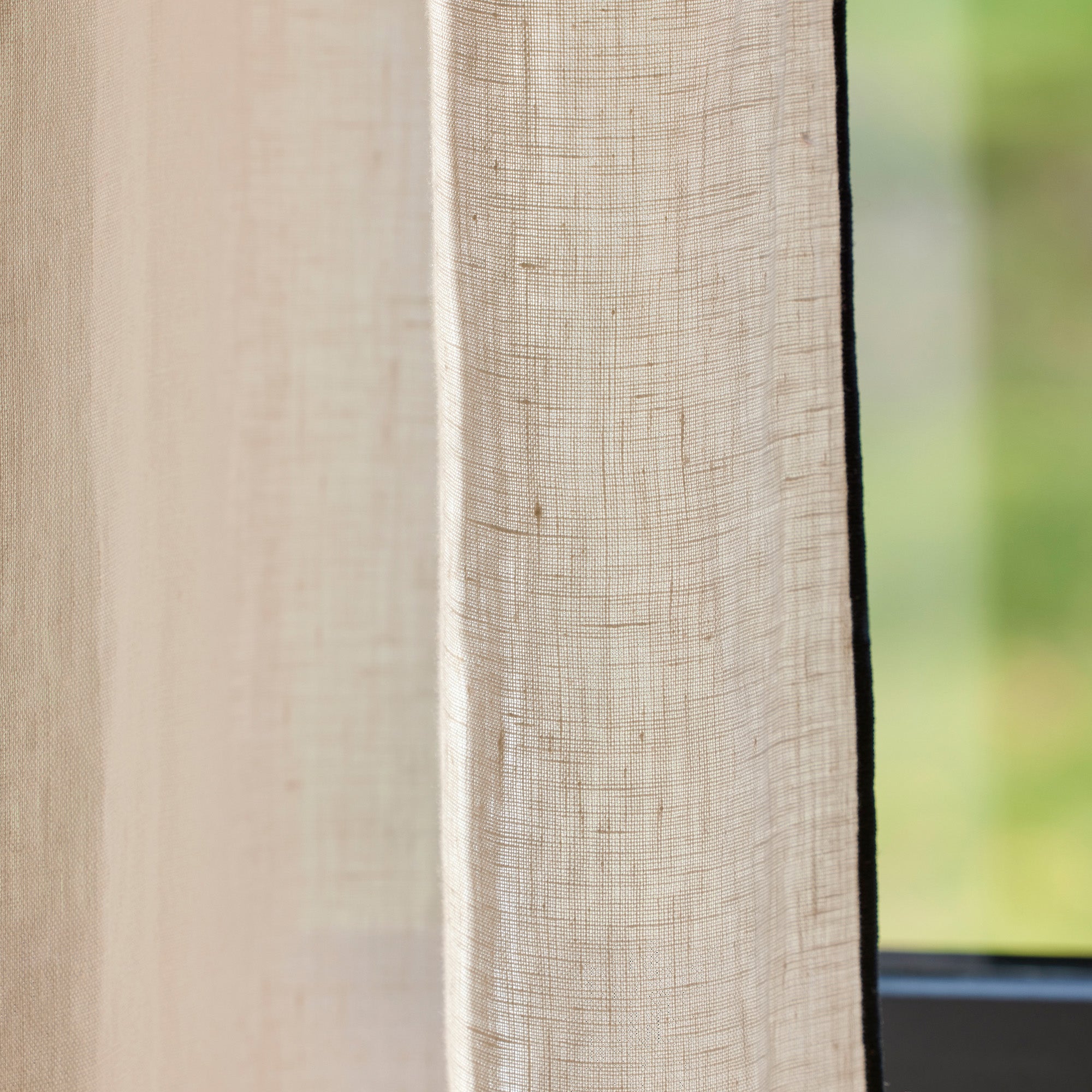
Washed linen and woven cotton are popular for their natural texture and ease of maintenance. In a Nordic interior, these fabrics provide discreet relief while retaining the simplicity and brightness of the decor. Linen has a soft drape and a slightly wrinkled appearance which gives a relaxed elegance. Woven cotton offers a fine and regular structure ideal for patterned or plain curtains. These fibers breathe well and are suitable for both sheers and thicker curtains.
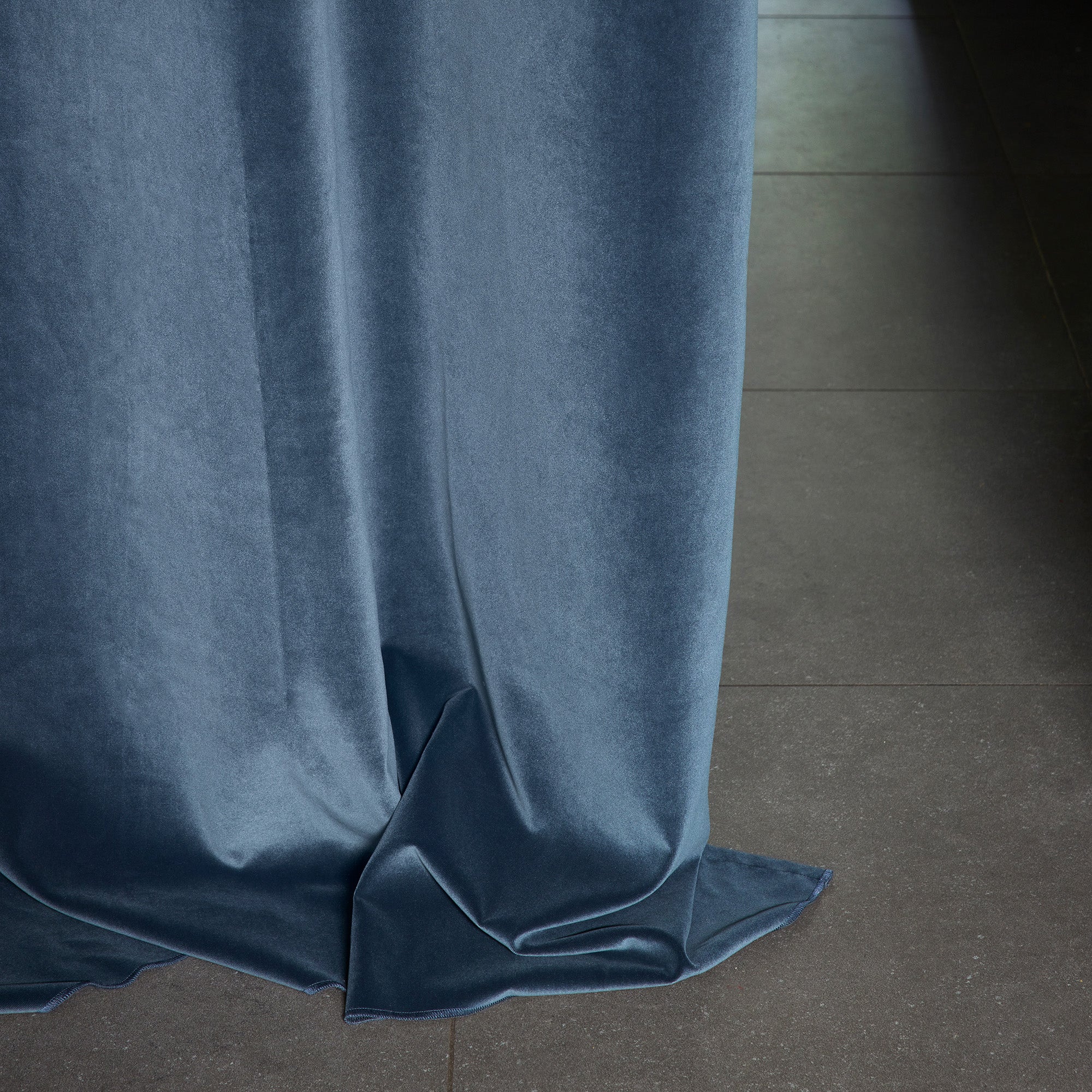
Velvet is synonymous with refinement: its thick texture and slight shine create deep reflections that capture the light and envelop the room in a cozy atmosphere. Beyond aesthetics, velvet offers insulating properties: the lining or the fabric itself reduces heat loss and can reduce energy loss by around 30%. Deep shades like midnight blue, fir green or terracotta go perfectly with this fabric in industrial, boho or contemporary style living rooms.
Sheers (muslin, cotton gauze, organza) filter the light while preserving privacy. They are ideally combined with thicker curtains to modulate light and improve insulation. Overlaying a light sheer curtain with a blackout curtain allows you to control the amount of light depending on the time of day and increases thermal efficiency by 15 to 20%. For a Mediterranean or minimalist style, a simple ecru sheer curtain is enough to lighten the decoration and prolong the brightness of the white walls.
Technical fabrics (polyester, synthetic blends) offer excellent UV and stain resistance, and often offer good value for money. Cotton/polyester blends are easy to care for and wrinkle little. They are suitable for homes with children or animals. Thermal curtains combine several layers (decorative fabric, insulating lining and thermal membrane) to reduce heat loss by up to 25%. In a living room with white walls facing south, a terracotta or sage green thermal curtain helps regulate the temperature while adding color.

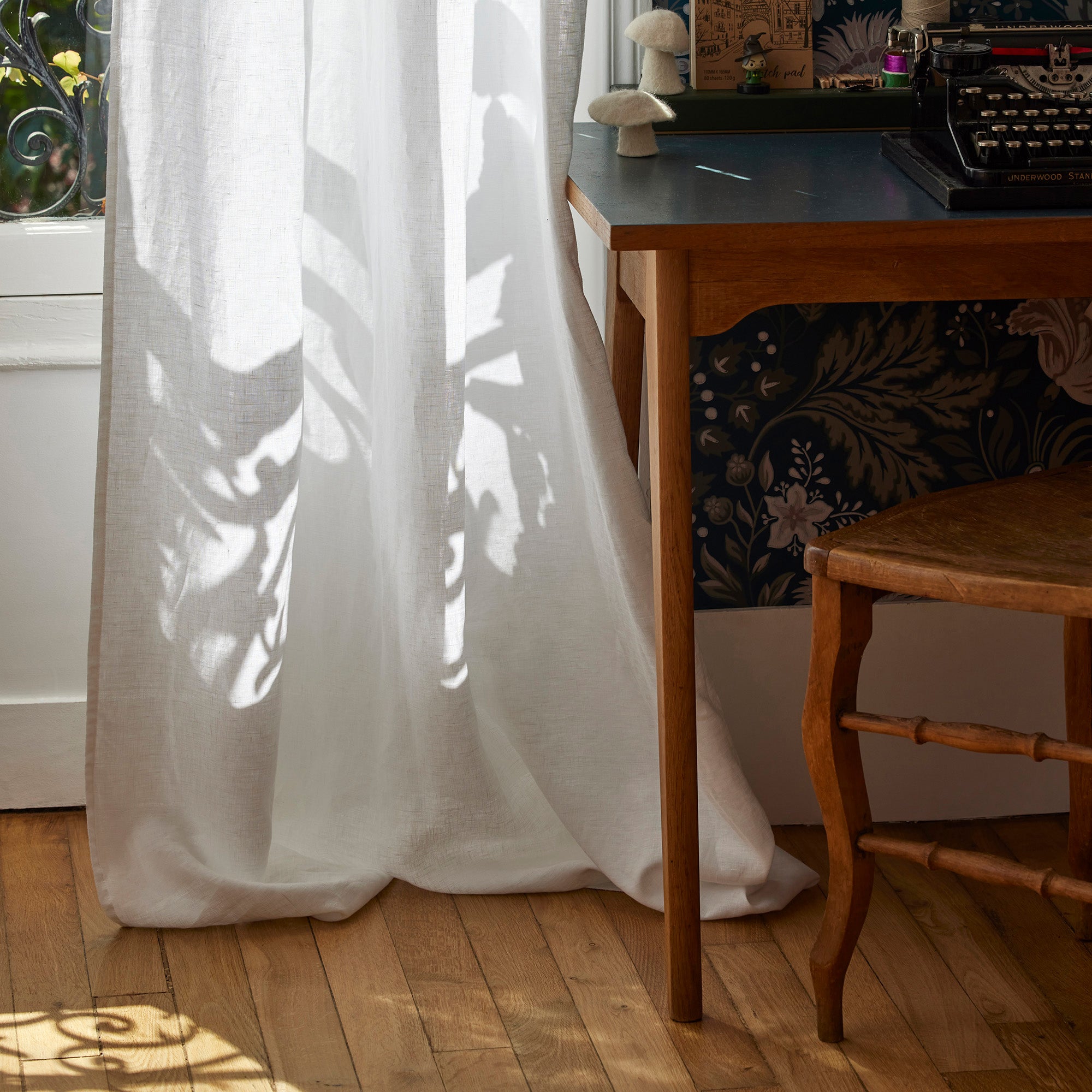
The dimensions of the curtains influence both aesthetics and functionality. For an elegant look, attach the rod approximately 10 to 15 cm above the window and leave 15 to 20 cm on each side so that the panels clearly clear the opening. The total width of the curtains should be 1.5 to 2 times that of the window to create beautiful gathers and guarantee good blackout. Sheers may require up to 2.5 times the width to maintain a light and airy appearance. As for the length, it is advisable to have them fall 2 cm from the ground for a neat look or to let them break slightly on the ground for a more bohemian effect.
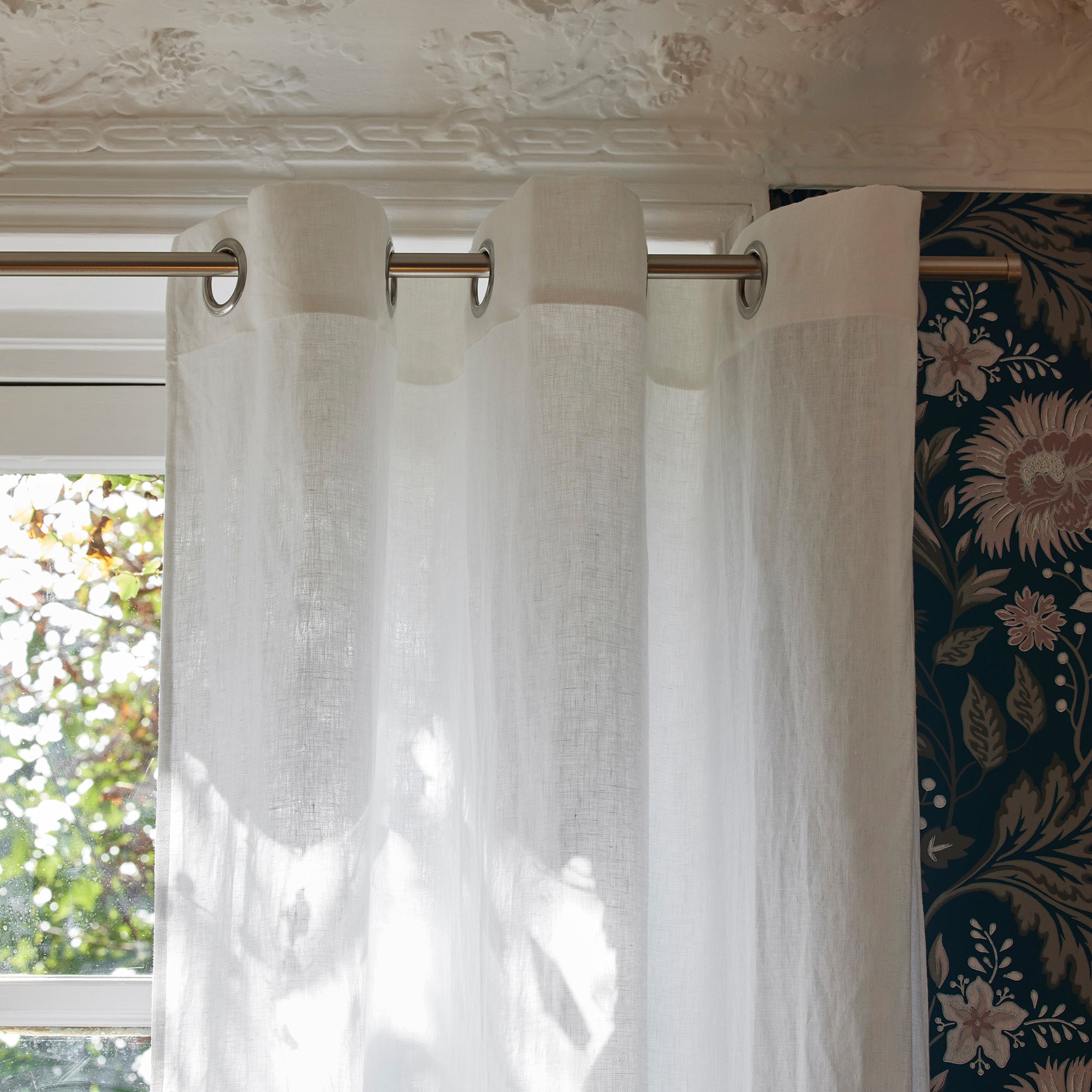
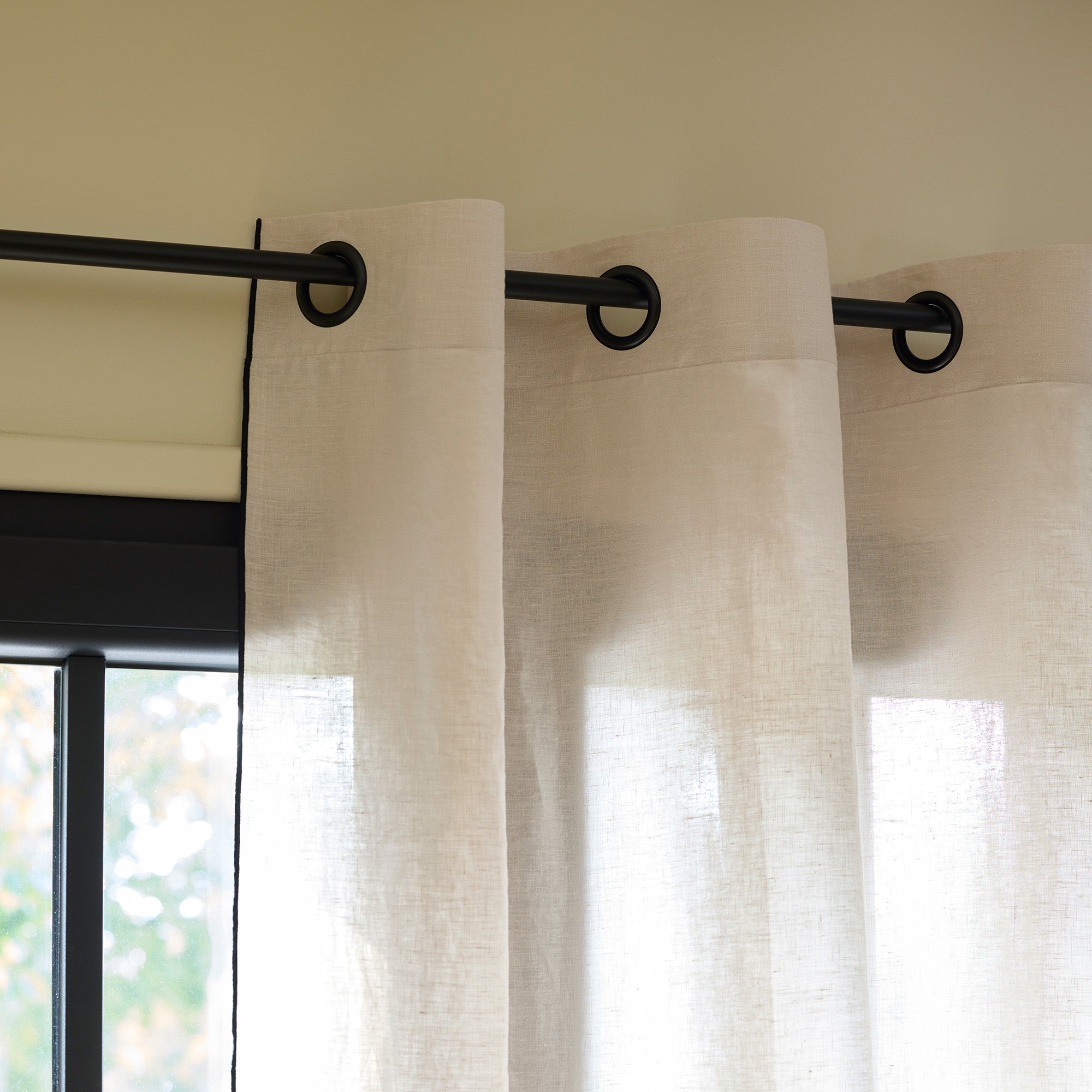
The finish influences the style: metal eyelets suit modern or industrial interiors and make handling easier, while knots or ruffled braid add a traditional or bohemian touch. Ceiling bars are ideal when there is little space above the window and visually increase the height of the room. For bay windows, several wide panels (130 to 150 cm each) can be installed to facilitate opening and obtain a uniform drape.
Superimposing a sheer curtain and a thick curtain is a modular solution: the sheer curtain diffuses light and offers privacy during the day, while the blackout curtain darkens the room and reinforces insulation in the evening. This combination is particularly useful in living rooms with white walls where you want to maintain brightness while controlling heat and outside views.

Analyze the orientation and brightness. In a north-facing or small living room, choose light, flowing curtains (beige linen, ecru sheer curtains) to amplify the light. For a very bright or large living room, you can dare to use darker colors (midnight blue, anthracite) which will structure the room.
Choose a color that matches your style. Scandinavian? Opt for light neutrals and natural materials. Bohemian? Earthy hues and ethnic patterns are enough. Industrial? Choose dark curtains and heavy fabrics. Minimalist? Off-white, taupe or powder pink add subtle character.
Harmonize curtains and furniture. Curtains should complement the sofa, rugs and accessories. Too many bright colors can weigh down the whole thing; limit yourself to two or three dominant colors and play with textures (velvet, linen, cotton gauze) to add relief without saturating the space.
Think about accessories. Tiebacks, rods, rings and clips contribute to the final style. A black metal rod highlights an industrial decor, while a light wood rod matches a Scandinavian spirit. Rope or macramé tiebacks reinforce the bohemian atmosphere.
Maintain your curtains. Choose washable fabrics (cotton, polyester) if you want to wash them easily. Linen and velvet require delicate cleaning or dry cleaning. Follow label directions and use gentle cycles to preserve fibers.

Curtains too short or too long. A curtain that stops above the window sill breaks the verticality and gives an impression of neglect. Conversely, a fabric that drags too much on the floor can be visually heavy and accumulate dust.
Excessive uniformity in white. Painting the walls white and choosing white curtains without texture creates a too cold world. Prefer ecru tones, natural linen or beige to bring warmth.
Too strong contrasts in a small space. A radical contrast (black curtains on white walls) can overwhelm a small living room. It is better to integrate intermediate shades and light materials to maintain a feeling of space.
Multiply bright colors. Too many different colors or patterns unbalance the decoration. Limit yourself to two or three tones and use them on accessories.
Ignoring harmony with furniture. The curtains must interact with the sofa, cushions and rugs. A style dissonance (bohemian curtains with an ultra-modern living room) can disrupt the whole thing. Take into account the texture and color of the furniture to choose the right material and shade.
|
Color / category |
Perceived effect |
Recommended styles |
Recommended subjects |
|
Natural linen / light beige |
Softness, warm neutrality, visual continuity |
Scandinavian, minimalist, country chic |
Washed linen, woven cotton |
|
Terracotta / caramel |
Warmth, enveloping cocoon |
Bohemian, vintage, Mediterranean |
Corduroy, heavy linen |
|
Deep blue / anthracite |
Contrast, visual anchor, modernity |
Industrial, contemporary |
Velvet, heavy canvas |
|
Pastels (powder pink, sky blue, mint green) |
Softness, freshness, harmony |
Scandinavian, romantic, minimalist |
Sheer fabric in cotton gauze, poplin |
|
Bright shades (mustard, electric blue, emerald green) |
Dynamism, originality |
Contemporary, eclectic |
Velvet or cotton blend, patterned curtains |

Madura is a French house founded in 1971 which invented the concept of ready‑to‑install : curtains and sheers sold ready to install. For more than fifty years, the brand has offered a complete range of carefully designed curtains, sheers, blinds and home textiles, in natural and sustainable materials. It is recognized for its know-how, its creativity and its fair prices. The Madura collections use noble textiles such as washed linen, cotton, velvet or even technical fabrics for sound and thermal insulation. For example, Madura thermal curtains with multiple linings can reduce heat loss by 25%, making them ideal for living rooms exposed to large temperature variations. The brand also offers a tailor-made service to perfectly adapt the curtains to the dimensions of your living room and offers expert advice in store or online. Choosing Madura means investing in products that are both aesthetic and efficient, manufactured using a responsible approach.
What type of curtain for a small white living room?
Choose light curtains (beige, off-white) in linen or cotton to maintain brightness. Be sure to install the rod close to the ceiling and let the curtains fall almost to the floor to visually enlarge the room.
Can I choose dark curtains if my living room is bright?
Yes. In a large, well-lit living room, midnight blue, anthracite or olive green curtains bring depth and character. They create a focal point and allow the light to be modulated. Just make sure the walls stay light and the furniture isn't too dark to maintain balance.
How to combine sheer and curtain?
Layer a light sheer curtain (muslin, cotton gauze) with a thicker curtain to control light and privacy. This combination also improves thermal insulation: layering can reduce heat loss by 15 to 20%. Open or close each layer depending on the time of day.
What material to choose for a warm effect?
Velvet is ideal for creating a cocooning atmosphere: it captures the light and offers a soft touch. Combined with warm tones (terracotta, caramel), it provides a luxurious appearance. For a lighter but still cozy effect, opt for thick linen or woven cotton.
Should I match my curtains to my sofa?
It is not necessary to use the exact same color, but harmony is essential. Choose a curtain that matches the sofa and accessories (cushions, rugs) by playing on contrasts and textures. For example, a light gray sofa can be highlighted by teal or mustard curtains and matching cushions.
How do I maintain my curtains?
Cotton and polyester curtains are easily machine washable. Linen curtains may require delicate washing or dry cleaning. Velvet must be brushed regularly and cleaned carefully to maintain its shine. Follow label directions and use gentle cycles to preserve fibers.
Also discover our other articles:
- How do I choose sheers for my living room?
- What type of curtain to insulate from the cold?
- Filtering or opaque curtains: what to choose?
Sommaire
Our last articles
Conseils et astuces •8 min
Correctly measuring your curtains is the first step to achieving a neat and harmonious result. This guide explains how to...
Conseils et astuces •8 min
Proper care for each material — linen, cotton, percale — helps preserve the softness, colors, and durability of your home...