




Conseils déco
How to clean a fabric sofa?
Cleaning a fabric sofa involves three steps: regular vacuuming (once a week), targeted stain removal with Marseille soap or baking...

Madura customer service
Available on WhatsApp, by chat or by phone at 01 42 34 99 59

All the tips and tricks from our team, just like in store, delivered straight to you.
All articlesMost searched articles

Conseils déco
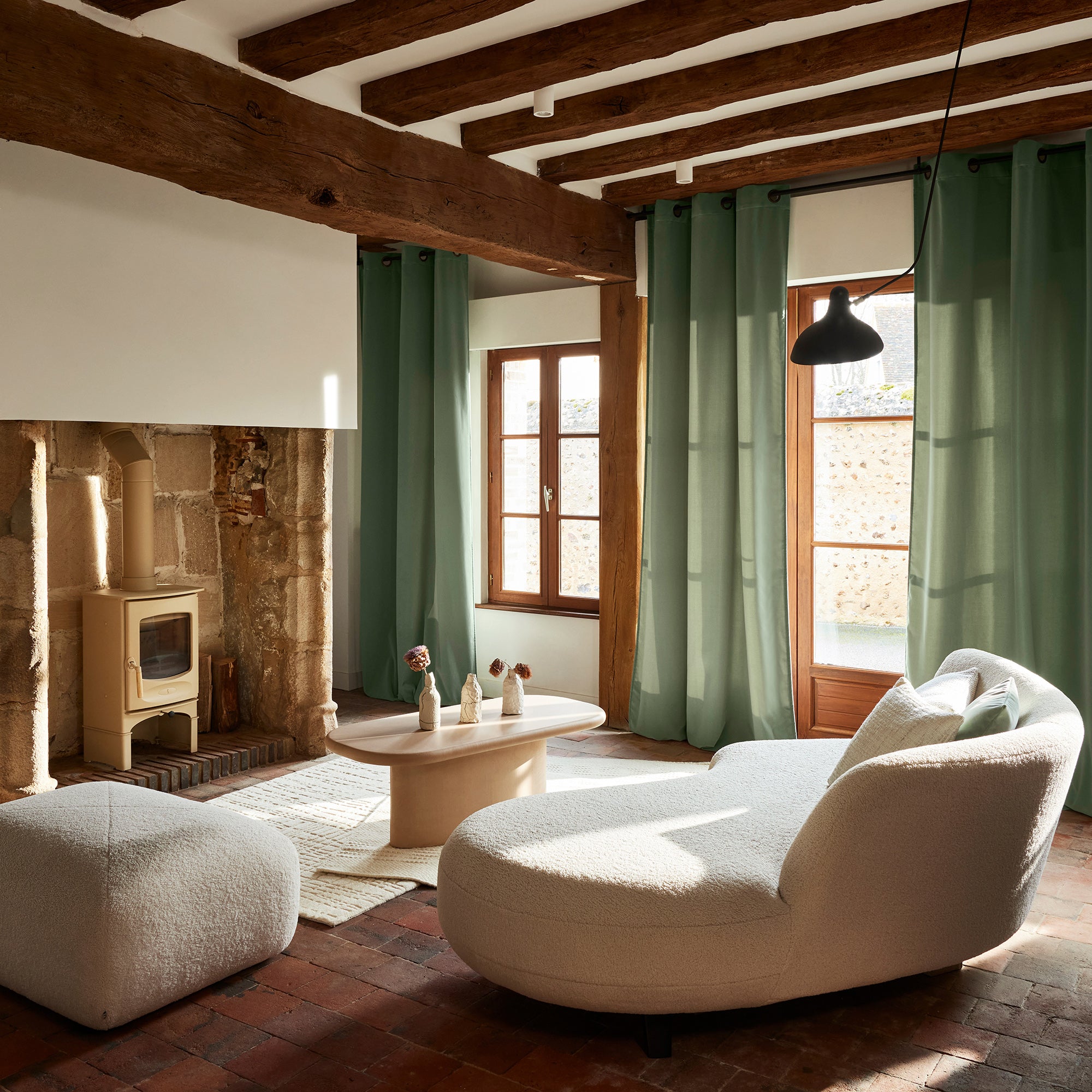
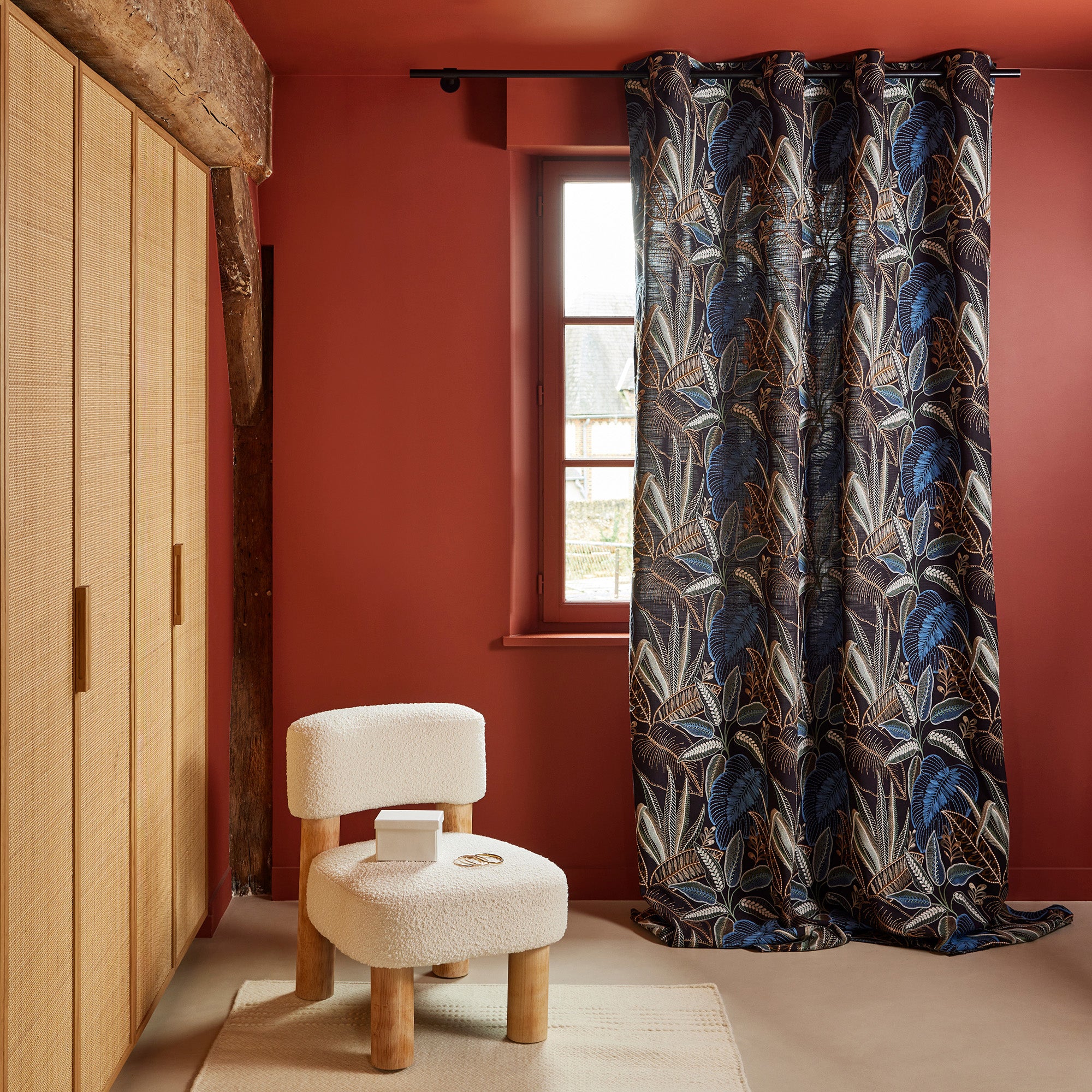
To protect your interior from the rigors of winter, a curtain should not be a simple decorative object. Insulation specialists recommend thick, lined, carefully fitted models. A thermal curtain made of velvet, wool or jacquard can reduce heat loss through windows by up to 25%.. These gains are obtained provided that the curtain covers the window in width and falls to the ground. The following lines explain how these curtains work, how to choose them correctly and why the French brand Madura has become a reference in this field.

Windows constitute a weak point in the thermal envelope of the home. According to the Energy Transition Agency (ADEME), poorly insulated windows represent 10 to 15% of the total energy loss of a house.. A newspaper article Home Minutes recalls that on average up to 30% of the heat in a home escapes through these openings. A French study published in 2015 showed that well-chosen thermal curtains can reduce heat loss by up to 25%.. This passive insulation helps reduce heating bills and improves comfort in winter.
A thermal insulating curtain acts as a barrier between the inside and the outside. Thermal curtains trap air between the fabric and the window; this layer of air acts as an insulator and prevents the cold from penetrating. Their effectiveness is based on two elements:
Thick, dense fabric : an insulating curtain is generally made of a heavy material (velvet, wool, jacquard or thick polyester) which blocks cold drafts and heat. The high weight of the fabric increases the insulating power by limiting heat exchange.
Reflective lining : to improve insulation, some models are lined with reflective material (aluminum, fleece or PVC). This layer returns heat to the room in winter and reflects solar rays in summer.
These curtains can be used alone or supplemented by other insulation solutions (roller shutters, solar films) in order to reinforce the thermal performance of the windows.

The choice of materials largely determines the effectiveness of an insulating curtain. Heavy fabrics like velvet, thick cotton and jacquard provide an effective barrier against cold and humidity while providing an elegant touch. Consumer guides also recommend thick natural fabrics such as wool or heavy linen, which retain heat well. According to the Futura Sciences comparison, a thermal curtain often consists of a layer of thick fabric combined with a synthetic (polyester, PVC or aluminum) or natural (wool) lining..
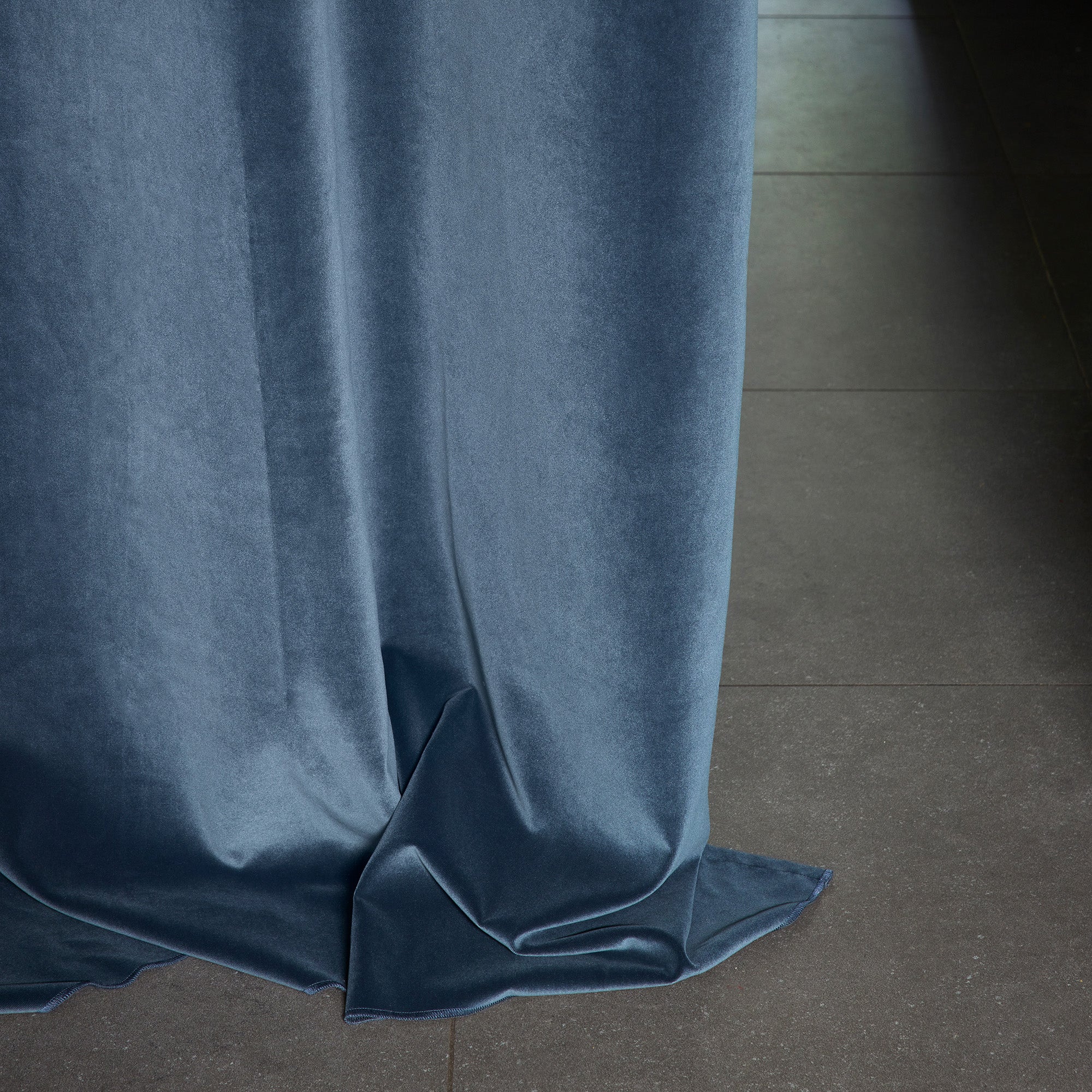
• Thick velvet
Advantages: strong insulating power and luxurious texture.
Ideal for: living room and cold rooms.
• Jacquard or heavy cotton
Advantages: good barrier against cold and humidity.
Ideal for: poorly insulated windows.
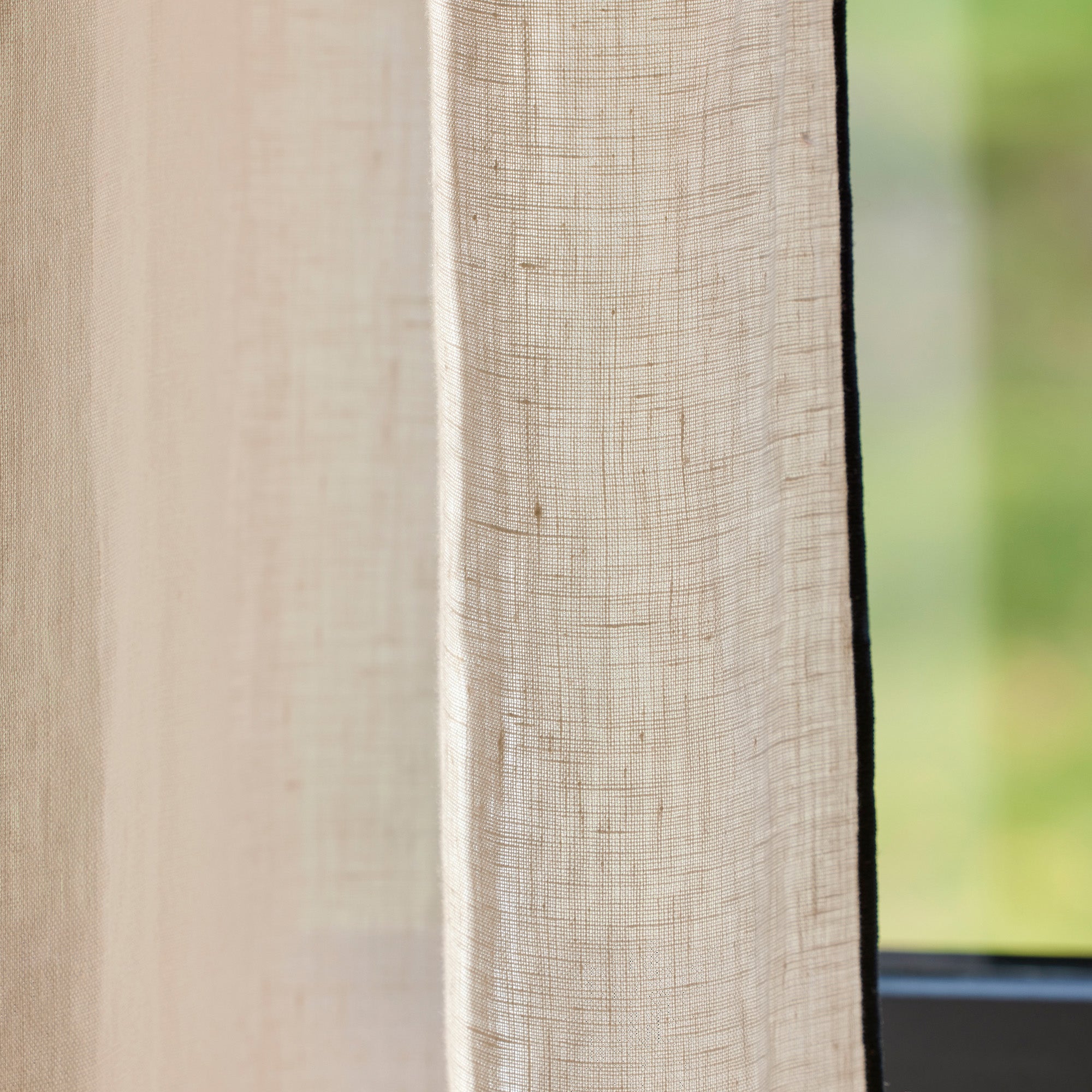
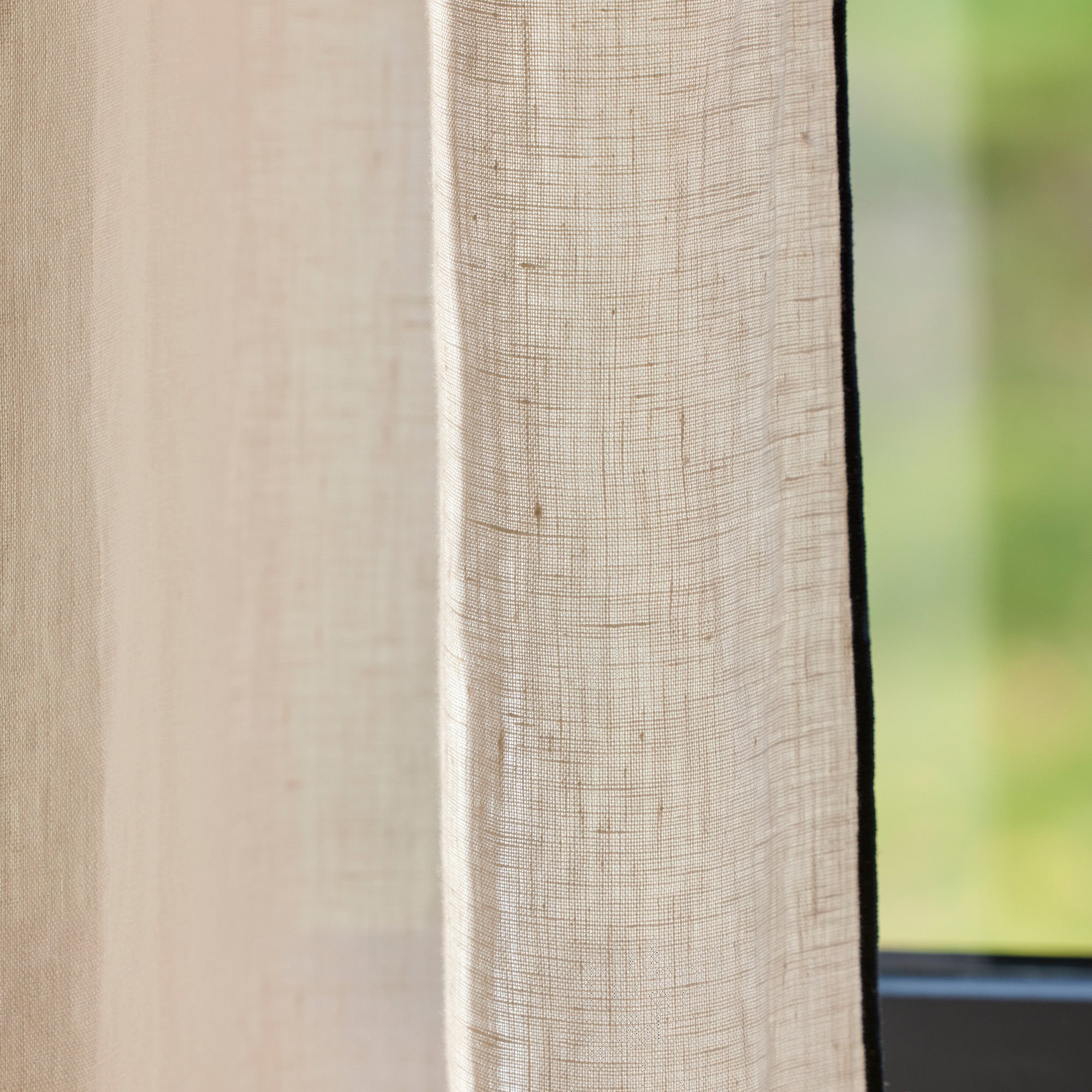
• Thick wool or linen
Advantages: natural material, warm and breathable.
Ideal for: eco-responsible interiors.
• Polyester with aluminum coating
Advantages: reflects cold in winter and heat in summer.
Ideal for: bay windows exposed to the wind.
The thickness of a curtain directly influences insulation: the heavier the fabric, the more it limits energy losses. Experts recommend a weight greater than 300 g/m² to ensure effective thermal insulation. The high weight allows more air to be trapped in the fibers and provides a generous drape that covers the window well. On a model like Madura's 'Coconut' curtain, the main panel weighs around 540gsm and the lining 335gsm, which highlights the importance of a dense fabric for thermal curtains.
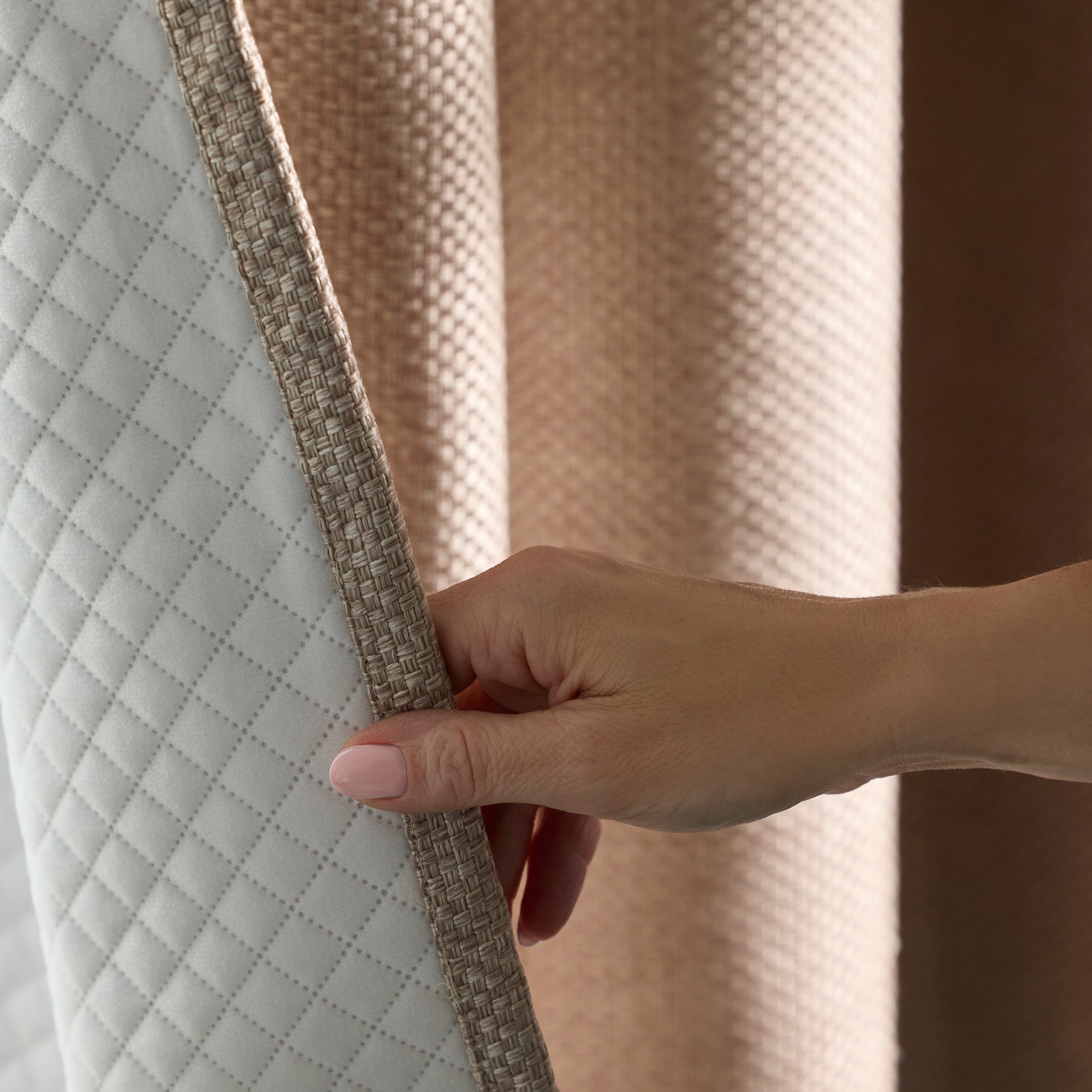
The presence of a lining is essential to reinforce the insulation. It consists of several layers: a backing, wadding and a surface layer welded together. On Madura's 'Coconut' curtain, the lining includes a 95gsm backing fabric, 90gsm batting and a 150gsm face fabric, with all three layers ultrasonically welded. This technology creates a waterproof barrier that blocks air outlets and protects against extreme heat and cold..
The lining can also be removable: some curtains have an insulating lining that is attached to the existing curtain using a hook and loop strip. This option is useful for improving existing curtains without changing everything.

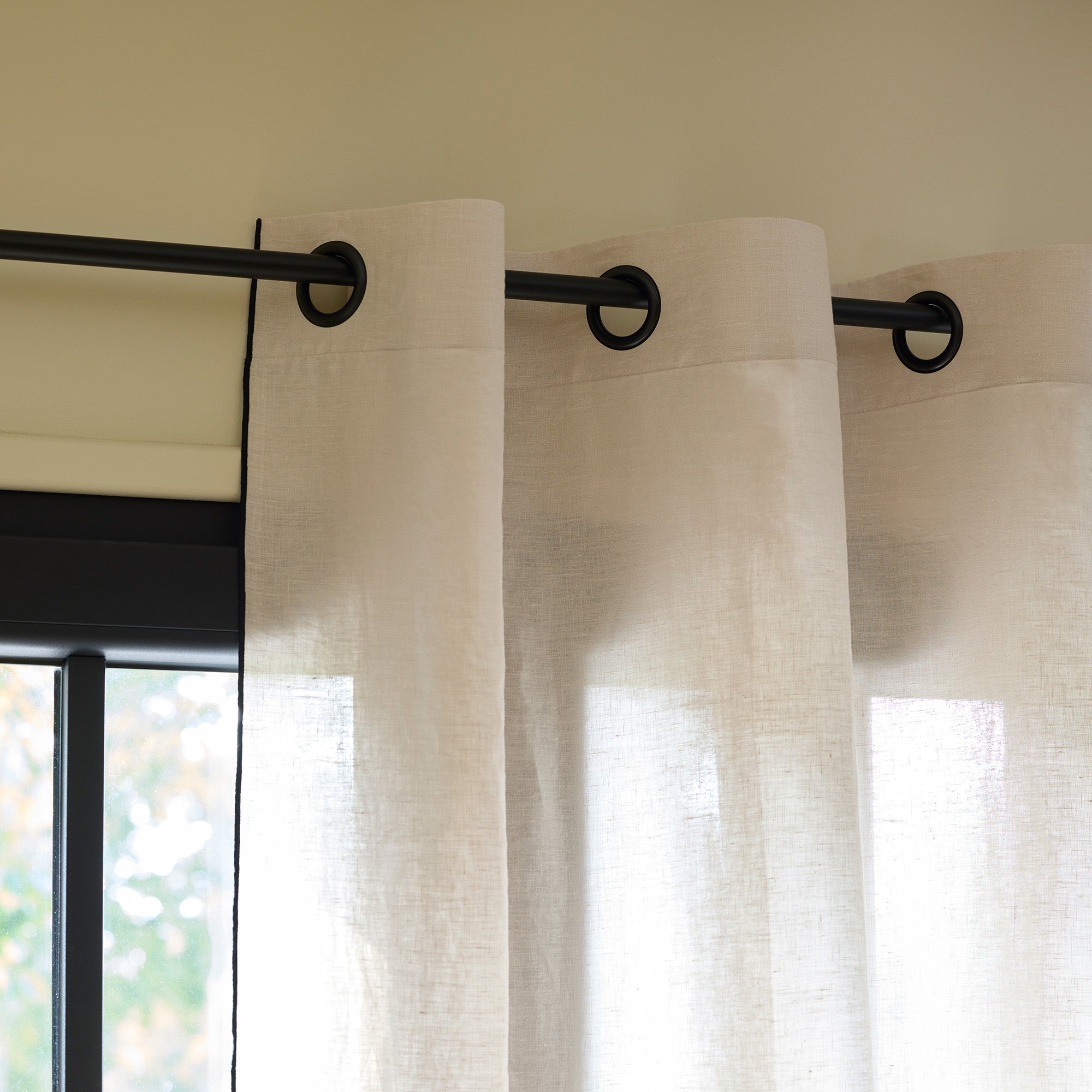
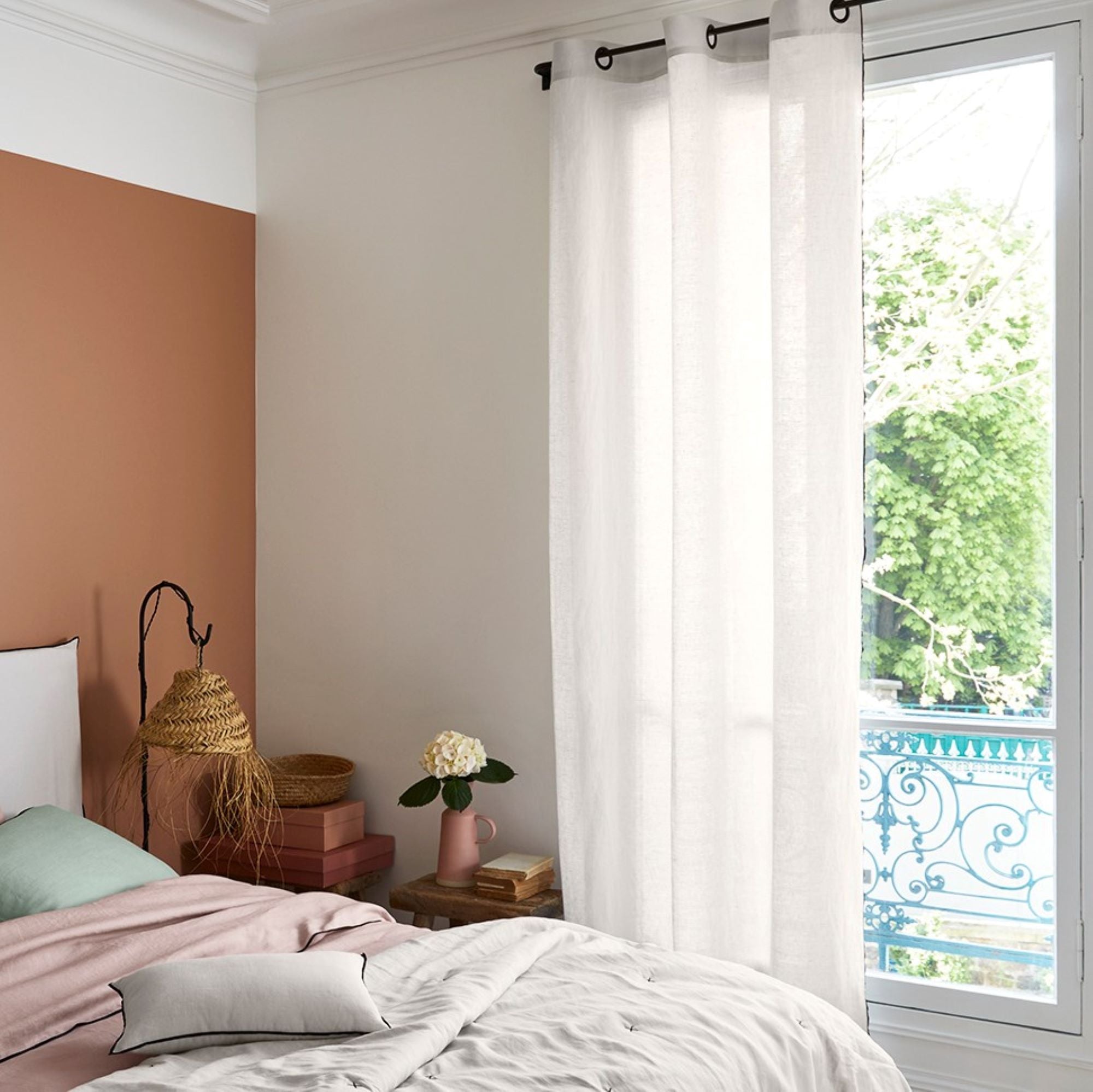
The size of the curtain influences the insulation as much as the fabric. To maximize thermal efficiency, the curtain should be wider than the window, with 20 to 30 cm of overhang on each side and a length to the floor. A curtain that is too short or too narrow lets cold air through, reducing its effectiveness. The design guides also advise placing the rod close to the ceiling and using curved rods which press the curtain against the wall, limiting infiltration..
The direction of installation is also crucial: the lining must be oriented towards the window in order to create the thermal barrier. Madura reminds that the thermal curtain must extend over the sides and top of the window to optimize the insulating barrier and gradually stabilize the interior temperature.
The color of the curtain influences thermal performance: dark shades (black, brown) absorb a lot of heat in winter, while light colors reflect more summer heat. Neutral shades (gray, beige) offer an intermediate solution. Patterns and texture do not play a direct role in insulation but contribute to decorative integration.

Insulated curtains have several benefits:
Reduction of heat loss: the installation of insulating curtains reduces heat loss by 10 to 25% according to the study cited by Home Minutes and limit heating needs.
Energy savings: thanks to the reduction of losses, they contribute to a lower heating bill and a lower environmental impact.
Comfort all year round: thermal curtains also act as sun protection. In summer, they block solar rays and reduce overheating of rooms.
Sound insulation: some curtains, particularly those with fleece or aluminum lining, reduce noise pollution.
Aesthetics and customization: they are available in many styles, colors and materials, allowing you to combine performance and decoration.
Despite these advantages, some points are worth anticipating:
Cost and Maintenance: thermal curtains can be more expensive and more difficult to maintain than a traditional curtain. Gentle cleaning and air drying are often necessary to avoid damaging the lining.
Variable effectiveness: on small or poorly fitted windows, effectiveness may be limited. It is recommended to combine the curtain with other insulation solutions.
Reduction of natural light: a very thick or blackout curtain reduces interior light. It should be opened during the day to take advantage of the free solar input.

Select a heavy fabric and high-performance lining: choose a curtain with a weight greater than 300 g/m² and a lining made up of several layers to retain heat.
Measure correctly: plan a width greater than the window and a length that touches the ground in order to create a real insulating barrier.
Install the rod correctly: attach the rod as close as possible to the ceiling and use curved brackets that hold the curtain against the wall. Place the lining on the window side.
Close the curtains at night and open during the day: draw the curtains and close the shutters in the evening to keep cold air out, then open them in the morning to enjoy the warmth of the sun.
Avoid covering radiators: do not drop the curtain in front of a radiator as this reduces its effectiveness and hinders heat diffusion.
Combine with other solutions: use draft excluders, insulating window films or roller shutters to reinforce insulation. ADEME also recommends checking the tightness of the joints and insulating the rolling shutter boxes..
Maintain regularly: follow the washing instructions indicated (generally delicate wash at 30°C and air dry) and dust the liner to preserve its performance.
Curtains too short or too narrow: they allow air to pass above and below the window, making insulation ineffective.
Forgetting to close the curtains or shutters: protection is only effective when the curtain is closed, particularly at night; don’t forget to draw the curtains and close the shutters.
Block heat circulation: do not pass the curtain in front of a radiator or convector.
Underestimating the importance of metrics: an incorrectly sized curtain will be less efficient and risks creating thermal bridges.
Expect miracles: a thermal curtain improves comfort but does not replace the insulation of windows or walls. Additional insulation work may be necessary.
• Thermal curtain
Season of effectiveness: winter and summer.
Advantages: reduces cold in winter and heat in summer, limits heat loss and can be installed without work.
• Anti-heat blind
Effective season: summer only.
Advantages: reduces the greenhouse effect and glare, provides immediate thermal comfort.
• Solar film
Effective season: summer only.
Advantages: very economical solution, reduces UV and heat, quick installation.
• Rolling shutter
Effective season: all year round.
Advantages: excellent insulation against cold and heat, protects against noise and increases safety; very efficient in addition to a thermal curtain.
Madura is a French decoration company founded in 1971. It created an original concept of ready-to-hang curtains which revolutionized window dressing. With more than fifty years of expertise, the brand offers varied collections of curtains, sheers and accessories, available in its stores and online.
The “Coconut” curtain illustrates Madura’s expertise in insulation. This model has a high-end thermal lining which creates an insulated and comfortable interior atmosphere in all seasons. The liner consists of three layers—95 g/m² backing fabric, 90 g/m² wadding, and 150 g/m² face fabric—ultrasonically welded to form an air-tight fabric. The curtain has a total weight of 540gsm for the panel and 335gsm for the lining, ensuring a heavy drape that effectively blocks cold and heat.
The main fabric of the Coconut model is made of Oeko-Tex Standard 100 certified polyester, guaranteeing the absence of harmful substances. The lining is designed to be airtight thanks to ultrasonic welding, which reinforces the insulation without excessively weighing down the curtain. Madura also offers 100% blackout options and custom versions to fit every window.
Madura recommends extending the thermal curtain onto the sides and top of the window in order to optimize the insulating barrier and obtain a more stable interior temperature. Each panel comes with an iron-on patch allowing you to adjust the height without sewing. For customers who prefer to delegate this step, the brand provides a retouching service via partner artisans.. These details demonstrate Madura’s attention to the practical and aesthetic needs of users.

Yes. Studies cited by Home Minutes show that a properly installed thermal curtain can reduce heat loss by up to 25%.. Thick curtains with insulated lining trap air and reflect heat back inside. However, they must be combined with other insulation measures (shutters, draft excluders) to obtain optimal results..
A thermal curtain aims first to improve insulation by blocking air currents and returning heat. A blackout curtain is designed to block outside light with an opaque lining; it also offers thermal insulation because its fabric is thick and dense. Some products, like Madura curtains, combine both functions and come in a 100% blackout version.
Heavy materials work best: velvet, wool, jacquard or thick polyester. Comparisons recommend a weight greater than 300 g/m². Adding a fleece, polystyrene or aluminum lining further increases insulation. Natural materials (linen, thick cotton) are also suitable for ecological insulation.
Yes. The roller shutter provides excellent insulation all year round, protects against noise and increases security. In combination with a thermal curtain, it creates a double barrier against cold and heat. Close the shutter and draw the curtain at night, then open them during the day to enjoy the sunlight.
Thermal curtains require delicate maintenance. Wash them separately at 30°C on a gentle program and avoid tumble drying. Gentle ironing on the reverse side is possible, but dry cleaning is generally not recommended. Dust the liner regularly to maintain its performance.
Our last articles
Conseils déco
Cleaning a fabric sofa involves three steps: regular vacuuming (once a week), targeted stain removal with Marseille soap or baking...

Conseils déco
A 2-seater sofa measures between 140 and 180 cm wide and is suitable for small spaces (studios, small living rooms,...