




Conseils et astuces •8 min
How to properly measure for curtains?
Correctly measuring your curtains is the first step to achieving a neat and harmonious result. This guide explains how to...

Madura customer service
Available on WhatsApp, by chat or by phone at 01 42 34 99 59

All the tips and tricks from our team, just like in store, delivered straight to you.
All articlesMost searched articles
Conseils déco
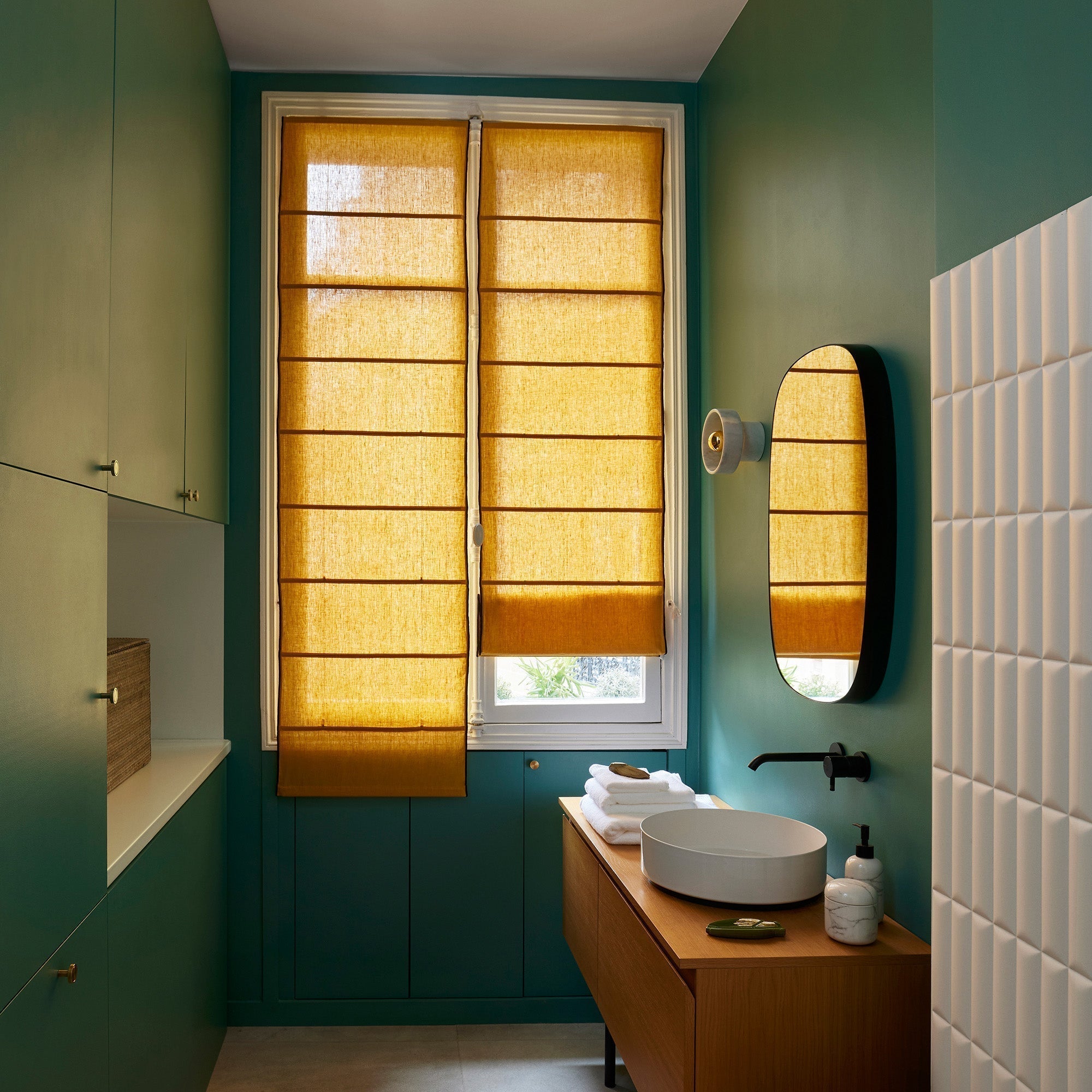
Choosing an interior blind can seem complicated as the offer is so vast. Each model – Venetian, roller, pleated, boat, Californian or Japanese panel – meets different needs. Venetian blinds offer precise light control, rollers stand out for their discretion, pleats provide effective insulation, while boats add an elegant textile touch. Californian blinds and Japanese panels are suitable for large bay windows or to create sliding partitions. This comparison guide will help you choose the right blind for your window and your lifestyle.

Interior blinds provide privacy, protect from the sun and are a useful replacement for curtains in contemporary interiors. They are modular and come in multiple models, materials and dimensions. Unlike a curtain, a blind can be fixed in a window recess, on the wall or on the ceiling and is easily manipulated using a cord, a chain or a motor. Before choosing, identify:
The size and shape of the opening : small window, bay window, skylight, tilt-and-turn window or atypical shape.
The desired level of brightness : dimming to keep the light in, blackout to make it dark, or a day/night mix.
Thermal and sound insulation : certain technical fabrics or cellular structures improve energy efficiency.
Decorative style : natural with wood, modern with aluminum, minimalist with sliding panels.
The desired interview : washable fabric blinds, easy-to-dust slats, etc.

The Venetian blind consists of thin horizontal slats connected by wires. By directing the slats, we adjust the light while preserving privacy and the view of the outside. The Venetians are available in wood, aluminum or PVC:
Wood : brings warmth and elegance. Ideal for living rooms and natural decorations. High-end versions can be expensive and require regular maintenance.
Aluminum : light, modern and easy to maintain. Suitable for bathrooms or kitchens because the slats are moisture resistant.
PVC : affordable and durable, suitable for damp rooms and available in many colors.
Venetian blinds come in standard widths of 40 cm to 180 cm and heights of 180 cm or 240 cm. They are easy to handle thanks to a rod or cord and can be motorized for large bays. Advantages: precise brightness control and privacy, varied price range, simple cleaning with a cloth or duster. Disadvantages: dust that accumulates on the blades, risk of cords for children and fragility of lightweight blades.
The roller blind is made up of a piece of fabric which wraps around a tube. A chain or a motor allows the apron to be raised or lowered. Its minimalist design fits into all interior styles. Depending on the thickness and composition of the fabric, a roller can be sieving or occulting. The “day/night” models alternate transparent and opaque bands to play with light.
Advantages:
Discretion : the tube is forgotten and leaves the window clear when the blind is raised.
Large selection of fabrics : light sails, technical anti-heat fabrics, micro-perforated screen fabrics to see without being seen, and blackout fabrics for bedrooms.
Easy installation : fixing to the wall, ceiling or without drilling in the window bead.
Affordable price : the roller blind is generally more affordable than pleated or roman blinds.
Disadvantages: less insulating than a pleated blind in terms of thermal and sound; some models may lack texture in a warm interior. Large formats require a reinforced tube or a protective box.
The pleated blind can be recognized by its accordion-folded fabric. When getting up, the folds tighten; on the way down, they unfold like an accordion. Some models have a honeycomb structure, made up of two layers of fabric forming cells that trap air. This architecture offers remarkable thermal and sound insulation: it retains heat in winter and coolness in summer. These blinds also exist in a version double meaning allowing an opening upwards and/or downwards to adjust the light and preserve privacy.
Other benefits:
Textured aesthetic : their pleated texture brings an original decorative touch.
Installation flexibility : suitable for inclined, tilt-and-turn windows and atypical shapes.
Light control : available in screening, blackout or double fabric.
Space saving : small footprint when folded, ideal for small windows.
Energy performance : cell versions reduce energy consumption by regulating temperature and can reduce heat loss by up to 60% in winter and solar absorption by 78% in summer.
Pleated blinds are available in many colors and technical fabrics, some with a pearly or aluminized face to reflect heat. They are washable for certain models and also provide acoustic comfort by absorbing sound reverberation thanks to the cells. Disadvantages include more delicate maintenance (do not crush pleats) and less adaptability to very large openings.

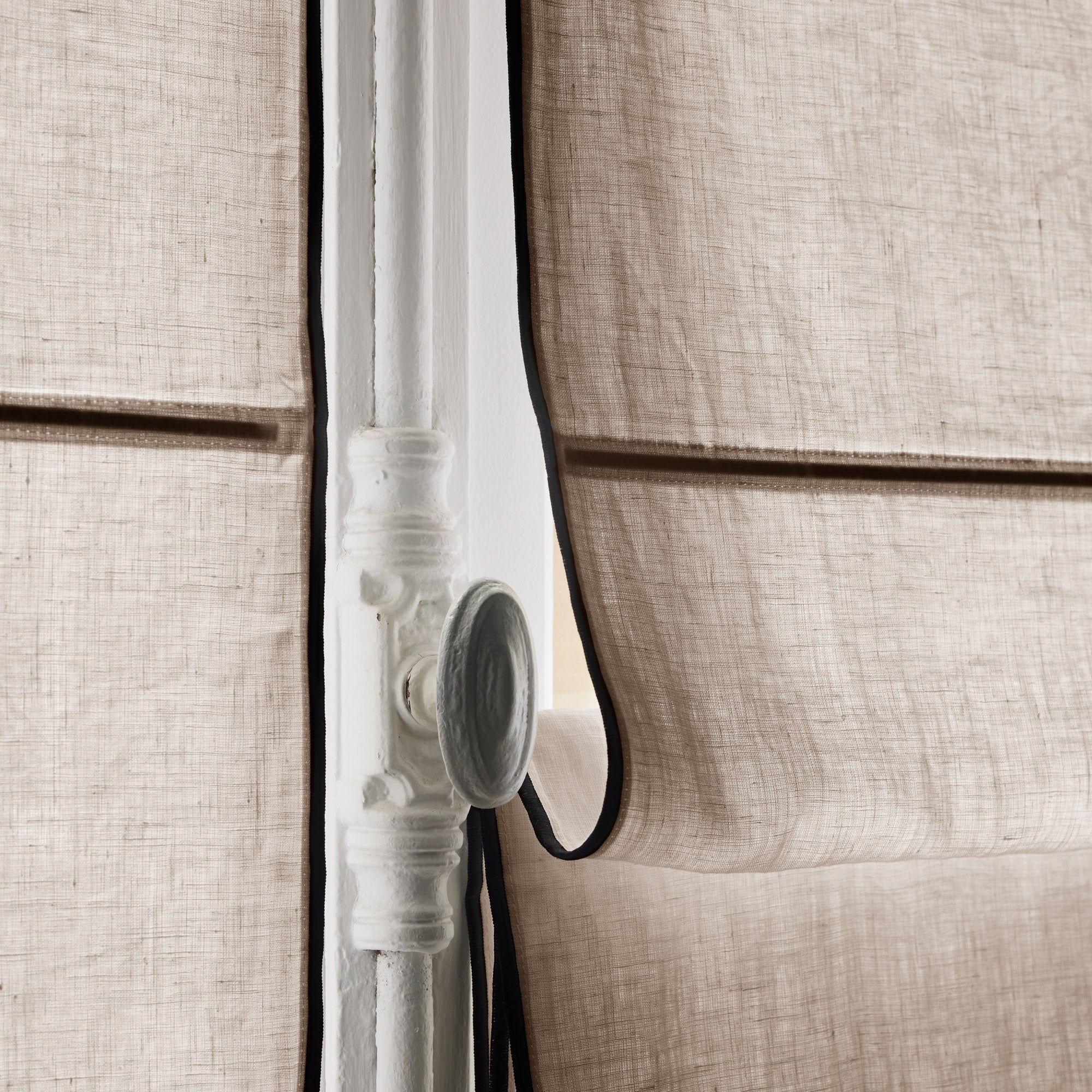
Also called "American blind", the Roman blind is made up of several sections of fabric separated by horizontal ribs. When rising, the segments fold horizontally to form regular folds. Like a curtain, this type of blind brings warmth and elegance to the decoration. Its main advantages:
Sleek design : it combines modernity and romance, brings a touch of sophistication to the window and adapts to any style of decoration.
Ease of use : a cord or chain lifting mechanism allows the height to be adjusted to modulate light and privacy.
Variety of fabrics : wide choice of materials and patterns (linen, cotton, polyester, sheer, screening, blackout).
Easy maintenance : the fabric is usually attached with Velcro and is easily removed for washing.
Light modulation and insulation : by choosing a filtering fabric, we filter the light while avoiding glare; a blackout fabric completely blocks the light to create a cocoon. Some thick fabrics also improve thermal insulation.
Disadvantages: less robust than roller or Venetian blinds; its mechanism is not recommended in a kitchen because of grease and humidity.
The California blind is made up of vertical strips suspended from a rail. Revealed in the 1980s, it is now making a comeback thanks to contemporary houses with large glazing. Its characteristics:
Suitable for large openings : suitable for windows up to 4 m high and 6 m wide. Custom versions can cover even larger areas: some models reach 6 m in width and 6 m in height.
Easy handling : a cord allows you to move the strips to one side or each side of the bay, while a chain allows you to rotate the slats 180° to adjust the light. Motorization is recommended for very large windows.
Light modulation : by orienting the strips, you play on brightness and intimacy. The fabrics available vary from micro-perforated (screen) which allows you to see outwards while avoiding glare, to filtering or blackout versions.
Contemporary aesthetic : vertical lines visually lengthen the room and structure the spaces. The Californian is also suitable for atypical or inclined windows and can be used as a movable partition.
The Californian blind is appreciated for its ability to cover large bay windows, its ease of use and the possibility of preserving privacy while maintaining good light. It can be combined with a roller blind to play on verticals and horizontals in the same room.
Inspired by Japanese architecture, the Japanese panel is made up of two to five panels of fabric or stretched paper sliding on a rail. Unlike vertical strips, each panel is wide and plain. This system is suitable both for covering a bay window and for demarcating a space in a room.
Advantages:
Versatile use : can be used as a blind to filter the light by superimposing the panels, or as a sliding partition to separate a living room and a dining room.
Flexible installation : wall or ceiling mounting, with possibility of installation without drilling thanks to fixing brackets.
Suitable for large bays : ideal for large windows or sliding doors; sliding sideways completely releases the opening.
Personalization : wide choice of colors and patterns. The panels can alternate two colors for a graphic effect. More or less blackout fabrics allow you to modulate the light intensity.
Zen style : Japanese inspiration gives a clean and modern design, particularly suited to minimalist interiors.
Compared to Californian and Venetian blinds, Japanese walls do not adapt as easily to original window shapes, but they remain an excellent option for partitioning a space in an aesthetic way.
Day/night blinds : combination of overlapping transparent and opaque strips, providing fine light adjustment and a contemporary aesthetic. They are suitable for living rooms when you want to go from a bright atmosphere to a more intimate atmosphere without raising the blinds.
Roof window blinds : for skylights and inclined windows, we will opt for tension pleats or blackout blinds, often with side rails to avoid movement. Blackout or anti-heat versions exist to improve thermal comfort.
Blinds without drilling : certain models of winders, Venetian or Californian, are fixed directly to the glazing bead or with clips, avoiding drilling the windows. They are convenient for tenants.

Take the width of the window and add at least 5 cm on each side to guarantee good blackout with a roller or Venetian. For Californian blinds and Japanese panels, provide a rail wider than the opening so that the strips or panels can be stored on either side and provide a clear view. Measure the height from floor to ceiling if you are attaching a French blind (to the wall), or from the top of the window to the bottom of the recess for surface-mounted installation.
Sieving (filtering) : lets light through while reducing glare, ideal for living rooms or offices.
Blackout : blocks light, suitable for bedrooms, screening rooms or south-facing rooms.
Screen or micro-perforated : micro-ventilated technical fabric that allows you to see the outside, blocks UV rays and reduces heat.
Honeycomb tissue : reinforced insulation for energy savings.
Small windows : rollers, Venetian or pleated are suitable, because they take up little space.
Bay windows and patio doors : Californian blinds or Japanese panels allow you to cover large widths and completely clear the opening.
Inclined windows (velux) : choose tension pleated blinds or blackout blinds with rails.
The choice of colors and textures is essential. Blinds in wood and natural fabrics warm up a room, while aluminum and technical fabrics suit contemporary styles. Vertical stripes add height to rooms with low ceilings, while Japanese panels add a Zen touch. Don’t hesitate to combine several types: a Californian blind on the bay and a roller on the windows to punctuate the space.
For large openings, choose motorization for effortless maneuvering. Home automation options allow you to program opening and closing according to the time or temperature, contributing to energy savings. Also check that the cords are secure for children (safety systems or continuous chains).

Measure incorrectly : a blind that is too narrow will let light pass through to the sides. Always take several measurements and allow for a margin.
Neglecting the orientation of the room : a south-facing room needs a heat-resistant fabric, while a north-facing room can do with a screening one.
Forget the interview : wooden Venetians require regular dusting, Roman blinds must be removed to be washed. Choose a model adapted to your pace.
Choosing an unsuitable blind for the window : a Roman blind on a sliding window will obstruct the opening; a California blind on a small window will be disproportionate.
Omitting security : Be sure to securely attach blinds to the wall or ceiling and use child safety cords.

|
Blind type |
Light control |
Thermal/sound insulation |
Ideal windows |
Advantages |
Disadvantages |
|
Venetian |
Tilt of horizontal blades |
Low to medium |
Small to medium-sized, damp rooms (PVC/aluminum) |
Precise modulation of light, confidentiality, wide choice of materials |
Accumulates dust, cords to secure, fragile at entry level |
|
Winder |
Fabric rise/fall; day/night version |
Average depending on fabric |
All sizes (provide reinforced tube for large width) |
Discreet design, easy installation, affordable price |
Less insulating than pleated, not very textured |
|
Honeycomb pleat |
Opening from bottom to top and top to bottom |
Excellent thanks to the honeycomb structure |
Standard windows, inclined windows, special shapes |
Thermal/sound insulation, small footprint, flexible installation |
Delicate maintenance, not suitable for large bays |
|
Boat (American) |
Raising the fabric in folds |
Good with thick fabrics |
Standard windows, bedrooms |
Elegant aesthetic, many fabrics, easy to remove for washing |
Less robust, not recommended for cooking |
|
Californian (vertical stripes) |
Blade rotation 180° and lateral movement |
Average to good (depending on fabric) |
Large bay windows (up to 4 × 6 m) |
Suitable for large windows, easy handling, allows you to structure the space |
Imposing on small windows, cleaning of the strips necessary |
|
Japanese panel |
Overlay of sliding panels |
Varies depending on fabric |
Large bay windows or partitions |
Allows you to separate spaces, Zen design, numerous patterns and colors |
Less adaptable to original windows, requires space to slide |

Madura is a pioneering French brand in window coverings. Since 1971, it has offered ready-to-hang, a concept that has democratized access to quality curtains and blinds. The brand is distinguished by:
Textile expertise : more than 50 years of know-how in fabrics for curtains, nets and blinds. Madura collaborates with designers and artisans from around the world to offer natural materials (linen, cotton, wood) and innovative technical fabrics.
A tailor-made offer : in addition to standard products, Madura makes tailor-made blinds and curtains to adapt to each window, even atypical ones. The advisors help choose the system (Venetian, roller, boat, pleated or Californian) and the fabric according to your needs.
Quality and durability : Madura collections use durable materials and careful finishes to ensure a long life of the products. Technical fabrics (screen, blackout, thermal) comply with environmental standards and offer comfort and energy savings.
A timeless style : Madura favors elegant designs and sober or trendy colors that go through the seasons and fit easily into all interiors.
By choosing Madura, you benefit from personalized advice, a wide range of fabrics and systems, as well as French manufacturing that respects artisanal know-how.

Californian blinds are ideal for large bays (up to 6 m wide and 6 m high). Their vertical strip mechanism allows them to be folded on the sides and the slats to be pivoted to manage light and privacy. Japanese panels are a design alternative that slide sideways and can also be used as a partition.
A fabric sieving lets light through by filtering it: it reduces glare while maintaining a luminous atmosphere. A fabric occulting completely blocks light to create darkness, ideal for a bedroom. Some roller or Roman blinds are available in both versions, and pleated blinds are also available with blackout cellular lining.
Yes. Many models of winders and Venetians are fixed with supports clipped to the bead or joinery. Japanese panels can be installed with glued fixing brackets. This system is ideal for tenants or to avoid drilling a PVC window.
Tension pleated blinds accommodate tilted and tilted windows. Their mechanism holds the fabric against the window, preventing it from flapping in the wind. Specific blackout blinds for Velux windows also exist to guarantee darkness and insulation.
Maintenance is more delicate than with smooth blades: you must dust regularly and avoid crushing the folds. However, some pleated or honeycomb fabrics are washable, which is an advantage. Check the manufacturer's maintenance instructions and use a low-power vacuum cleaner or a soft cloth.
Absolutely. Blinds can be complemented with decorative sheers or curtains to create layers. For example, a screen roller blind combined with a linen curtain provides thermal comfort and a decorative touch. Californian blinds go well with long curtains to structure large bay windows.
Also discover our other articles:
- How do I choose sheers for my living room?
Sommaire
Our last articles
Conseils et astuces •8 min
Correctly measuring your curtains is the first step to achieving a neat and harmonious result. This guide explains how to...
Conseils et astuces •8 min
Proper care for each material — linen, cotton, percale — helps preserve the softness, colors, and durability of your home...