



Conseils et astuces •10 min
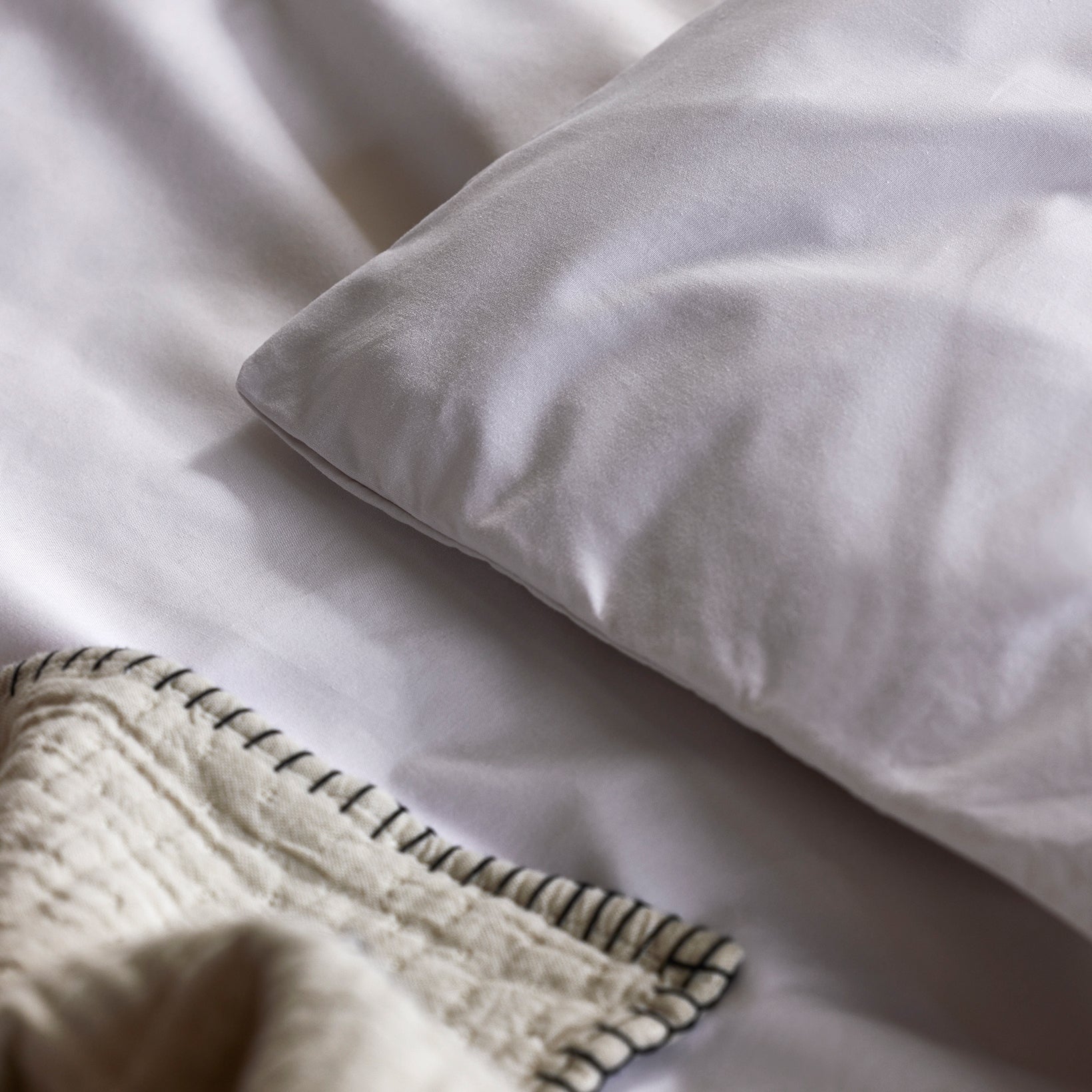
Washed linen or cotton percale: what are the real differences for bed linen?
Washed linen and percale cotton are the two reference materials for high-end bed linen, but they are aimed at different...

Madura customer service
Available on WhatsApp, by chat or by phone at 01 42 34 99 59

All the tips and tricks from our team, just like in store, delivered straight to you.
All articlesMost searched articles
Conseils et astuces
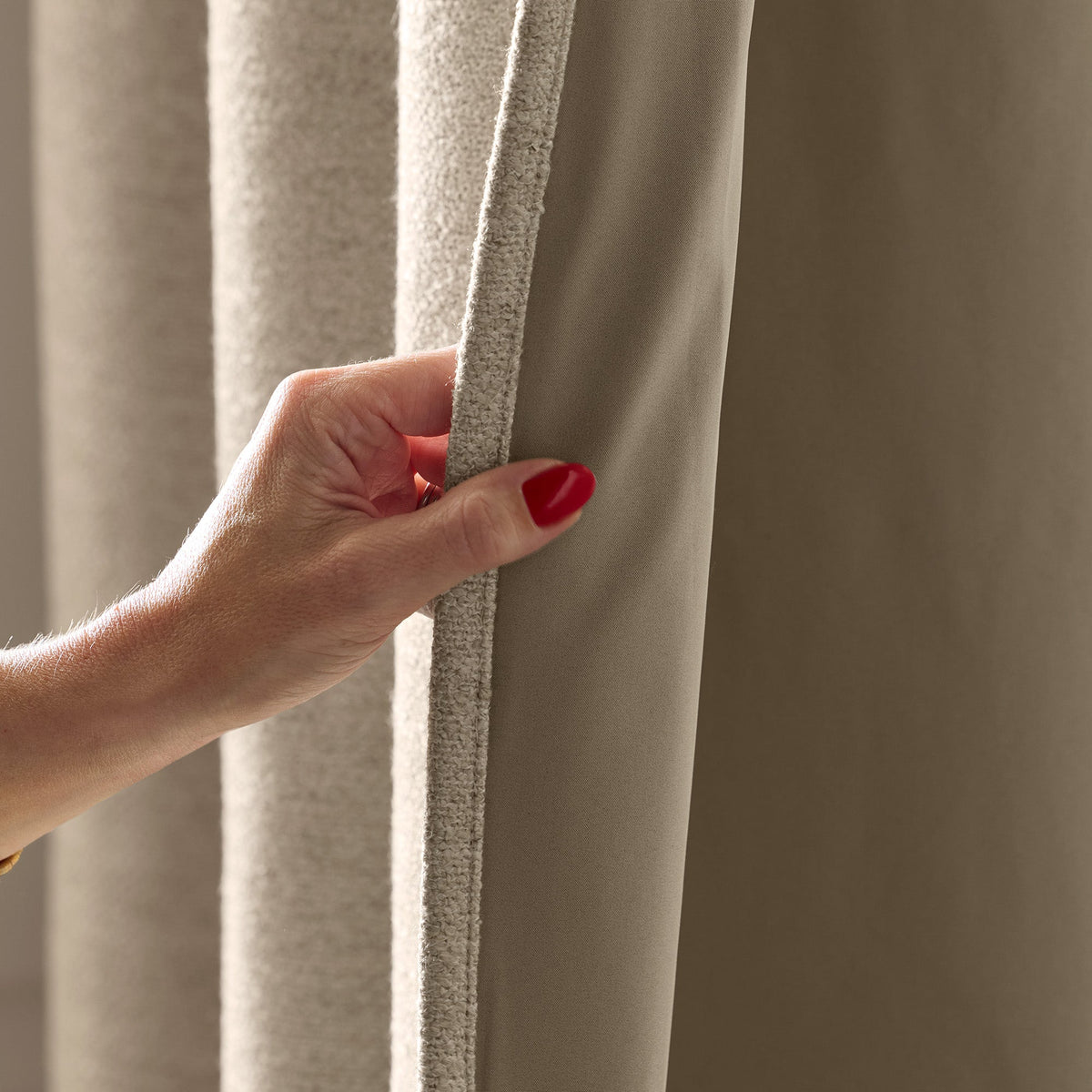
A blackout curtain is a curtain made of lined or tightly woven fabric that completely or almost completely blocks outside light. It differs from the classic curtain by its weft density and, often, by an integrated thermal lining. For a bedroom, it fulfills three essential roles: promoting sleep by creating deep darkness, reducing noise pollution from outside and limiting heat loss through windows. Choosing the right blackout curtain involves taking into account the fabric, dimensions, fixing system and color — each criterion directly influences the effectiveness of the result.
Darkness is not just a comfort: it is a biological signal. According to the National Institute of Sleep and Vigilance (INSV), the light perceived by the retina inhibits the secretion of melatonin, the hormone that triggers sleep. Even dim ambient light, such as the glare of a street lamp, can disrupt sleep cycles.
For children, shift workers or anyone sensitive to morning light, a blackout curtain is not a luxury but a functional answer. According to Inserm, the quality of sleep is directly linked to circadian regulation – and the light environment of the bedroom is part of it.
These three terms are often confused, but they designate distinct properties. A blackout curtain blocks light with a high weave density or a dark backing. A thermal curtain reduces heat exchange between the window and the room thanks to an insulating lining – generally polyester or interlining. A lined curtain combines a decorative face with a lining fabric sewn on the reverse, with no guaranteed thermal or blackout properties.
According to ADEME, windows and glass walls are responsible for a significant part of heat loss in a home. A blackout thermal curtain — combining both properties — therefore constitutes a relevant response for a room facing north or poorly insulated.
Measurement is the step most often botched — and the most determining for occulting effectiveness. A curtain that is too narrow lets light pass through to the sides, canceling the desired effect. The width of the finished fabric should be at least twice the width of the bead to ensure sufficient pleating and full coverage.
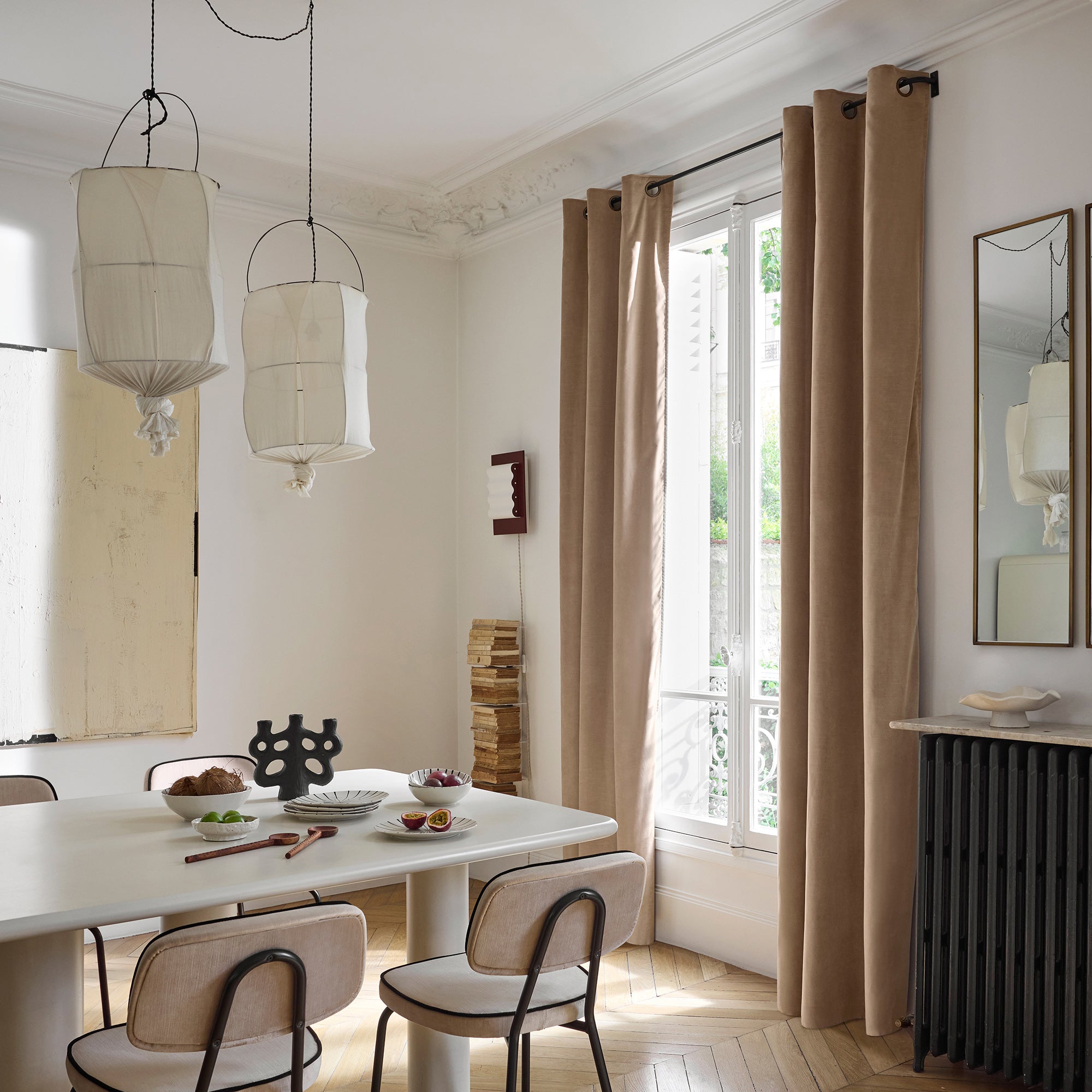
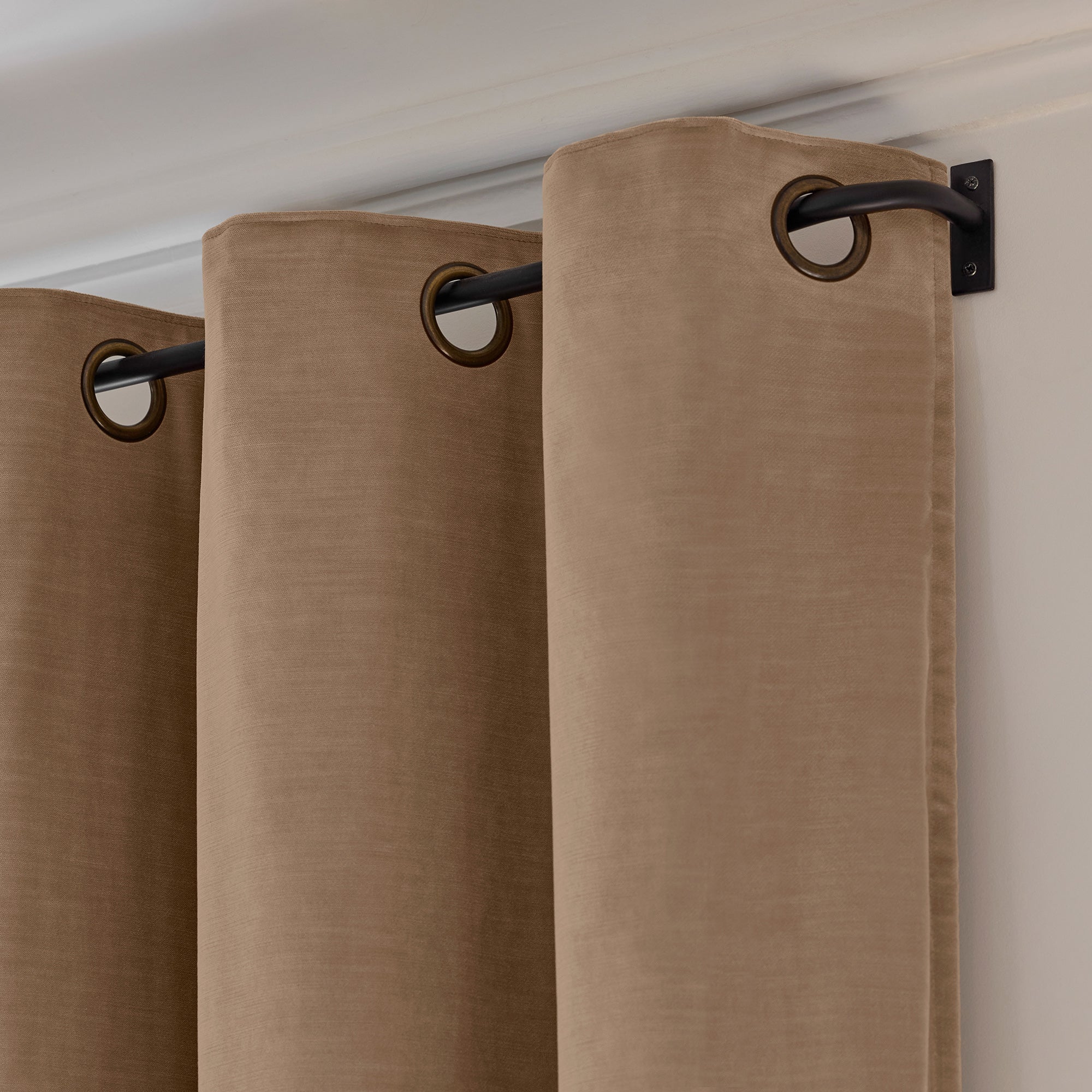
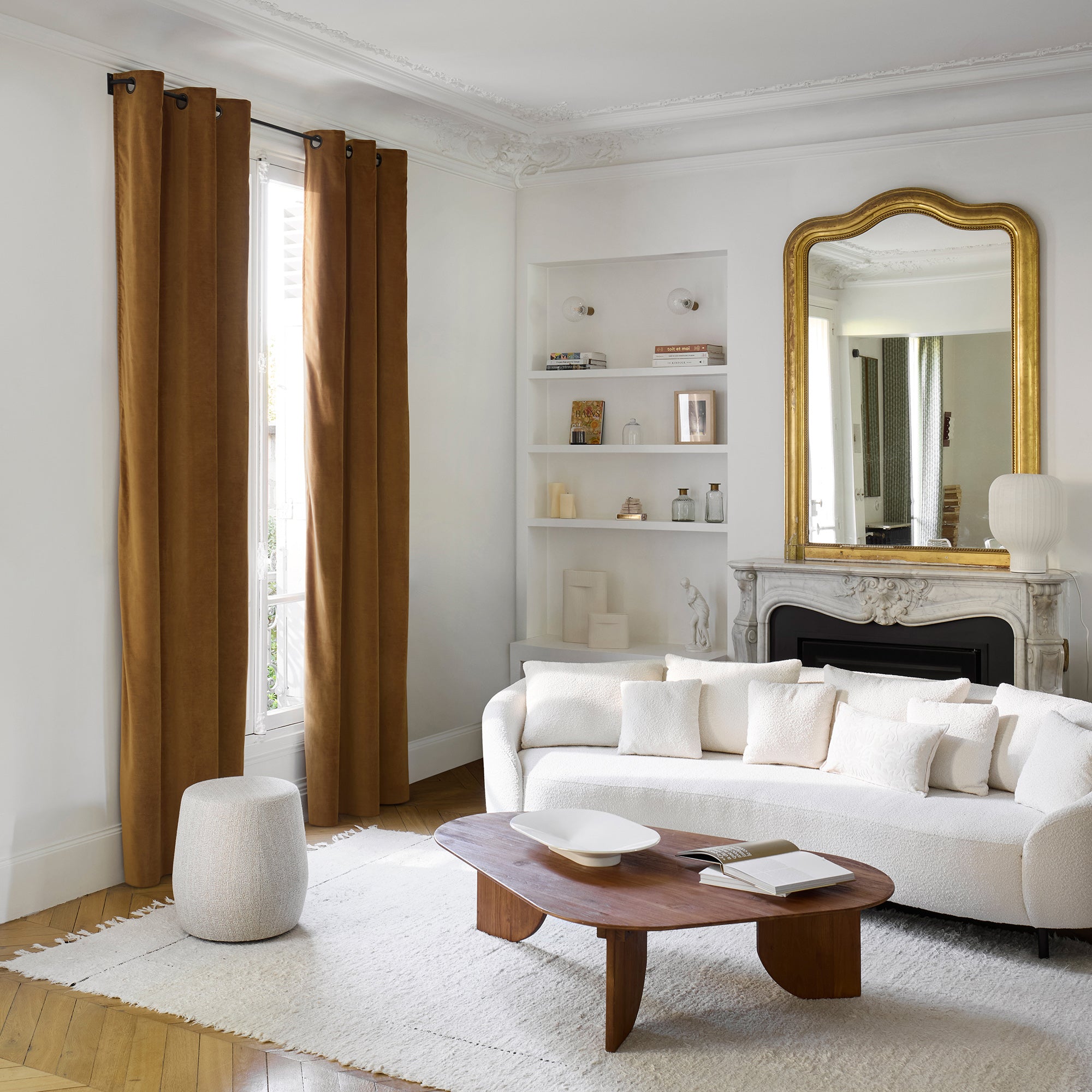
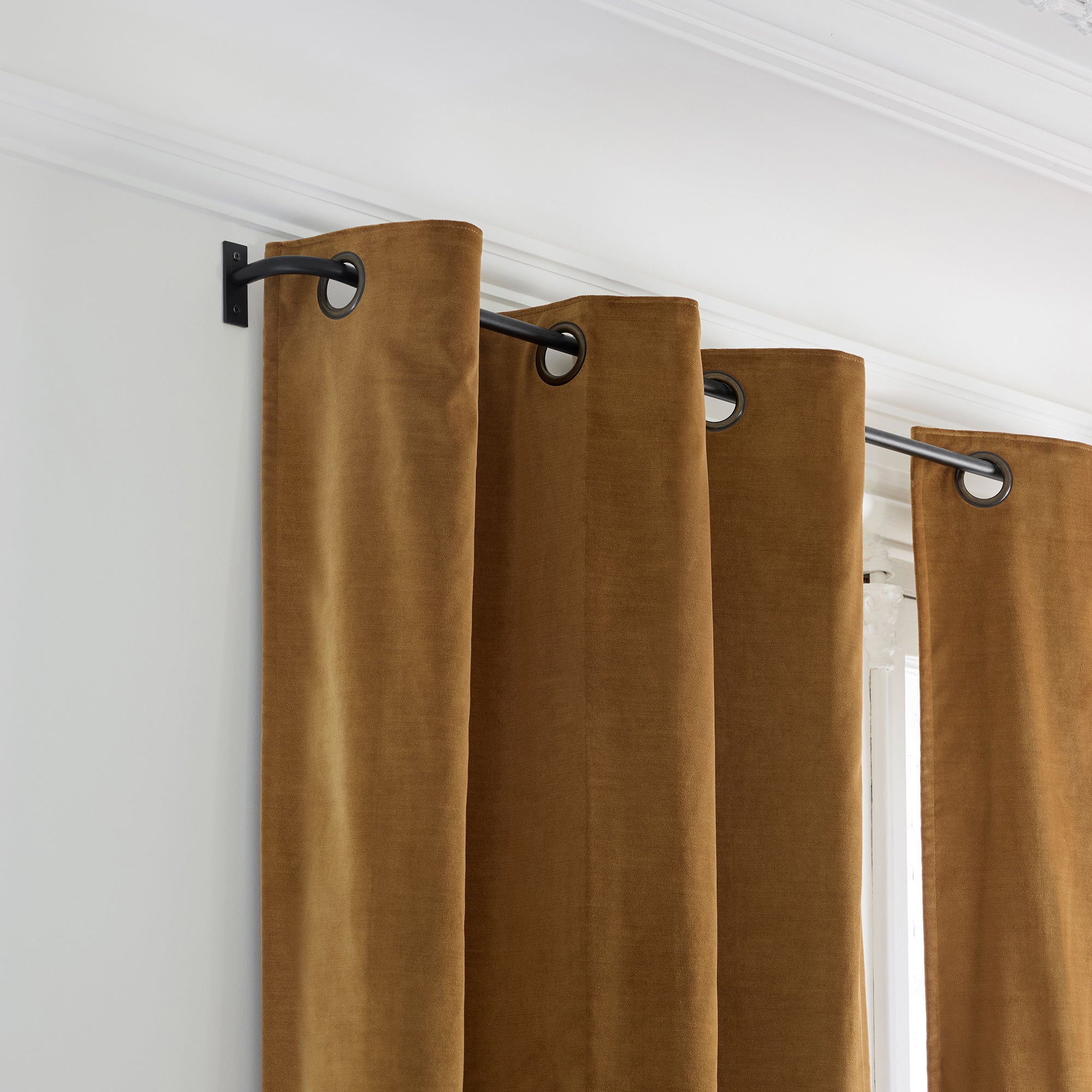
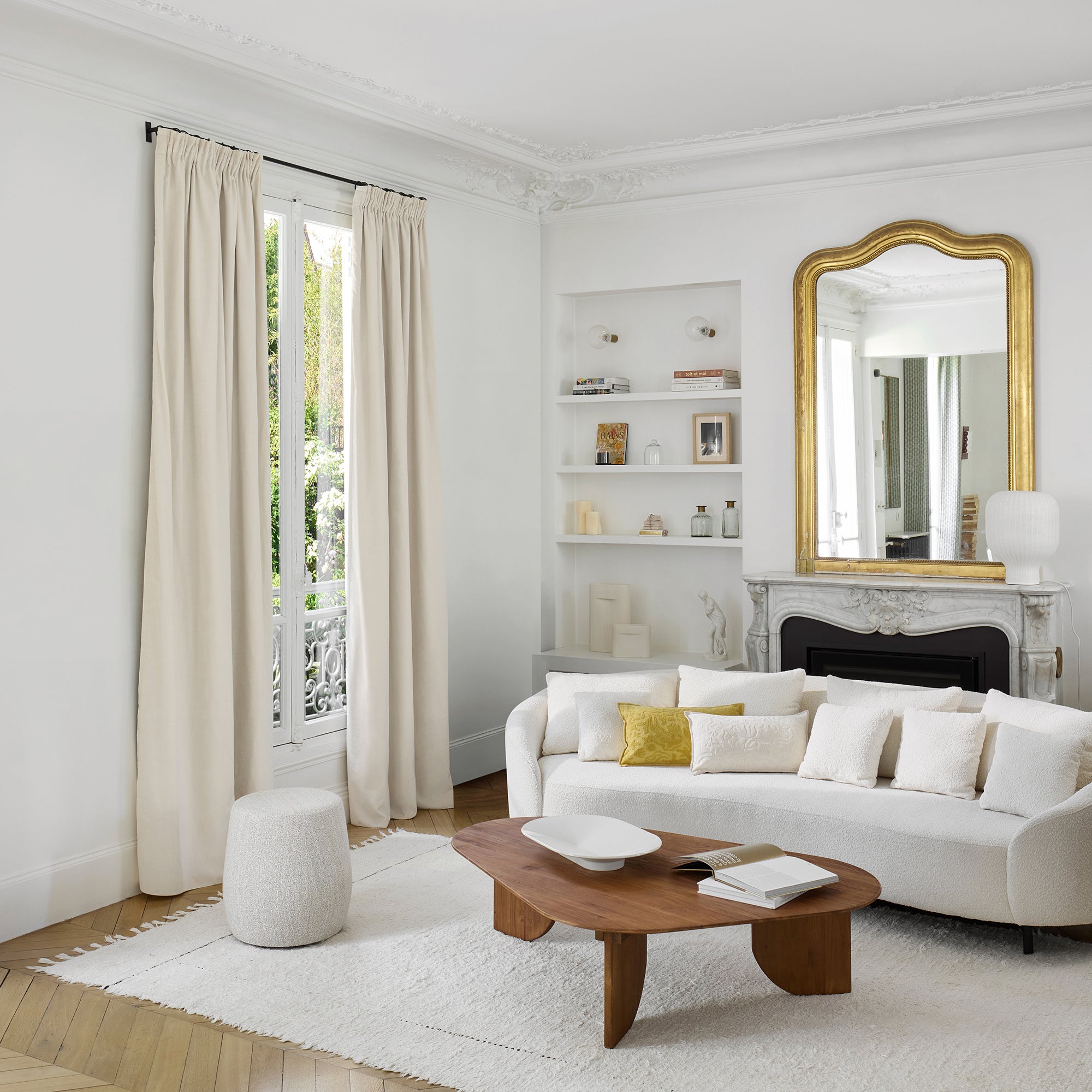
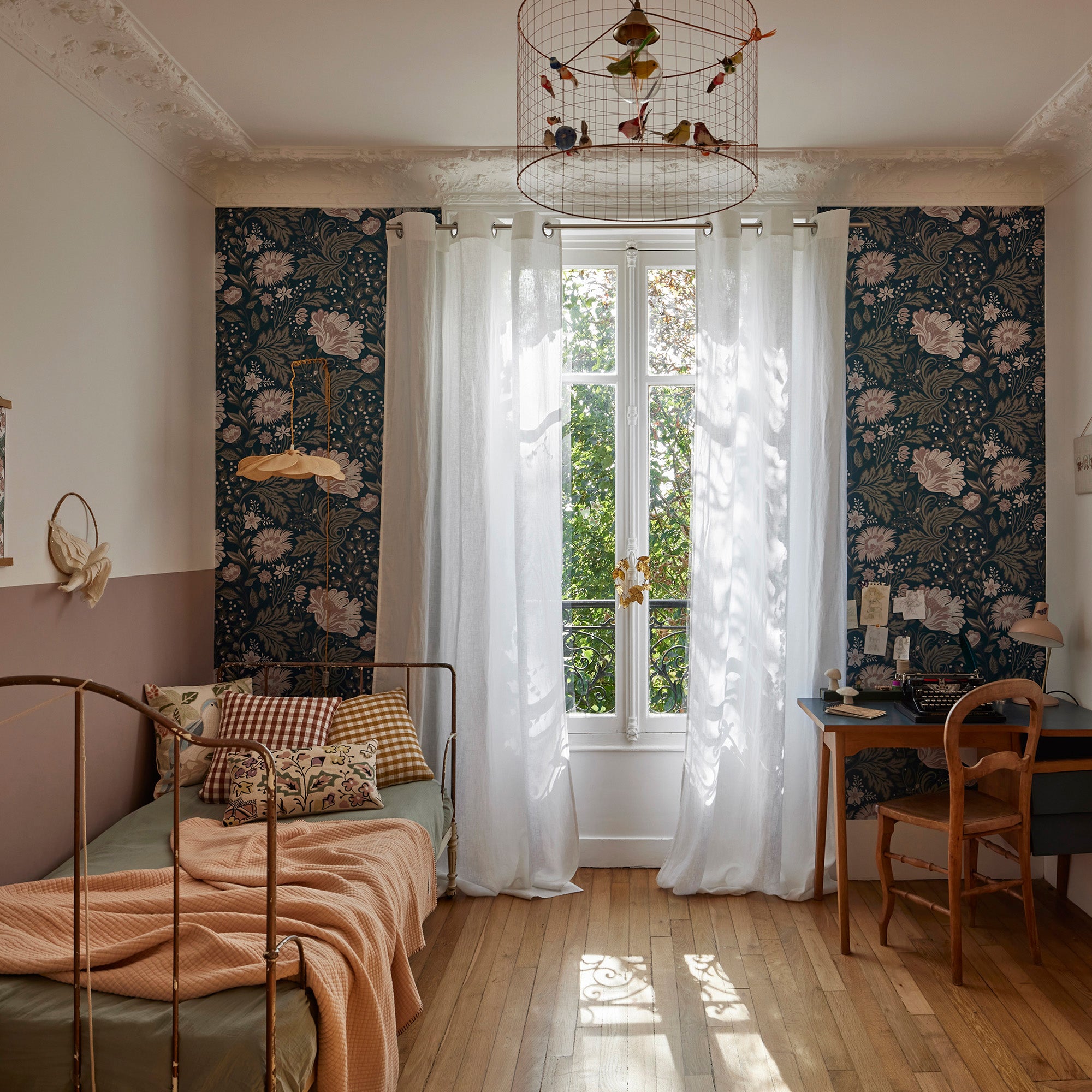
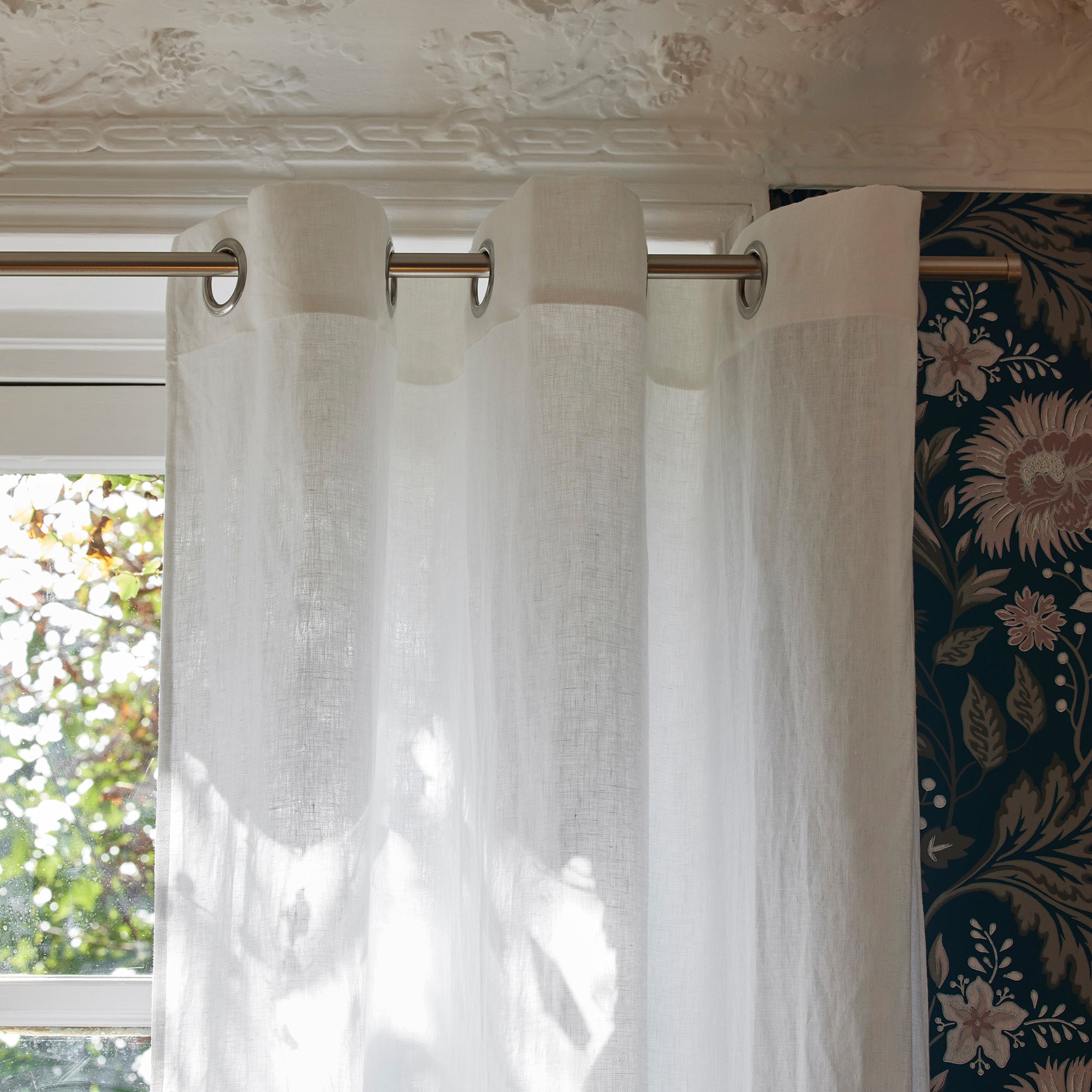
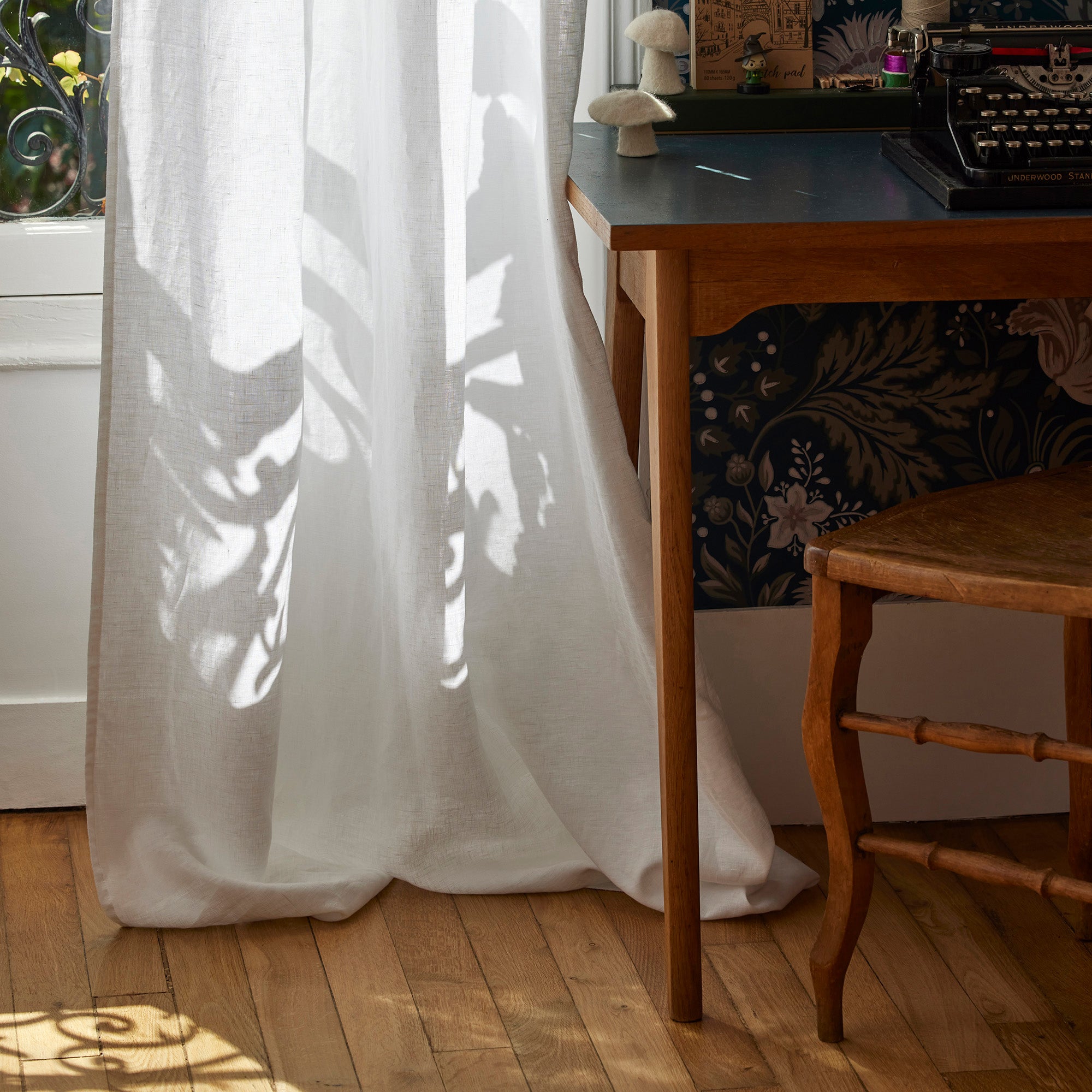
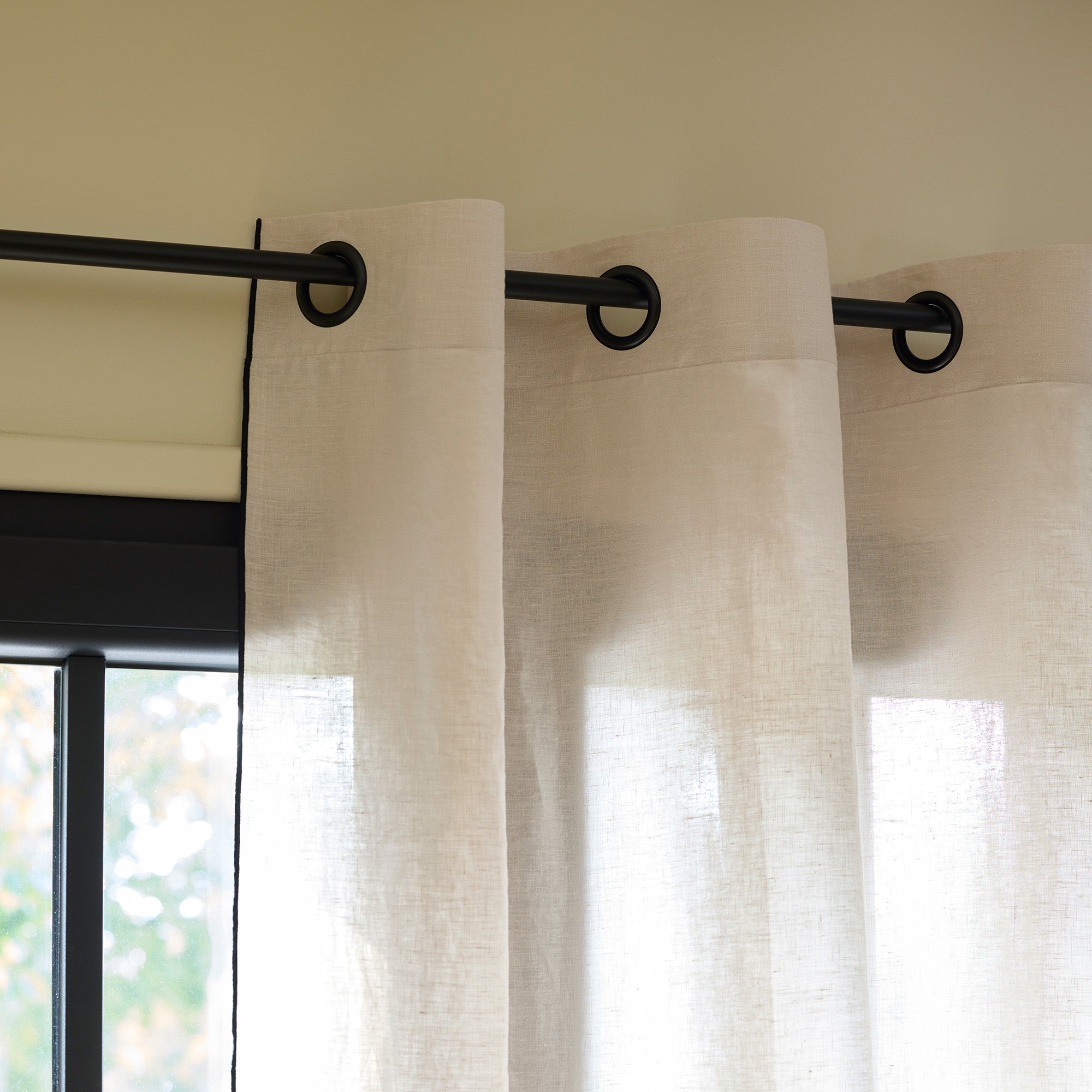
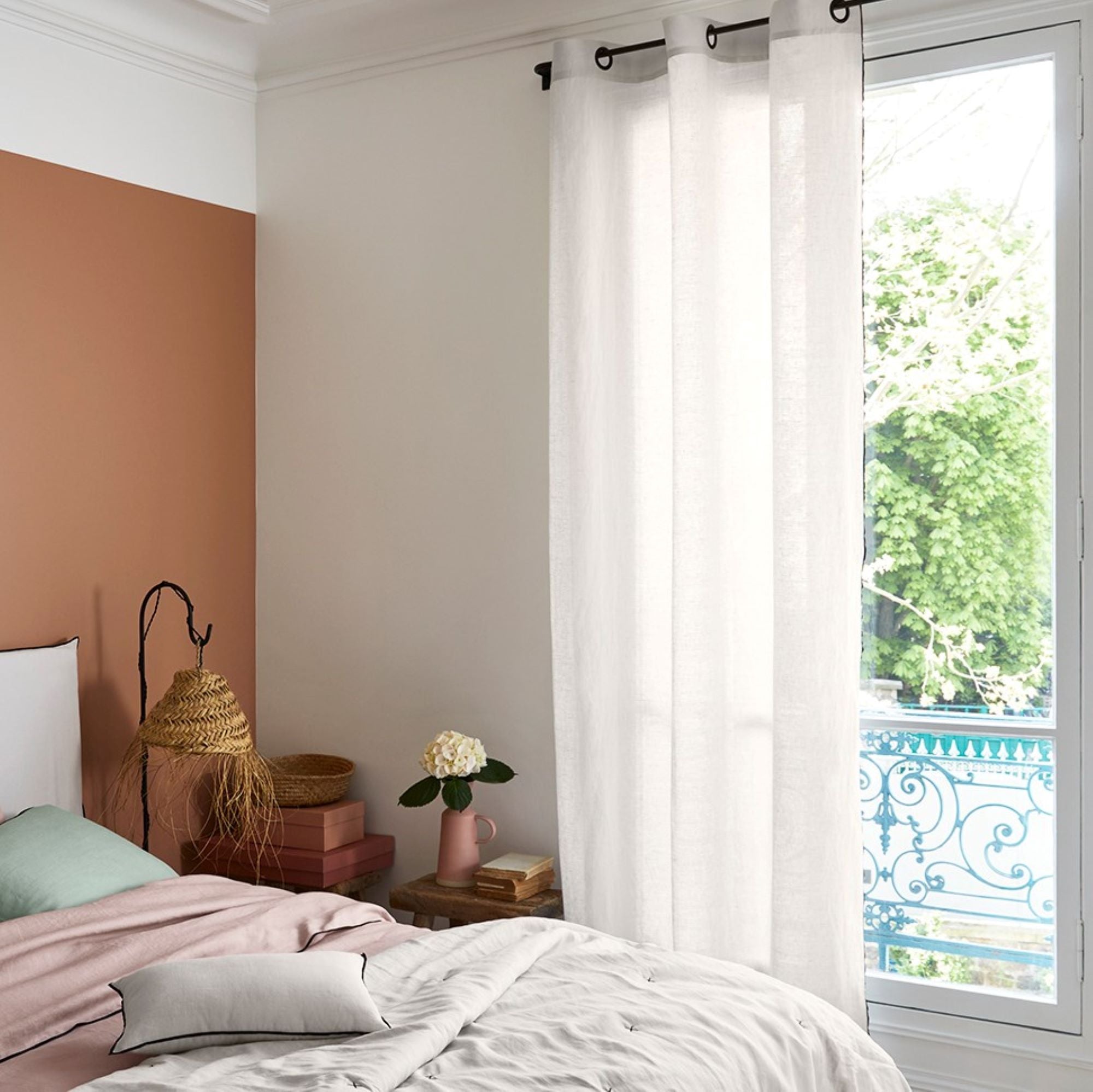
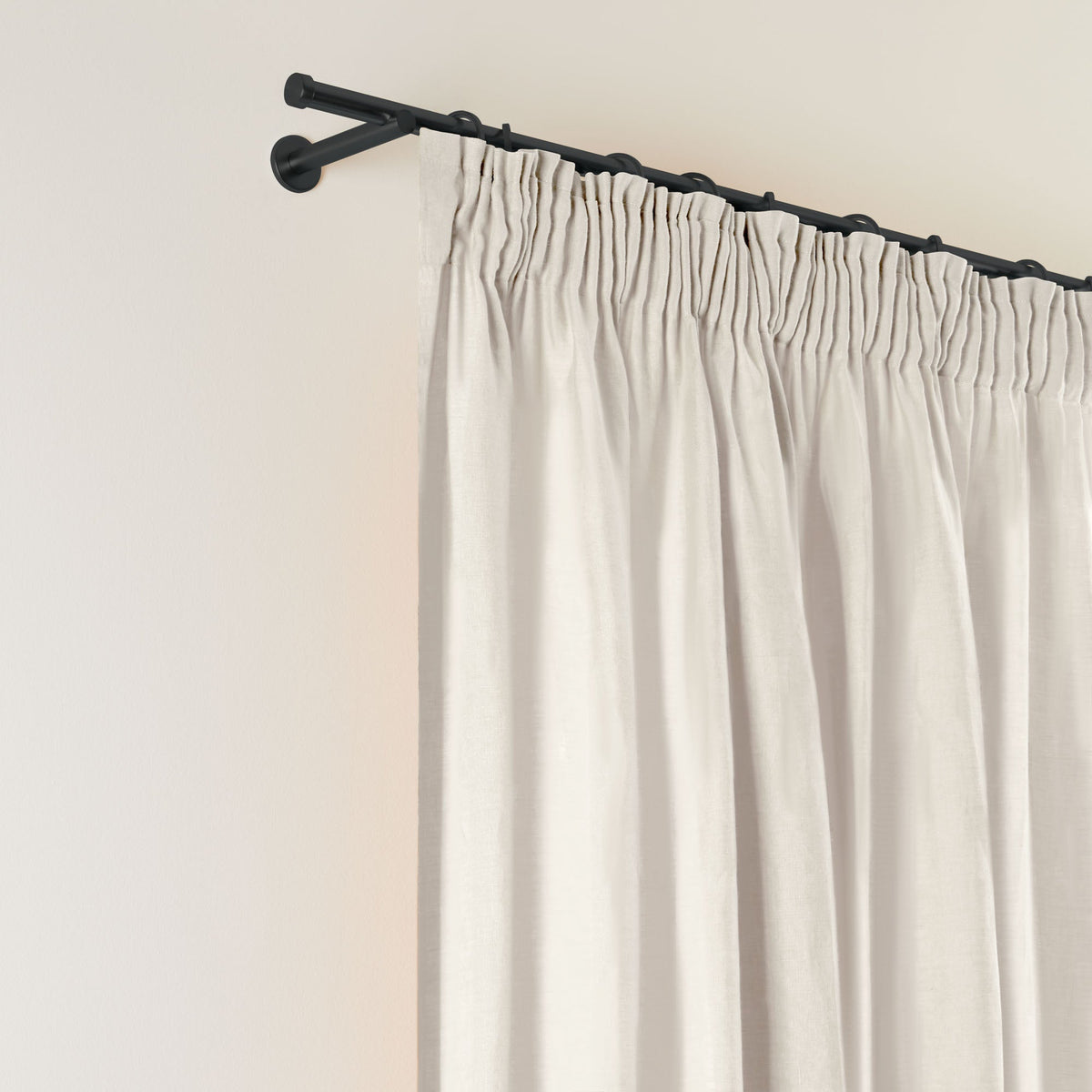
For the height, the curtain should ideally fall to the floor or 1 to 2 cm from the floor. Installation at height, by fixing the rod 15-20 cm above the window frame, visually enlarges the room and reduces light leaks at the top of the panel.
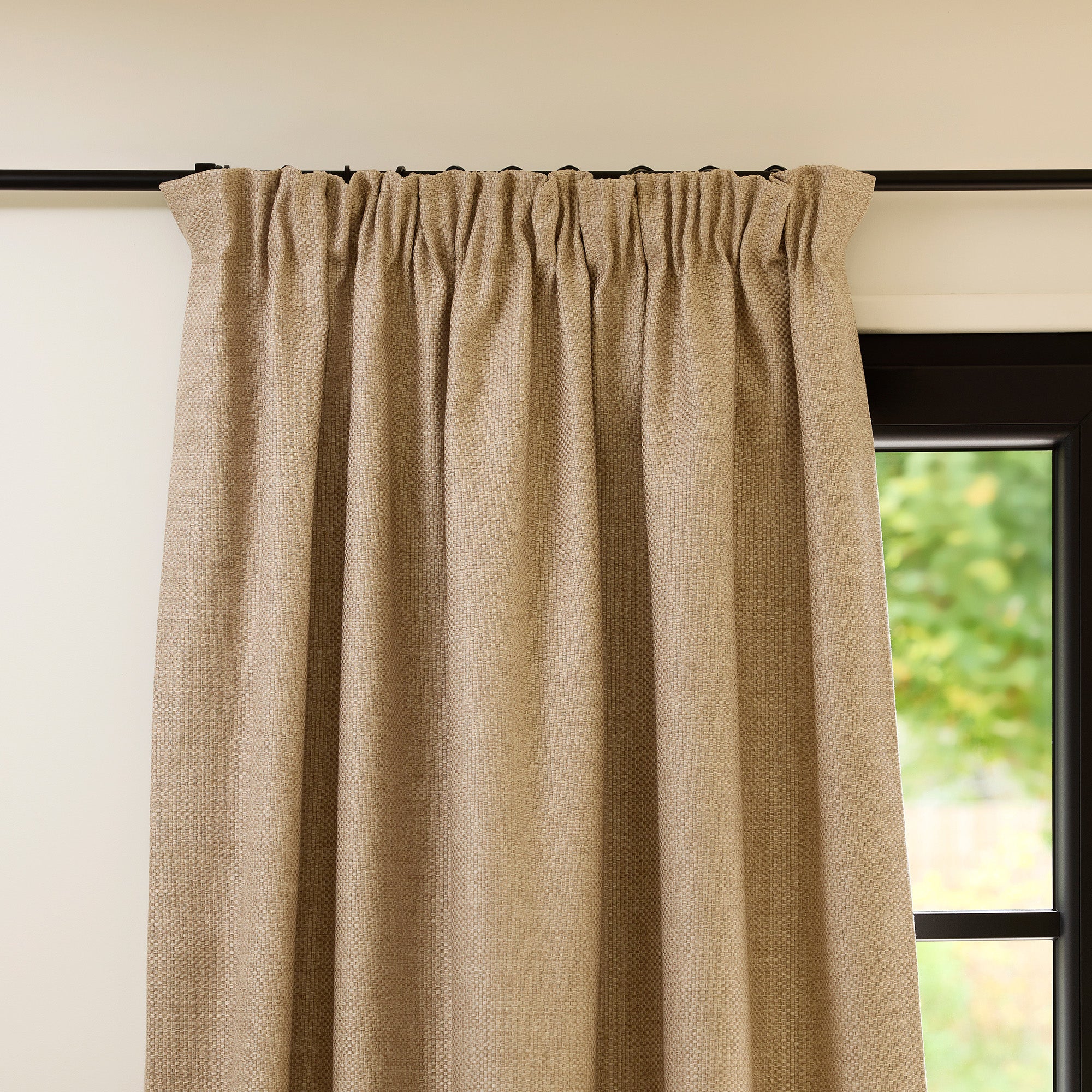
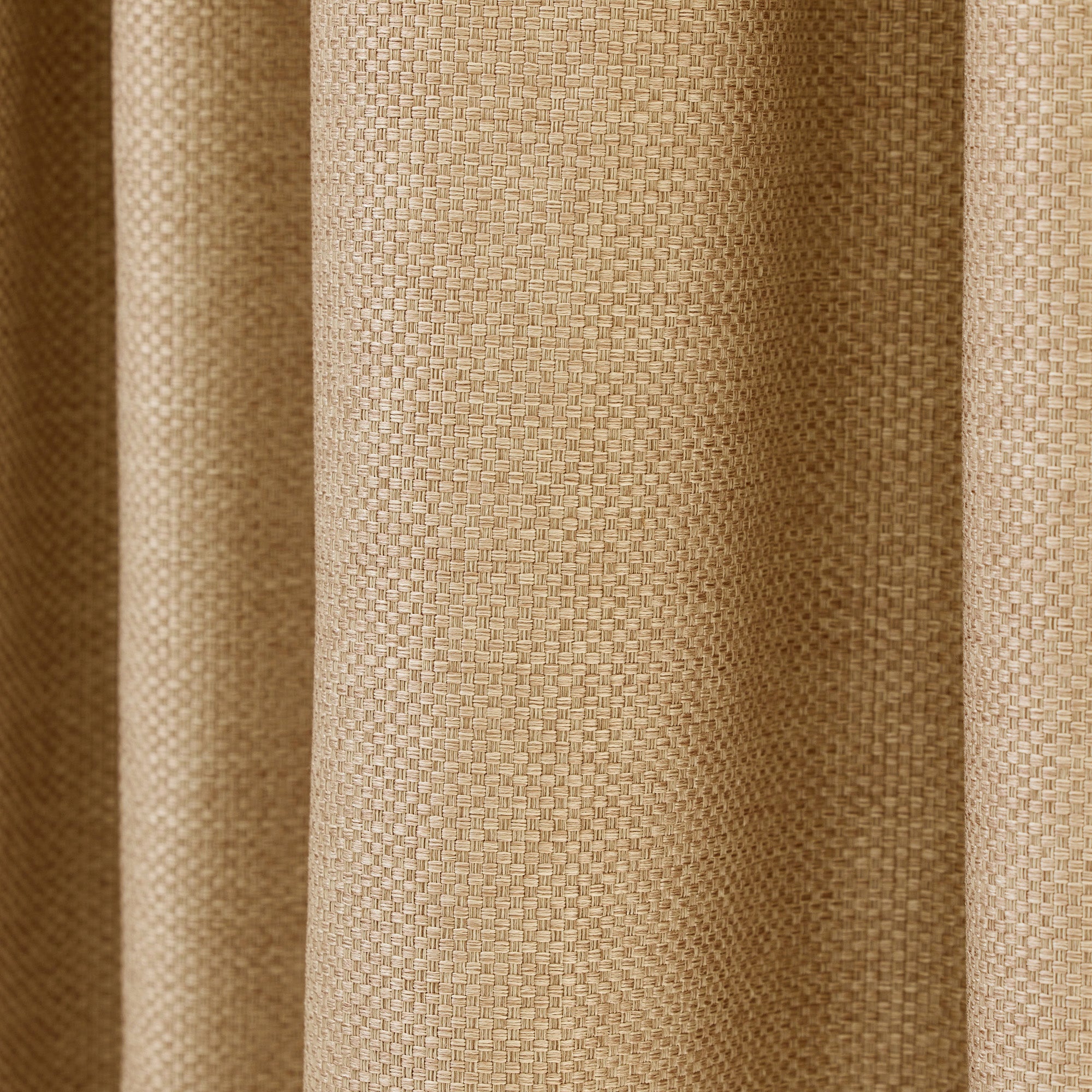
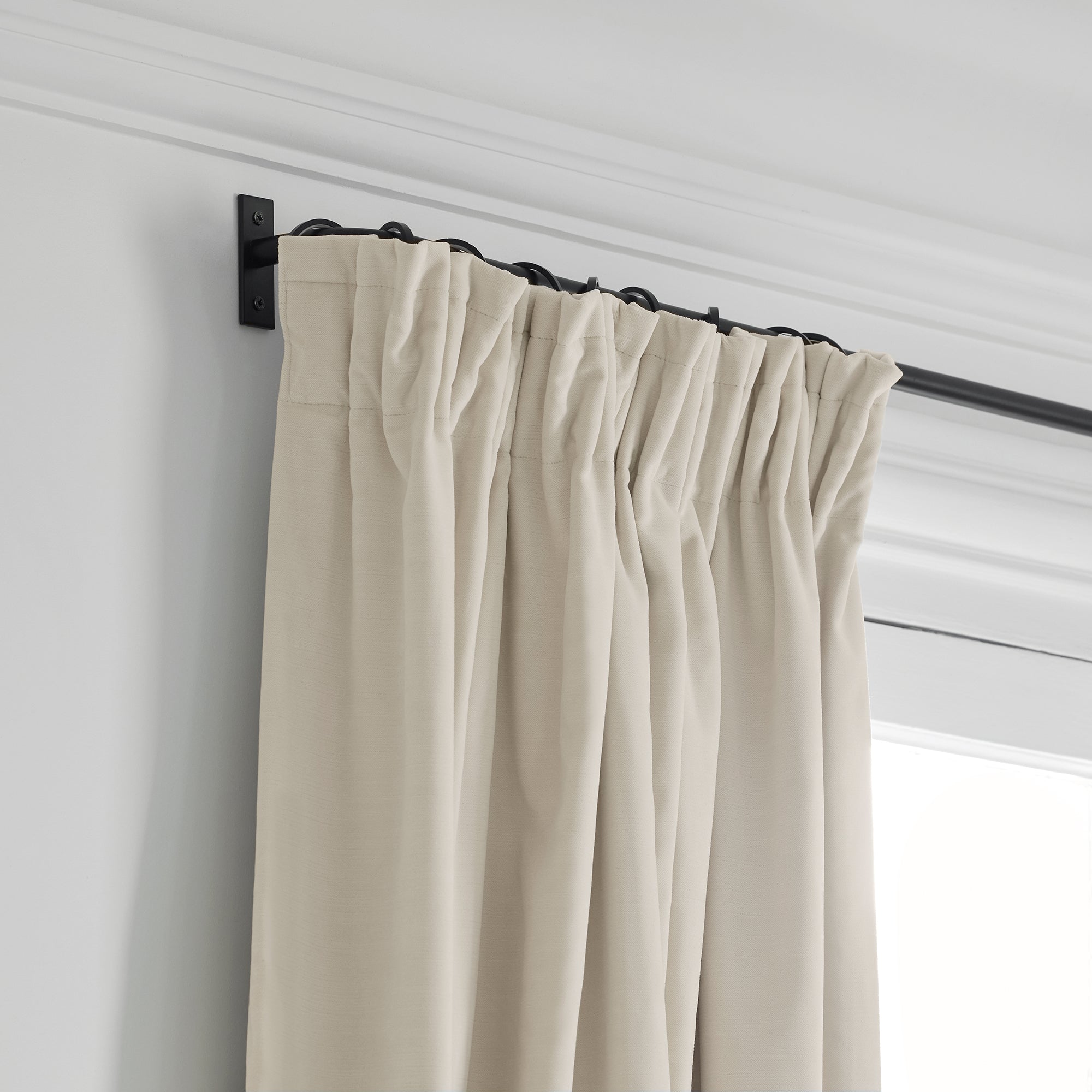
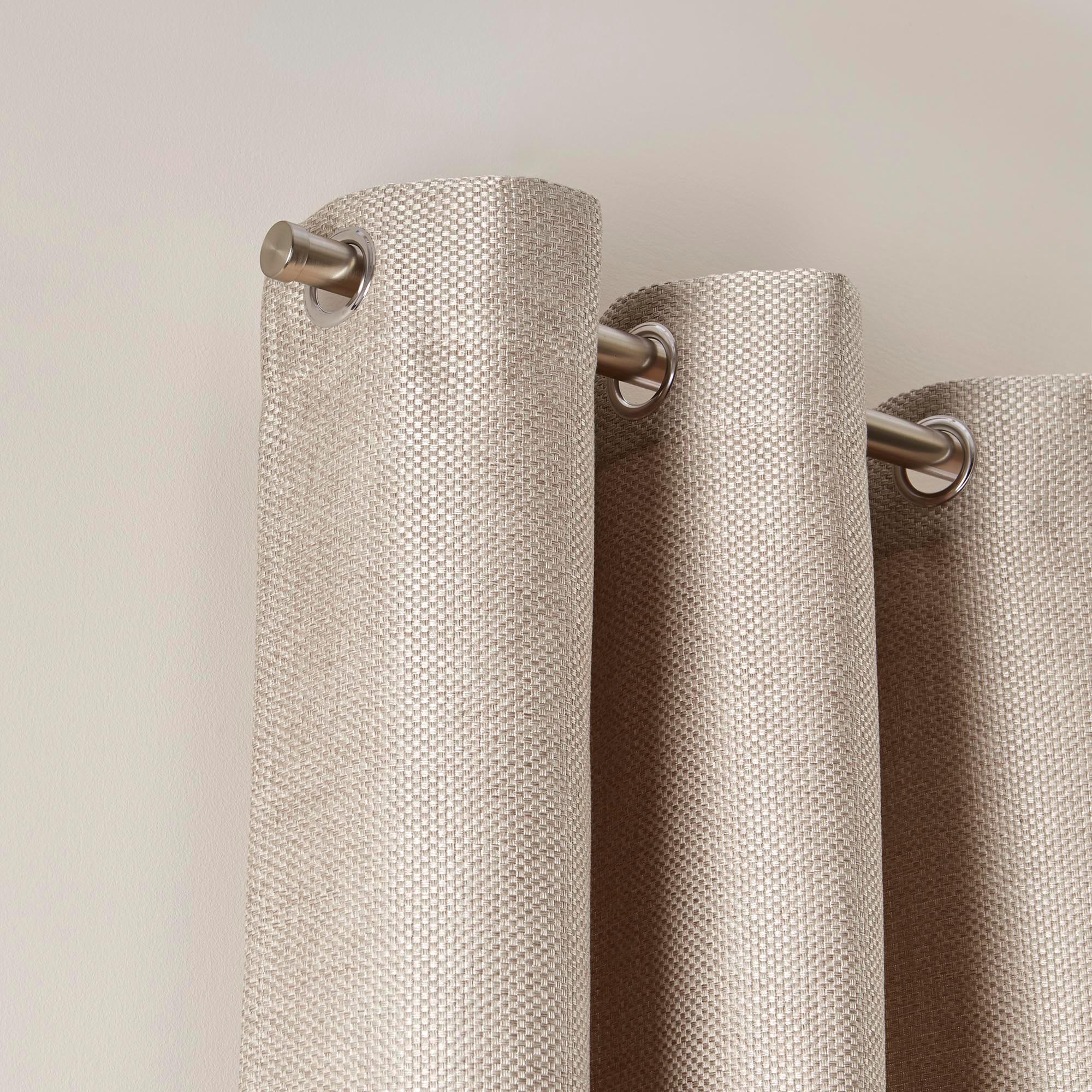
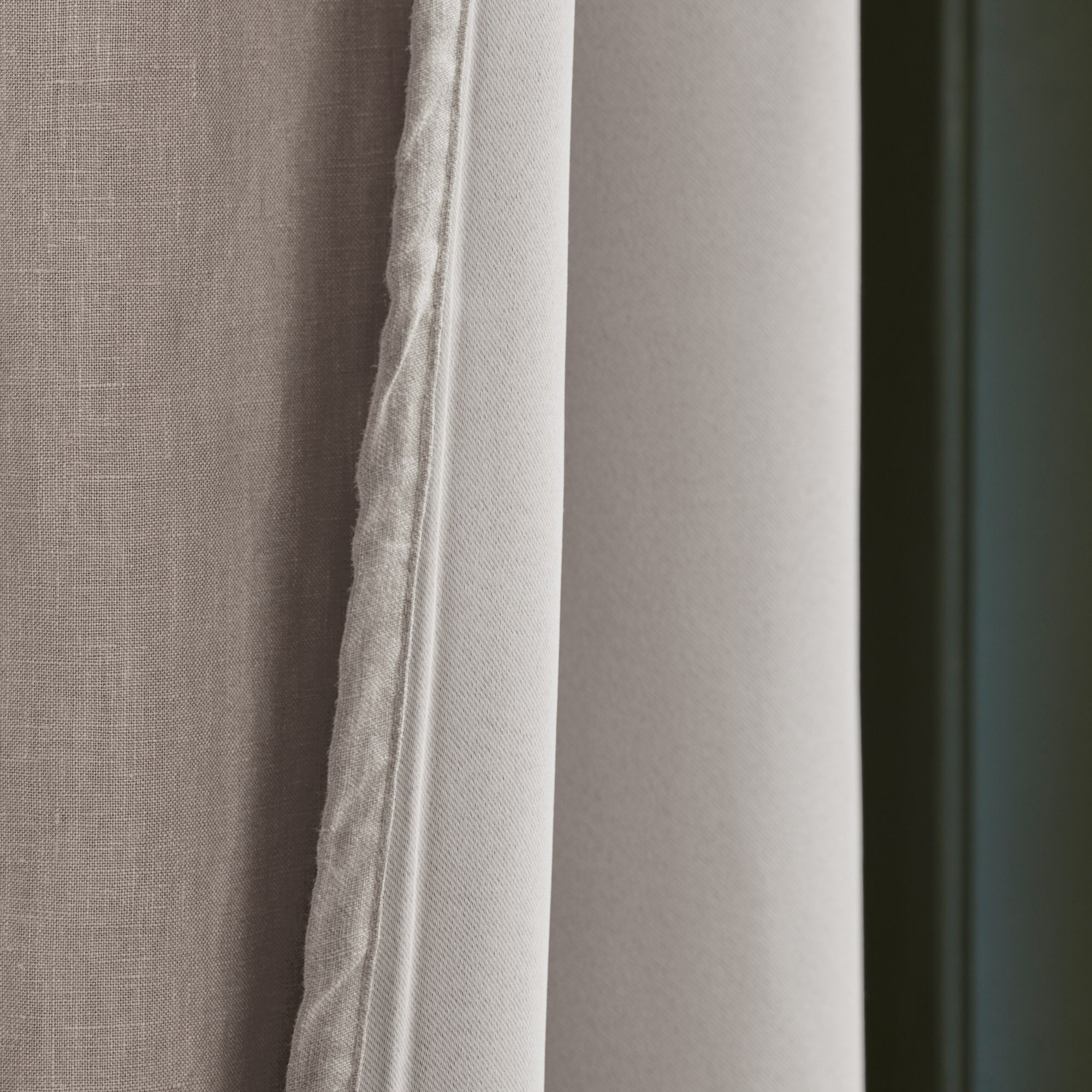
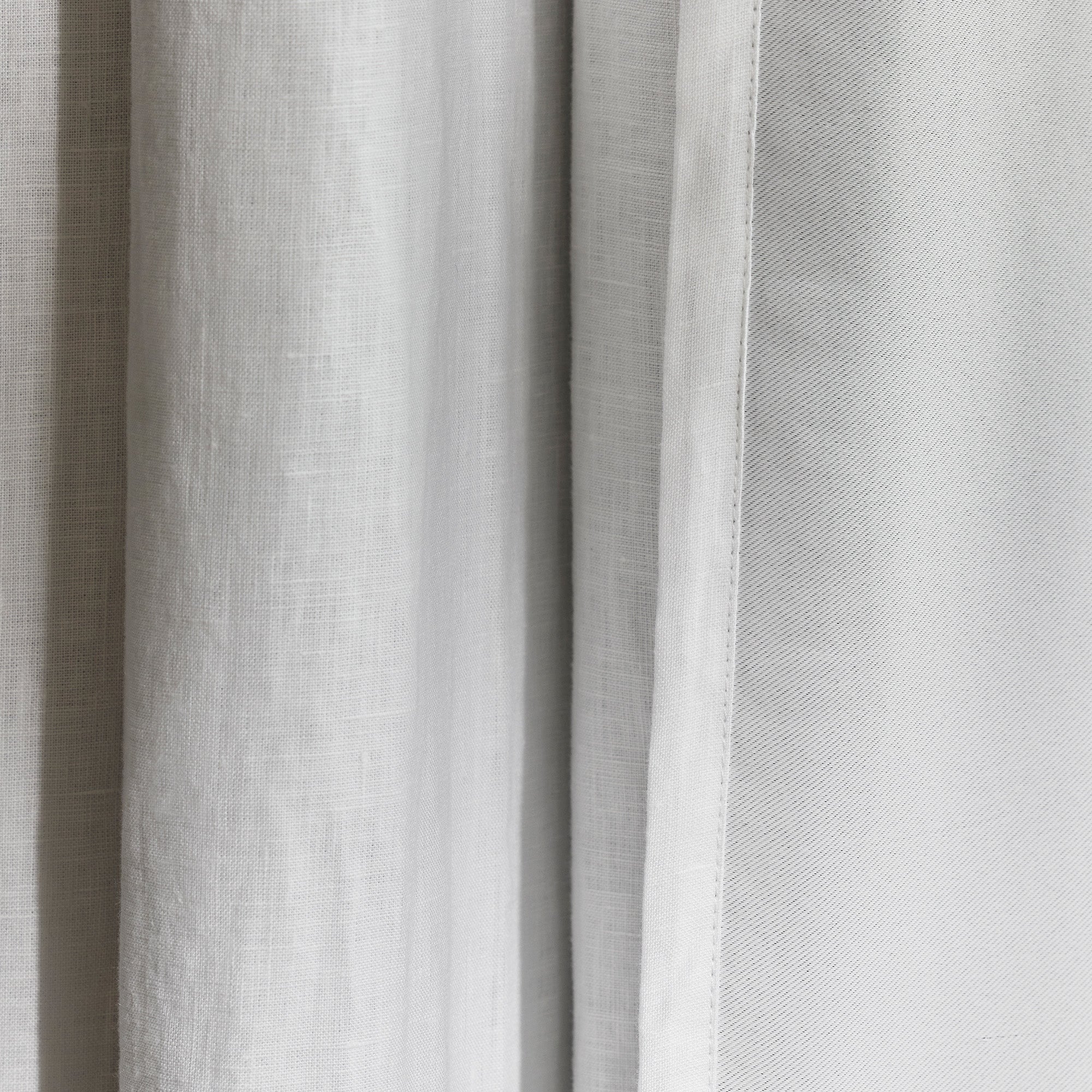
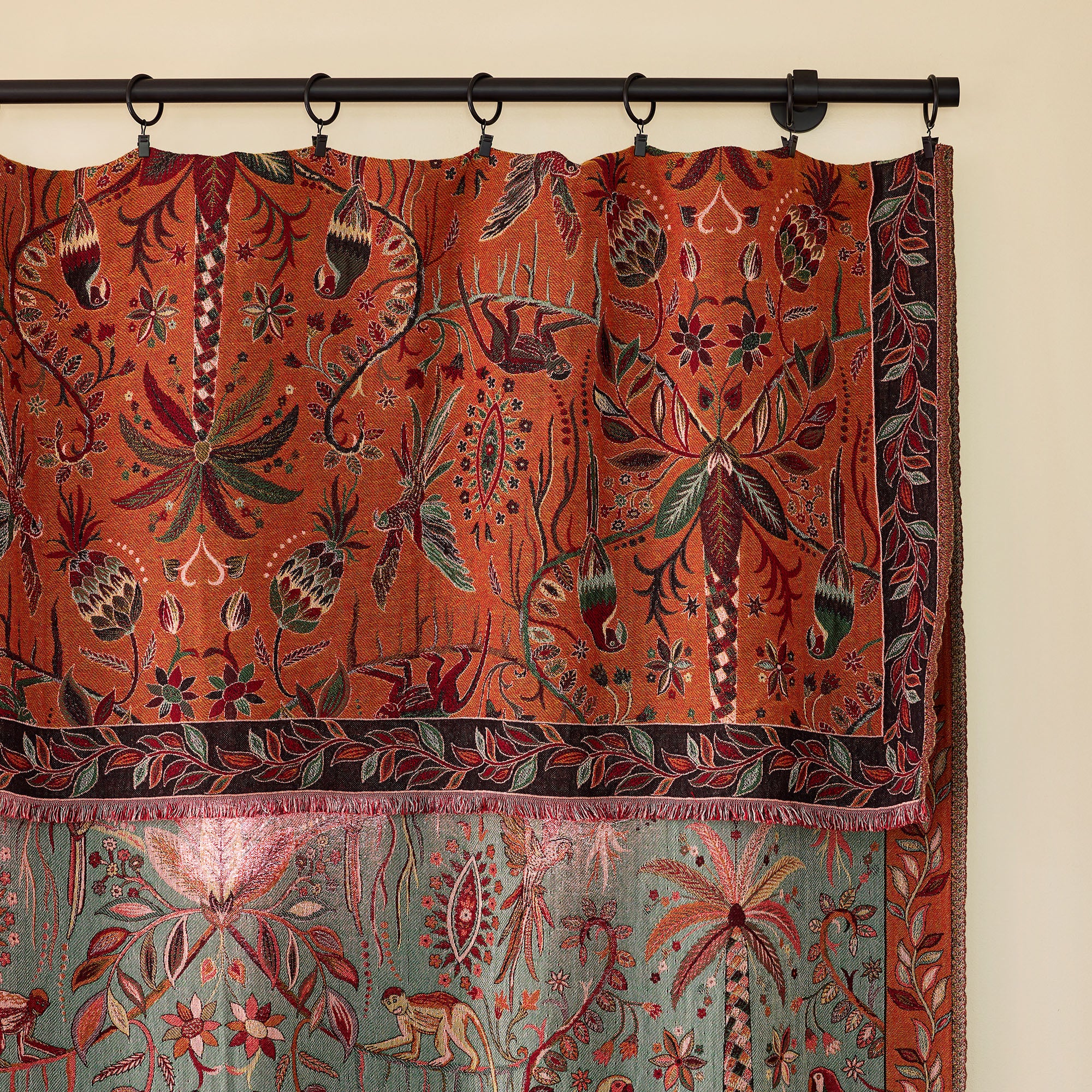
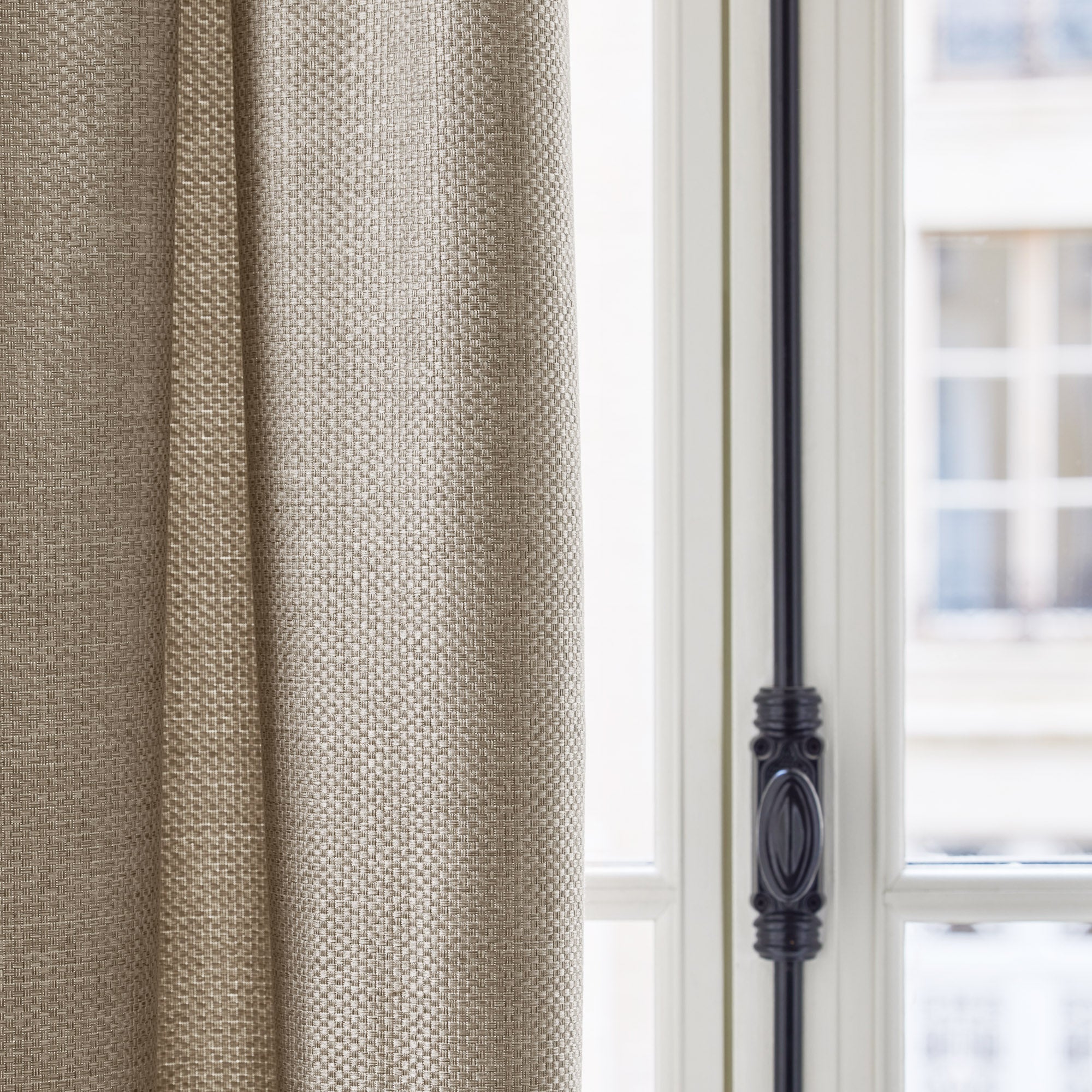
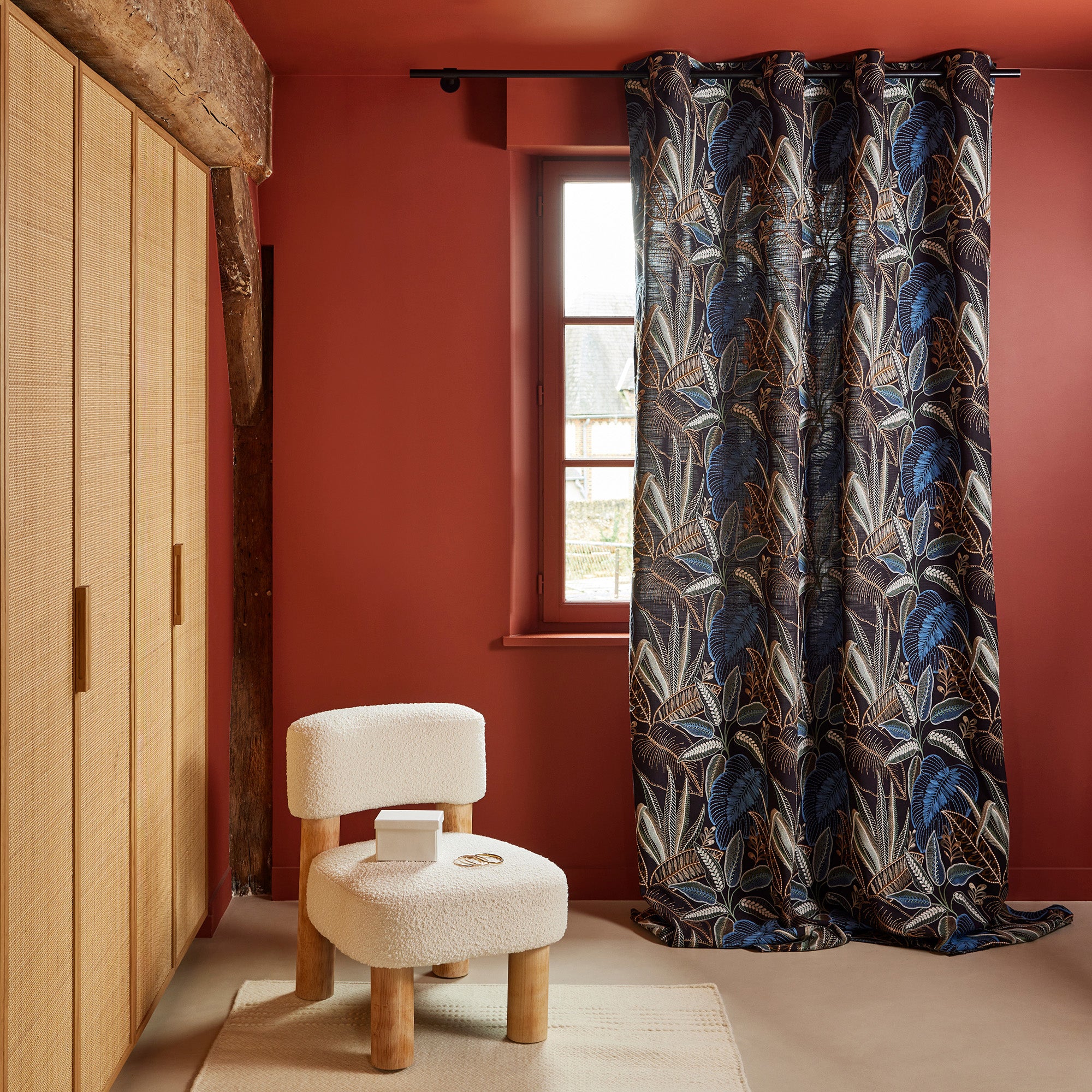
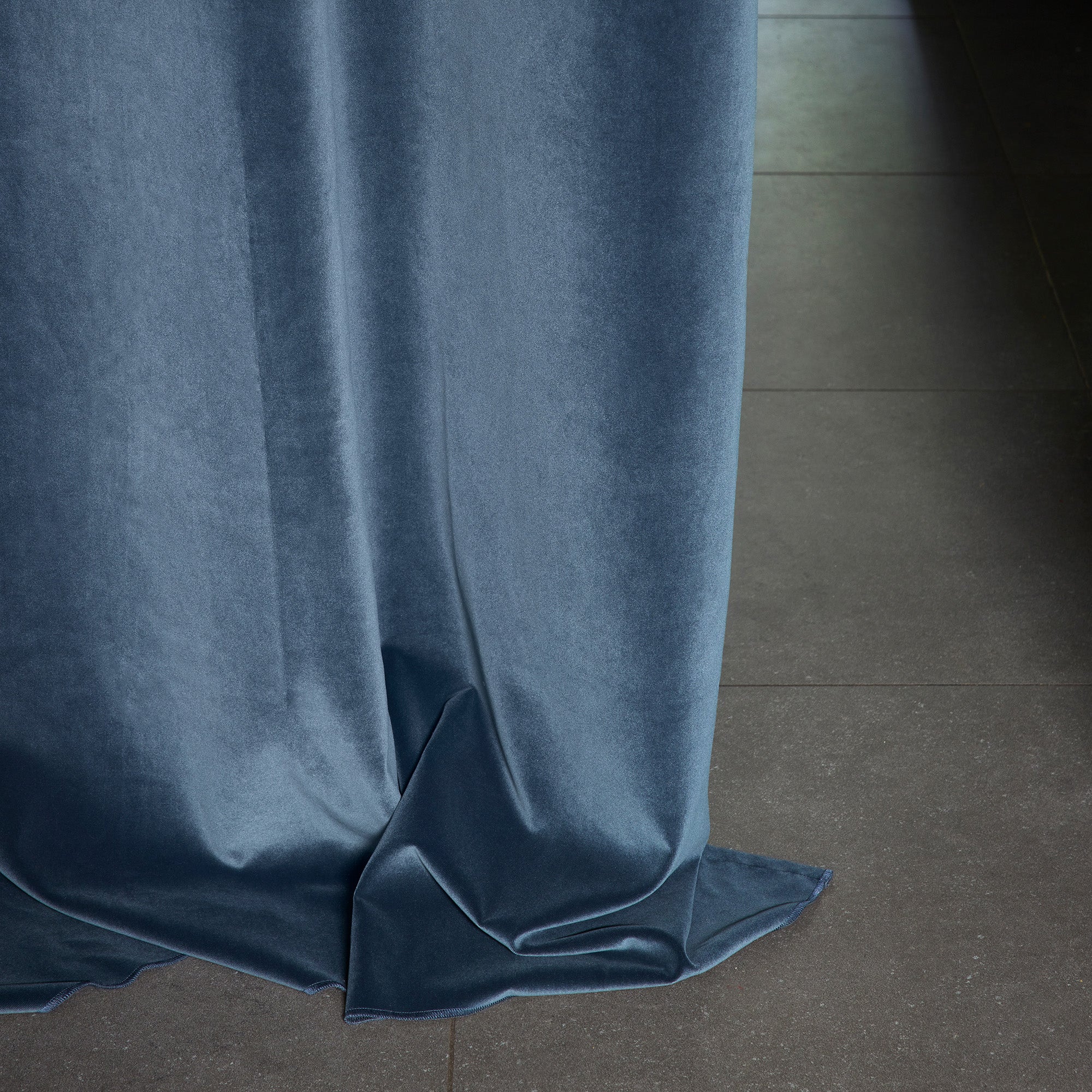
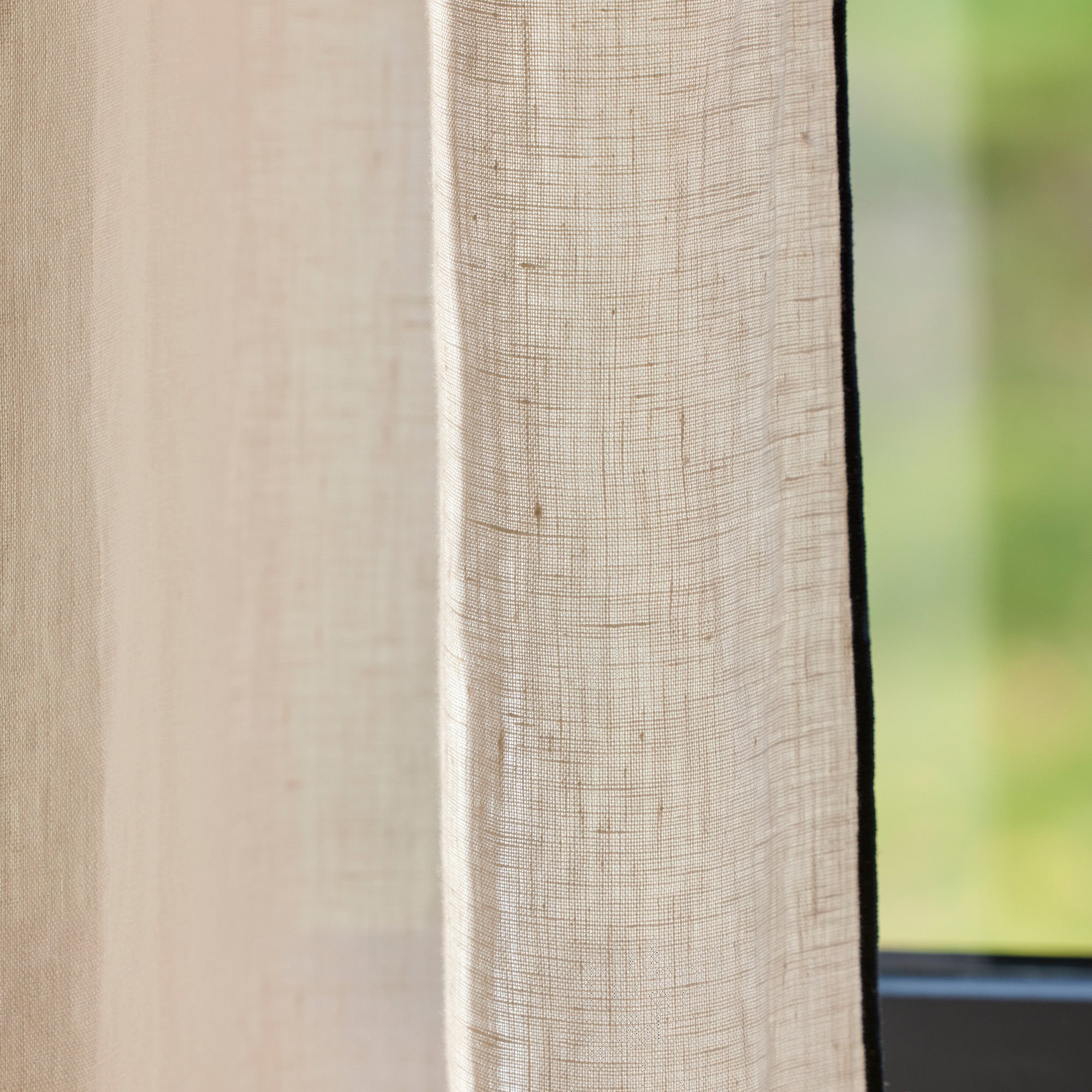
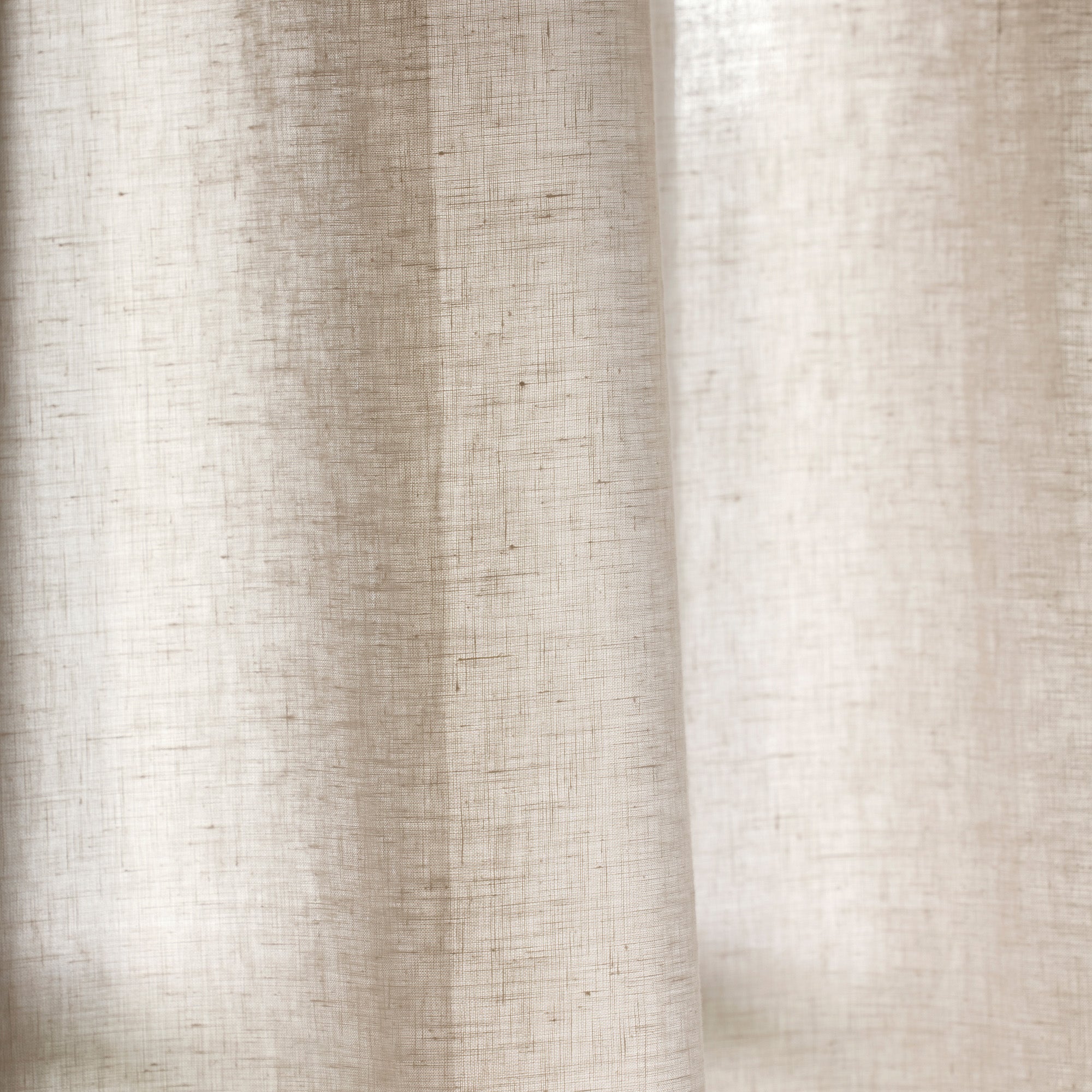
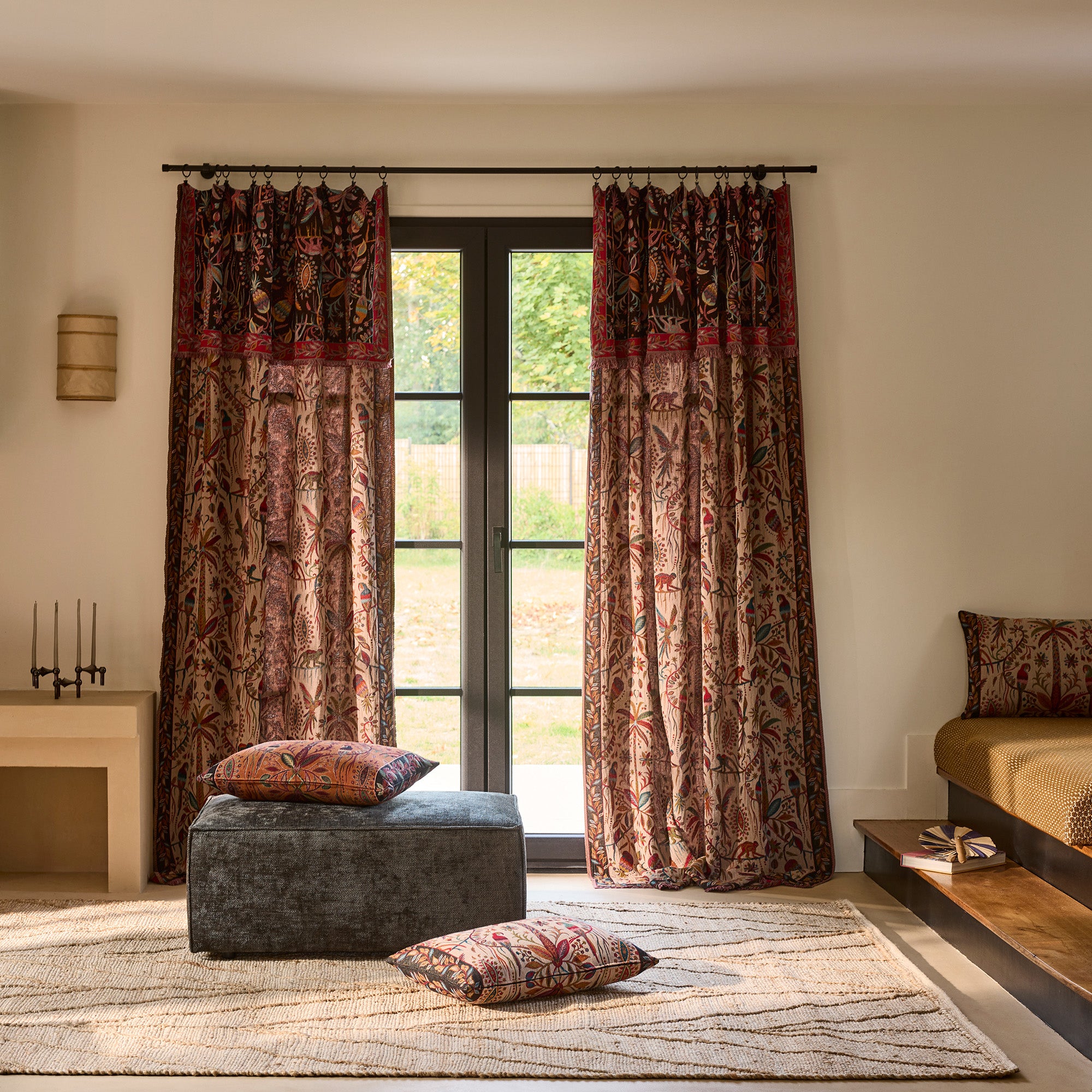
Velvet, dense jacquard and flock-backed fabrics are the most effective materials for blackout. Velvet also absorbs some sound, making it a relevant choice for street-facing rooms. Jacquard — structured relief weave — offers natural opacity without lining, with an elegant drape.
Fabrics with integrated thermal lining (often coated polyester or interlining) combine concealment and insulation. They are heavier and require a sturdy rod. For children's rooms, choose OEKO-TEX Standard 100 certified fabrics, which guarantee the absence of harmful substances in the finished fabric.
Color does not affect the level of blackout — it is the structure of the fabric or the lining that determines the opacity. A white curtain can be as blackout as an anthracite curtain, provided it has the same composition. On the other hand, dark shades absorb solar heat better in summer, which can warm the room slightly.
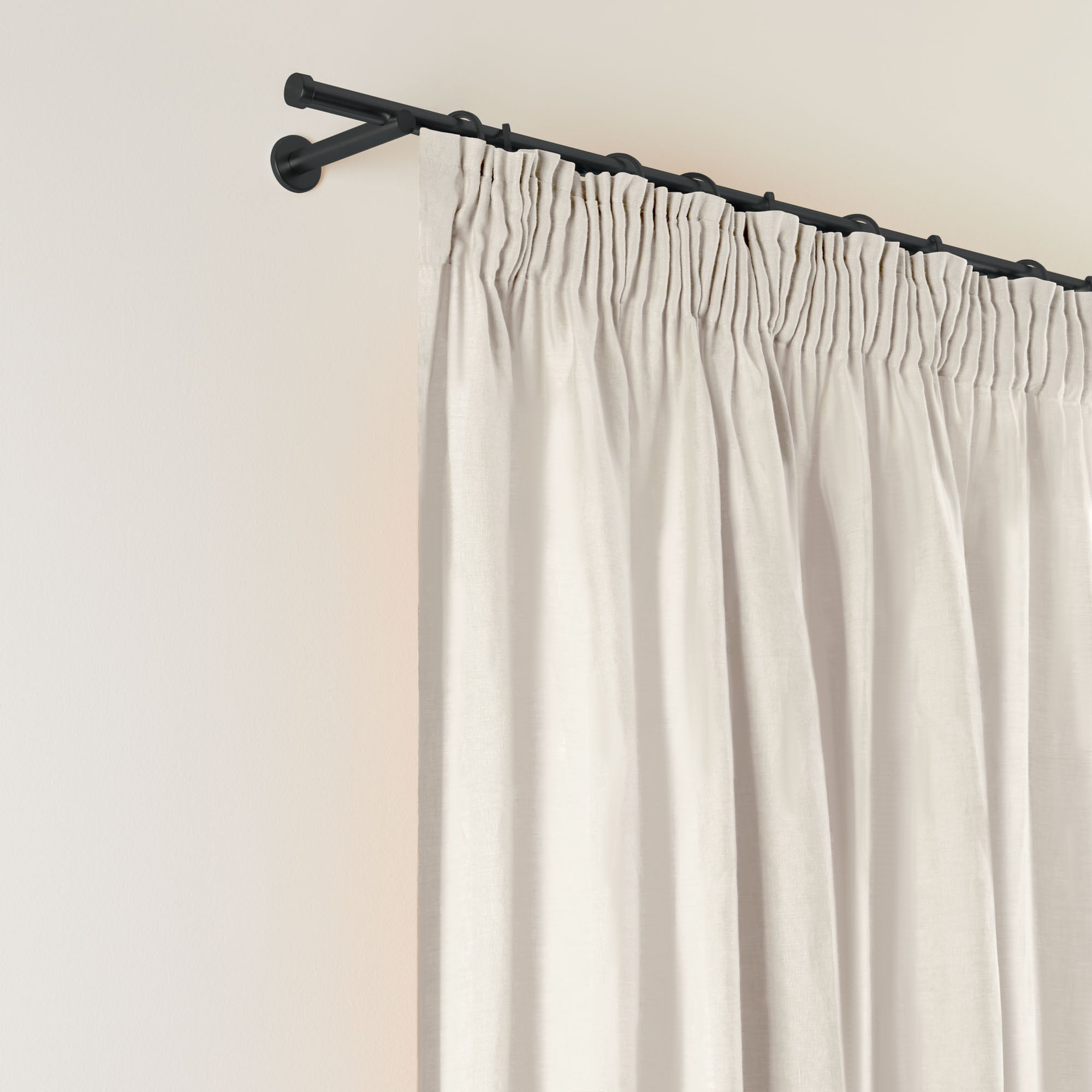
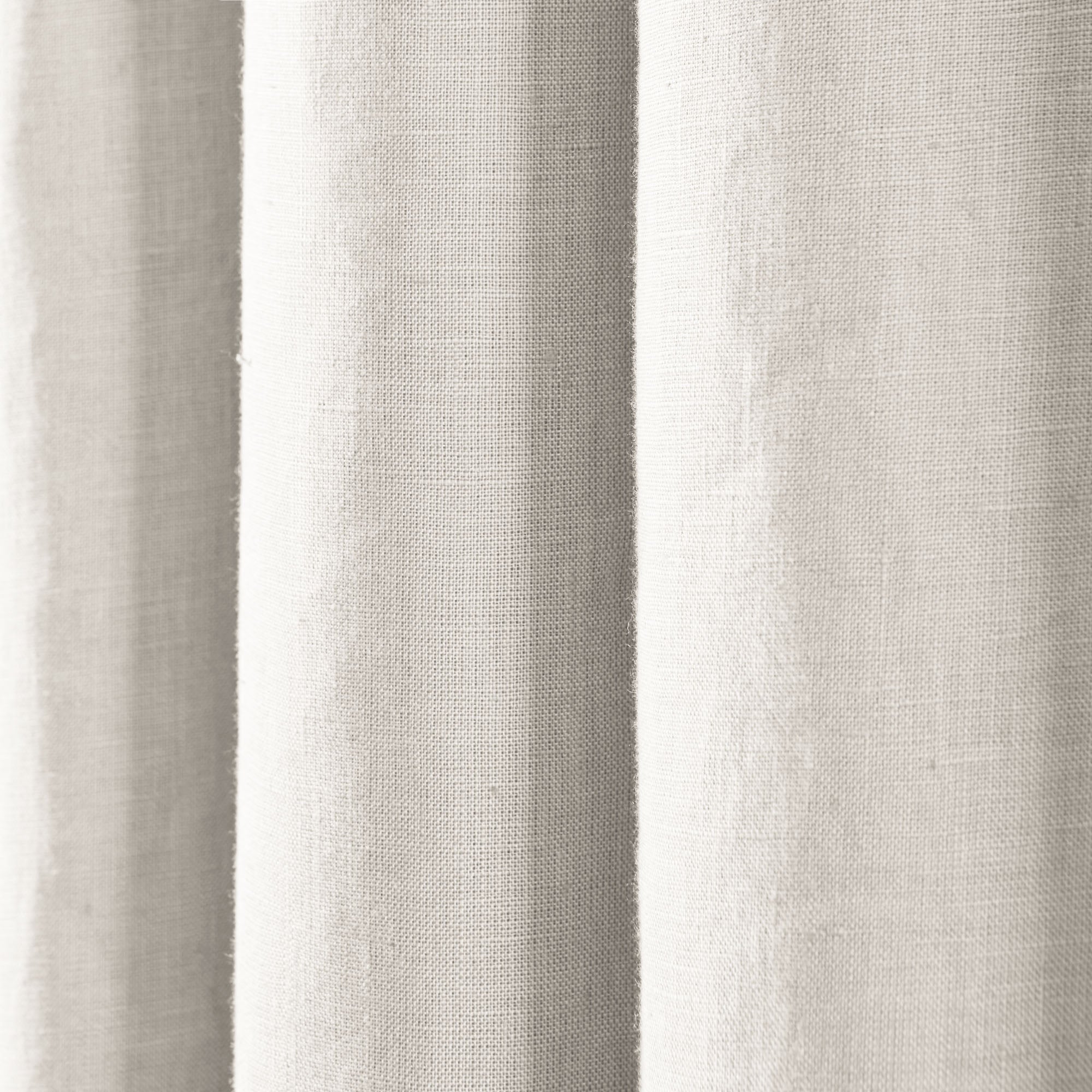
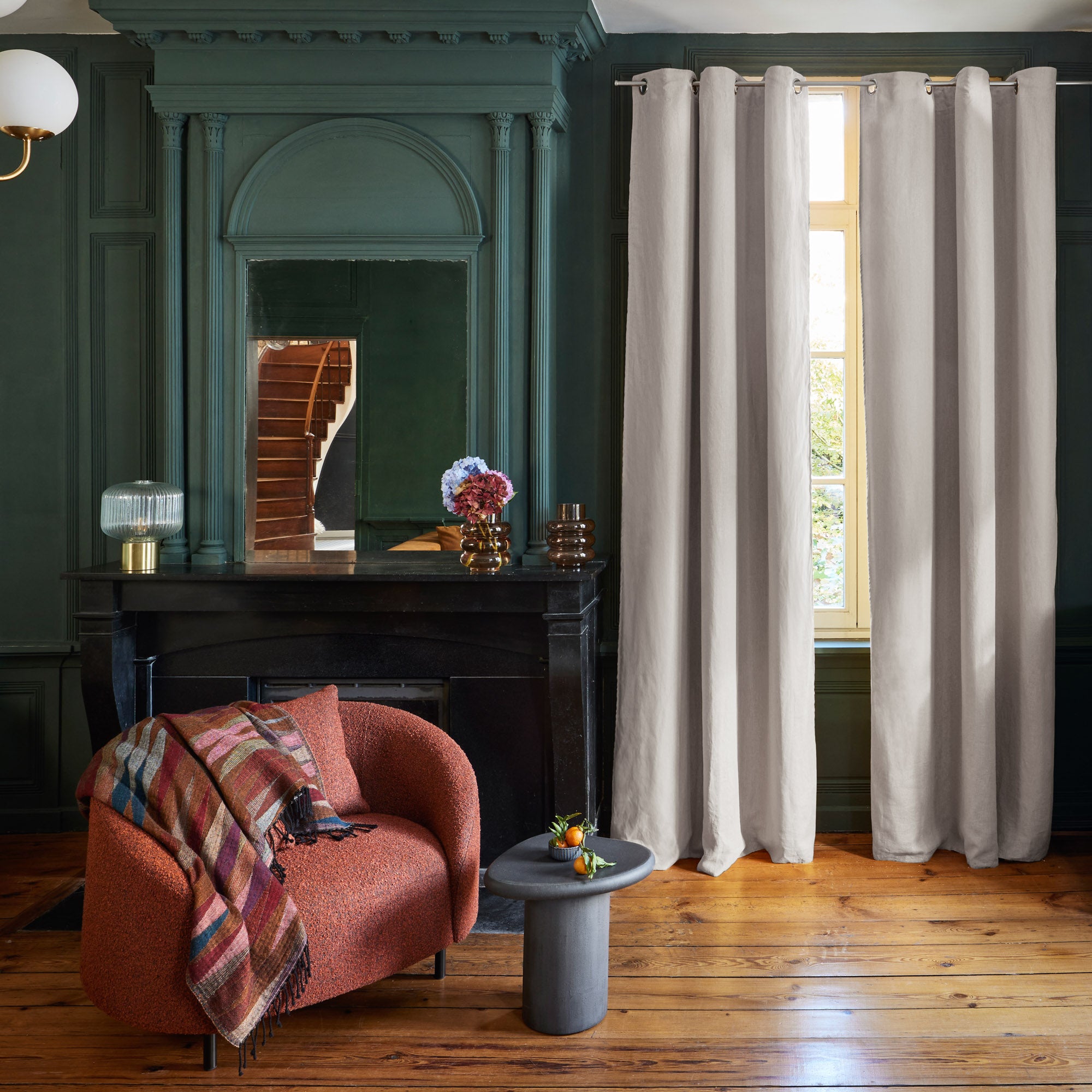
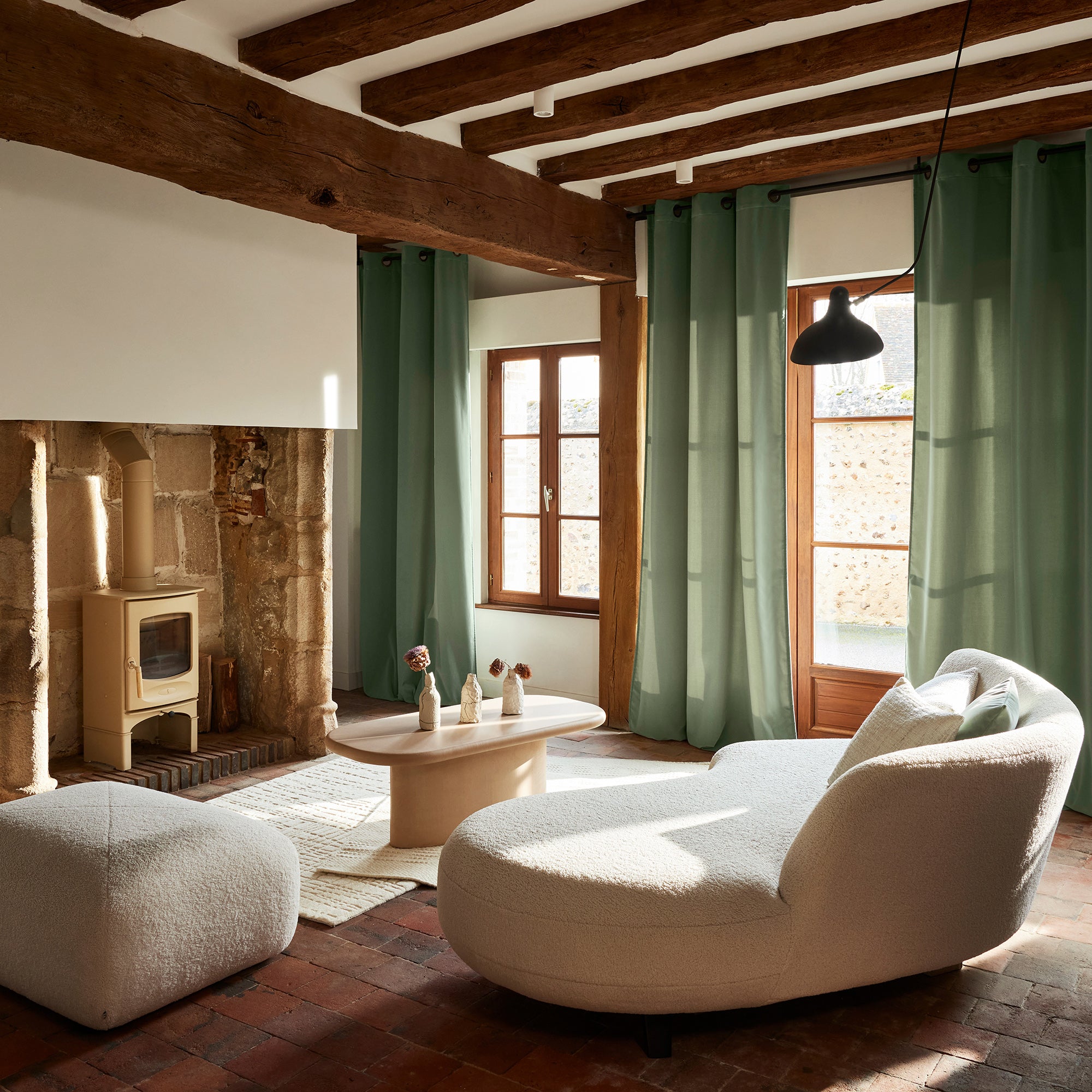
For a bedroom, muted and soothing palettes are preferred: sandstone, slate, verdigris, soft ocher or warm ivory. These colors match natural materials (wood, linen, washed cotton) and contribute to an atmosphere conducive to rest. Bright or high-contrast colors can be visually stimulating — avoid in a space dedicated to sleep.
The effectiveness of a blackout curtain depends as much on the installation as on the fabric. Three areas are systematically neglected: the sides (space between the curtain and the wall), the top (space between the rod and the ceiling) and the center (space between the two panels).
The most frequent errors do not come from the choice of fabric but from the dimensions and installation. A poorly installed technically blackout curtain will be less effective than a well-sized ordinary curtain.
A quality blackout curtain blocks between 95% and 100% of light when properly sized and installed. Residual leaks almost always come from the sides or top — an installation problem, not the fabric. A rail with wall return eliminates these weak areas.
A blackout curtain blocks light thanks to its fabric density or dark lining. A thermal curtain reduces heat exchange via an insulating lining. Both properties can be combined in a single curtain, making it the most complete solution for a bedroom.
Measure the width of the rod (not the window) and multiply by 2 to get the fabric width. For height, measure from the top of the rod to the floor. Fix the rod 15 to 20 cm above the frame to avoid halos of light at the top of the panel.
Yes, it's even recommended. Darkness promotes the secretion of melatonin, which is particularly important in young children. Choose OEKO-TEX Standard 100 certified fabrics to guarantee the absence of harmful substances in the fabric in contact with the air in the room.
Yes, tension rods or suction cup systems allow installation without drilling, suitable for small windows and tenants. For large windows or heavy fabrics, wall mounting is still recommended to support the weight and guarantee blackout effectiveness.
Most blackout curtains are machine washable at 30°C, gentle cycle. Always check the GINETEX care symbols (ISO 3758) on the label. Thermal linings are sensitive to high temperatures: avoid tumble drying. Steam ironing at low temperature is enough to restore the drape.

By Laurine Didier
In charge of content and decoration advice at Madura.
Sommaire
Our last articles
Conseils et astuces •10 min
Washed linen and percale cotton are the two reference materials for high-end bed linen, but they are aimed at different...
conseils et astuces •11 min
Attaching a rod to the ceiling rather than above the window is one of the most effective tips for visually...