


Conseils et astuces •10 min
How to choose a blackout curtain for a bedroom?
A blackout curtain blocks light, improves sleep and insulates against the cold. This guide helps you choose the right fabric,...

Madura customer service
Available on WhatsApp, by chat or by phone at 01 42 34 99 59

All the tips and tricks from our team, just like in store, delivered straight to you.
All articlesMost searched articles
Conseils et astuces

Washed linen and percale cotton are two natural materials of reference for bed linen, but their properties differ on essential criteria: touch, thermoregulation, maintenance and durability. Washed linen, from the Linum usitatissimum plant, stands out for its textured feel and great breathability, ideal for warm nights. Cotton percale, woven in a plain weave with a thread count greater than 200 per square inch, provides a soft, smooth feel, suitable for all seasons. Choosing between the two depends on your thermal morphology, your maintenance habits and the aesthetic you want to give to your room.
Washed linen is linen that has undergone high temperature washing and creasing treatment after weaving. This process, sometimes called stone-washing or enzyme-washing, softens the naturally stiff fibers of linen and gives the fabric its slightly wrinkled appearance and supple feel from the first night.
According to the Alliance for European Flax-Linen & Hemp (2024), linen is grown primarily in Western Europe, without irrigation or pesticides in traditional growing areas, making it one of the least resource-intensive natural fibers. This origin guarantees superior traceability for materials imported from less regulated areas.
Washed linen can be recognized by three distinct visual and tactile characteristics: a slight relief on the surface, a slightly irregular texture which demonstrates the craftsmanship of the weave, and a naturally casual appearance which does not require ironing. Its color softens slightly over time, which is seen as a quality by those who appreciate the patina effect.
Percale is a cotton fabric woven in a simple plain weave, with a thread count of 200 threads per square inch or more. This weaving density gives it a smooth surface, a characteristic slight crunch and high resistance to repeated use. It is often referred to as the benchmark for quality hotels for this reason.
GOTS (Global Organic Textile Standard) certified organic cotton percale guarantees the absence of harmful chemical residues in the fibers. According to the OEKO-TEX Standard 100 benchmark, any certified bedding item is checked for the absence of more than 100 potentially dangerous substances, a particularly relevant criterion for a fabric in direct contact with the skin for several hours each night.
Percale does not wrinkle as much as washed linen and is suitable for ironing if you want an impeccable bed with a very smooth feel. It better withstands frequent washing at 60°C, which can be a decisive criterion for allergy sufferers or families with young children.
Thermoregulation is often the first criterion of choice for bed linen. Washed linen has a naturally high thermal conductivity: the fiber wicks away body heat more quickly than cotton, making it particularly suitable for summer nights or for people who get very hot at night.
Cotton percale, thanks to its weaving density, offers better lightweight insulation in the off-season. It is soft without being cool at first contact, which makes it comfortable whatever the season. For sleepers who are cold or in rooms that are poorly heated in winter, percale will generally be more comfortable.
The National Institute of Sleep and Vigilance (INSV) points out that the ideal bedroom temperature for restful sleep is between 16 and 18°C, and that bed linen plays a role in nighttime body thermal regulation. Choosing a material adapted to your thermal profile can contribute to the quality of your sleep.
Touch is subjective, but there are objective differences between the two materials. Washed linen has a textured feel, slightly grainy in the noble sense of the term, which softens over time. Some people find it immediately enveloping; others need a few nights to fully appreciate it.
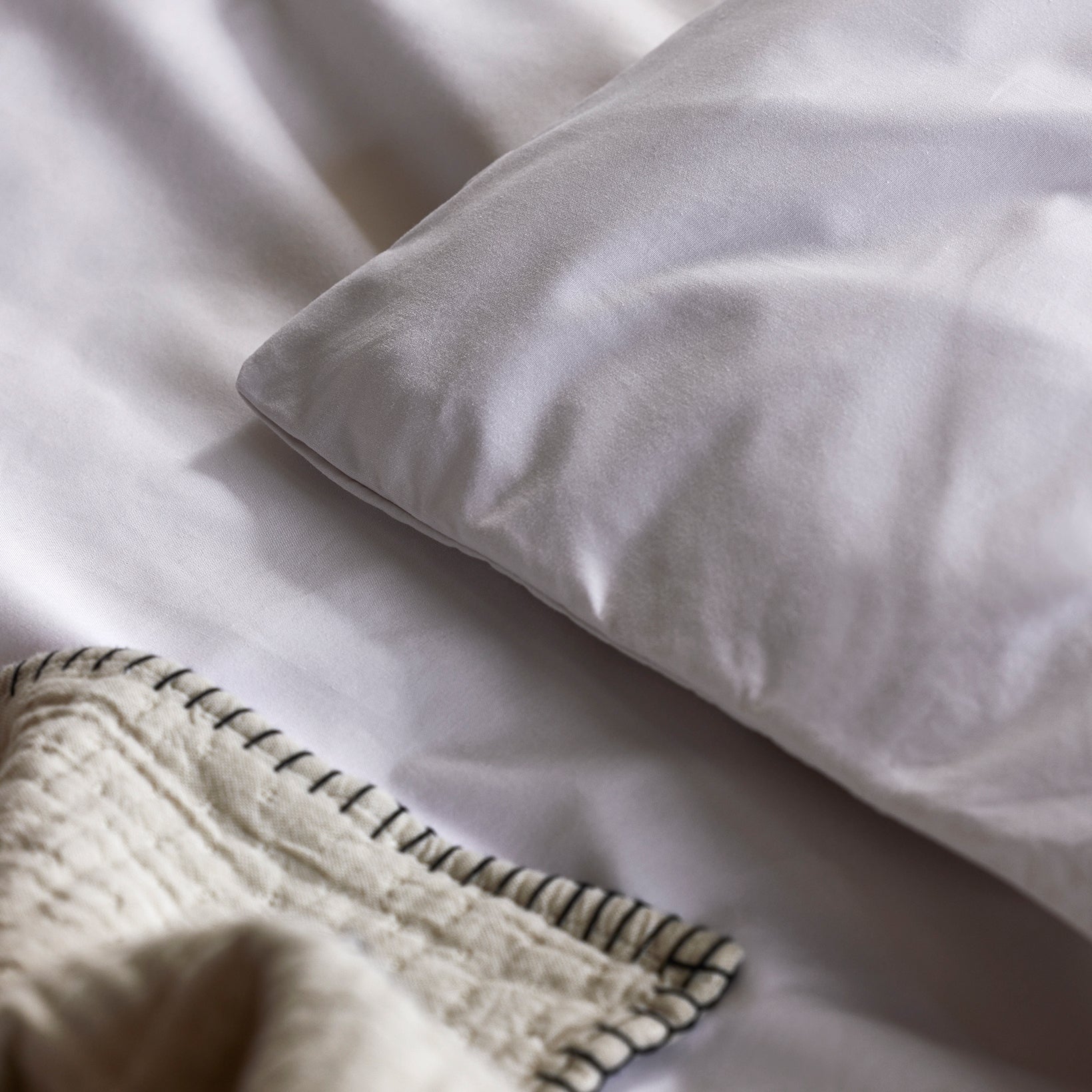
Cotton percale offers a smooth, cool feel, often described as "clean" and neutral. It does not have the strong sensory character of linen, but this neutrality is appreciated by people with reactive skin or sensitive to textures.
Maintenance is a criterion that is often underestimated at the time of purchase. Washed linen can be washed at a maximum of 40°C to maintain the structure of its fibers. According to the recommendations of GINETEX (the international reference organization for care symbols, ISO 3758 standard), drum drying at low temperature is possible but drying flat or on a drying rack better preserves the shape of the fabric.
Cotton percale tolerates higher washing temperatures, typically up to 60°C for common bedding items. It is better suited to tumble drying at normal temperature and can be easily ironed with a hot iron if necessary. These properties make it more practical for intensive or family use.
Linen is renowned for its exceptional longevity. According to the IFTH (French Textile and Clothing Institute), linen fiber has a higher tensile strength than the majority of common plant fibers, and its strength increases slightly when wet, unlike cotton whose strength decreases when wet.
Cotton percale, thanks to its high weaving density, is also very resistant to friction and repeated washing. Its weak point lies in the seam areas and hems, which can fray sooner than on linen if the quality of finish is not up to par.
In terms of environmental impact, washed linen from certified European sectors has a favorable ecological balance: cultivation without irrigation, low carbon footprint compared to synthetic fibers, and natural biodegradability at the end of its life. GOTS certified organic cotton percale offers a responsible alternative if your priority is cotton.
There is no universally superior material: the right choice depends on your thermal profile, your laundry care habits and the aesthetic you want for your bedroom.
Buying based solely on the advertised thread count is a common mistake. A very high thread count (over 400) may indicate the use of multi-strand threads twisted together, which actually reduces the breathability of the fabric. For percale, a thread count between 200 and 300 is often a sign of a good balance of softness and breathability.
Yes. Washed linen has greater thermal conductivity than cotton: it wicks away body heat more quickly and remains cool to the touch even in summer. Cotton percale is softer and insulated, which makes it preferable in the off-season or for people who are cold.
Washed linen gradually softens over time. Generally allow between 3 and 5 washes at 40°C to achieve optimal softness. It is a living material which gains character over time, unlike a synthetic fabric whose softness diminishes with use.
OEKO-TEX Standard 100 or GOTS certified cotton percale is a safe bet for sensitive skin: smooth surface, absence of abrasive texture and possibility of washing at 60°C for enhanced hygiene. Washed linen is also well tolerated, but its slightly textured feel may confuse very reactive skin.
Yes, but at low temperature only (delicate program or 40°C). According to GINETEX recommendations (ISO 3758), drying in the open air or flat remains the best option to preserve the structure of the linen fibers and avoid any shrinkage or premature weakening of the fabric.
Washed linen is recognized by the IFTH for its tensile strength superior to the majority of plant fibers. A quality linen sheet can last 10 to 20 years with proper care. High-density cotton percale is also durable, but its strength declines slightly in humidity, unlike linen.
Washed linen can be used in winter by combining it with a warm duvet. Its breathability remains an asset even in the cold season. However, if your room is not very heated or if you are cold, cotton percale offers a less cool first contact and an overall more enveloping sensation.

By Laurine Didier
In charge of content and decoration advice at Madura.
Sommaire
Our last articles
Conseils et astuces •10 min
A blackout curtain blocks light, improves sleep and insulates against the cold. This guide helps you choose the right fabric,...
conseils et astuces •11 min
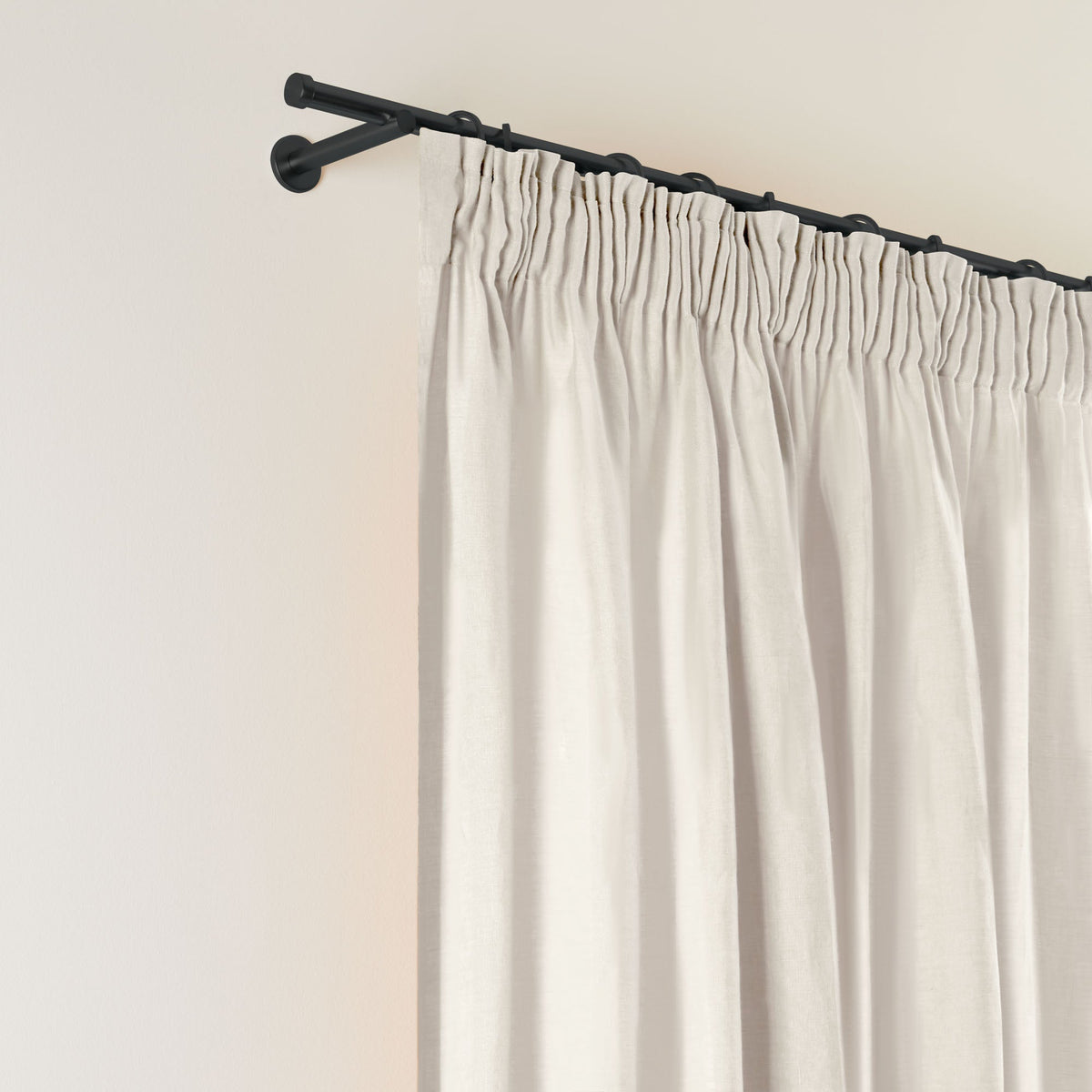
Attaching a rod to the ceiling rather than above the window is one of the most effective tips for visually...