Ceiling curtain rod: why it’s the trendy solution to visually enlarge your rooms
14 / 10 / 2026
•
14 / 10 / 2026
•
11 min
Sommaire
14 / 10 / 2026
Updated on 14 / 10 / 2026
11 min
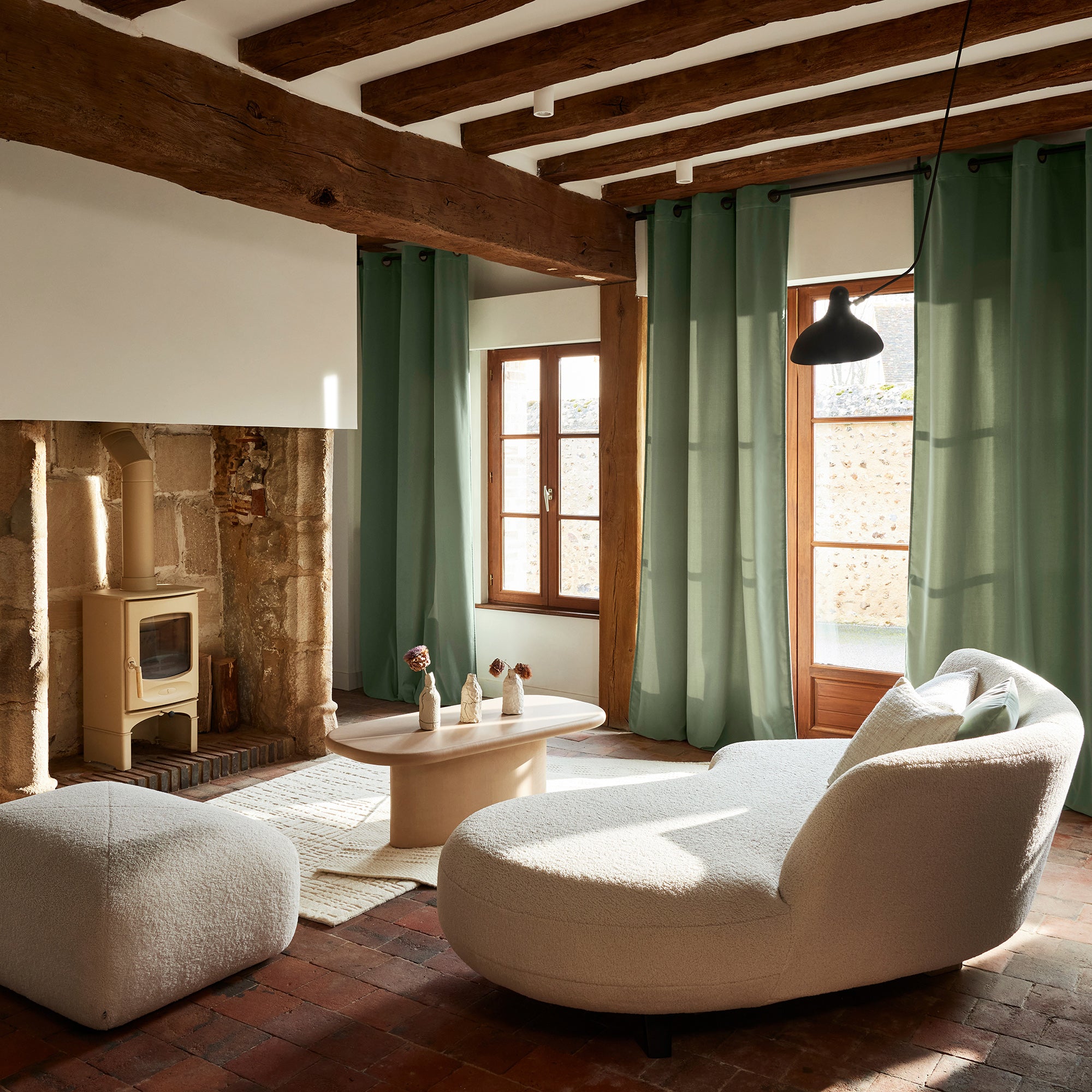
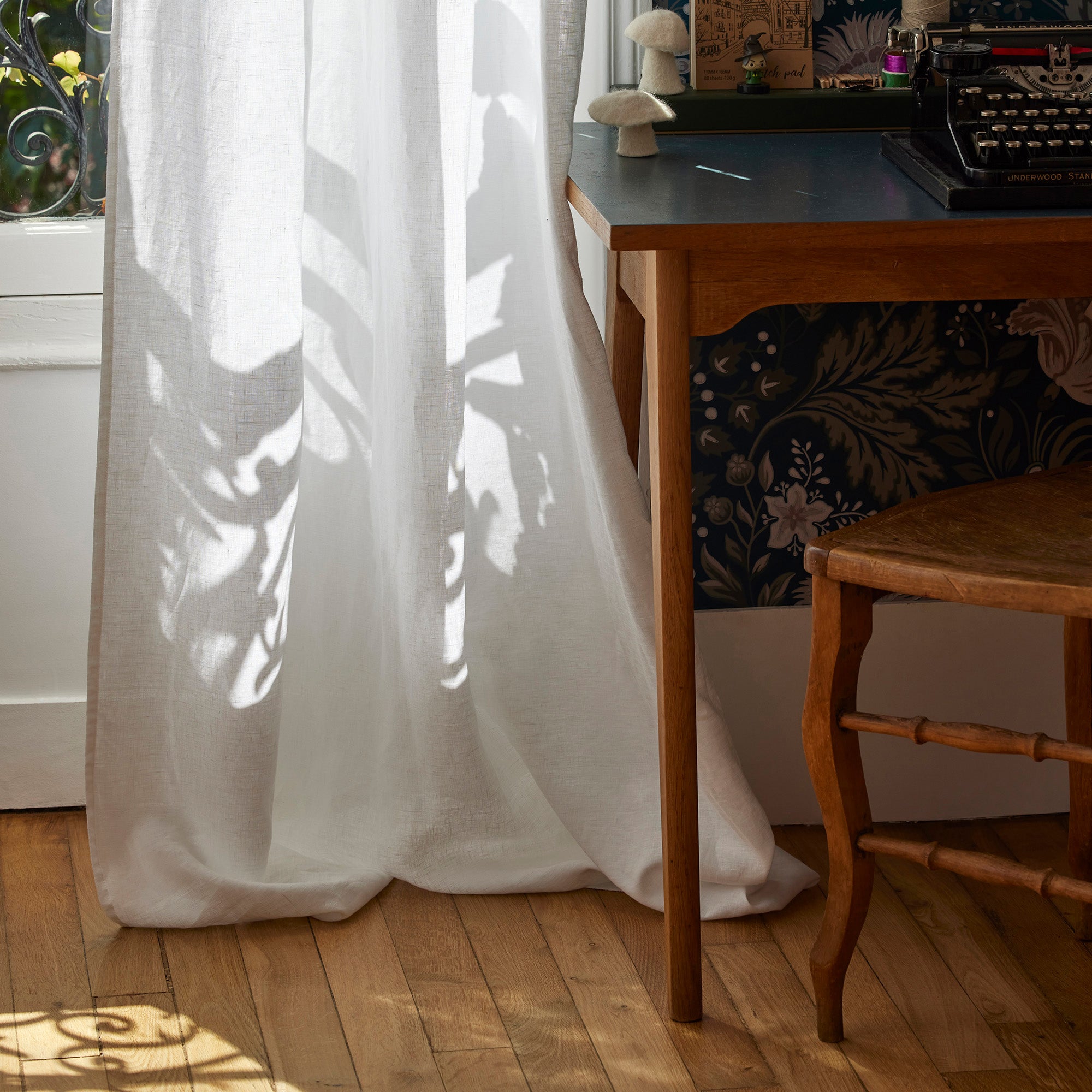
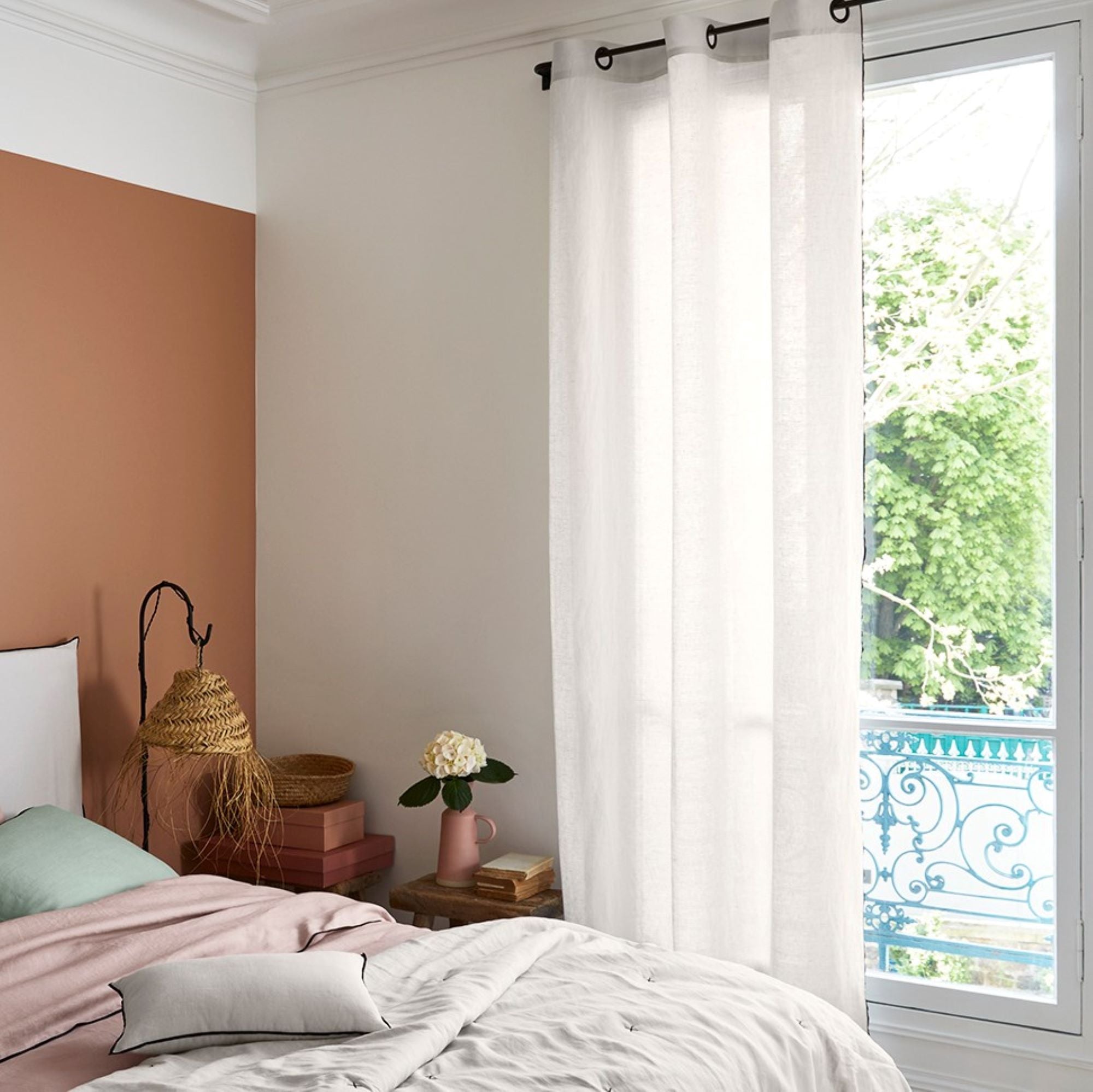
The ceiling curtain rod is a mounting system that anchors the bar or rail directly to the ceiling, rather than to the wall above the window frame. This high positioning creates a powerful optical illusion: the eye follows the fabric from floor to ceiling and perceives the room as higher and larger. Discover our curtain collection designed to accompany this staging, from airy curtains to blackout panels for hot summer nights. A single installation gesture can permanently transform the atmosphere of your interior.
Why does attaching the rod to the ceiling visually enlarge a room?
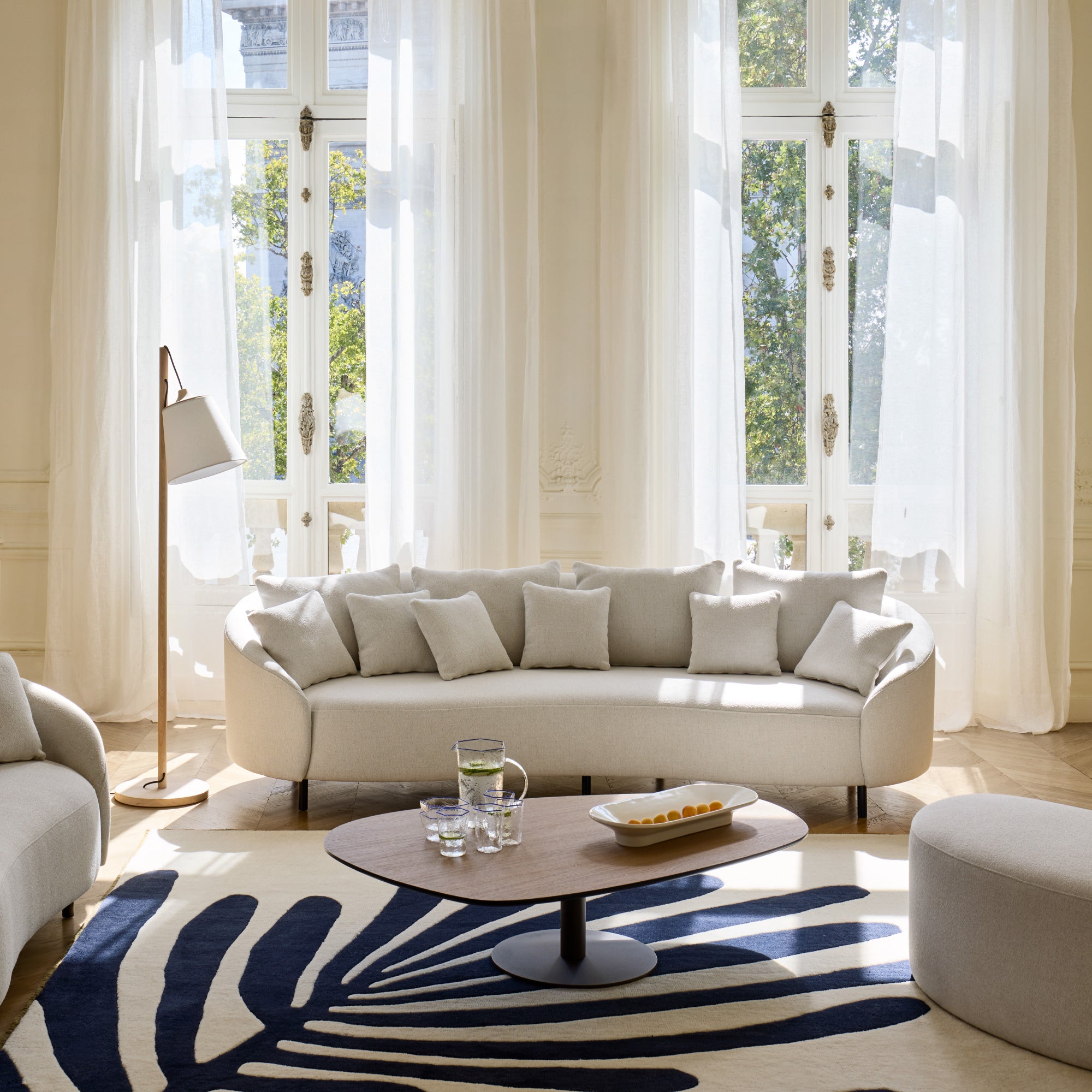
The human eye judges the height of a room by following the available vertical lines. According to work in environmental psychology relayed by the CNRS, a continuous line from floor to ceiling tricks the brain into perceiving a space as larger than it really is.
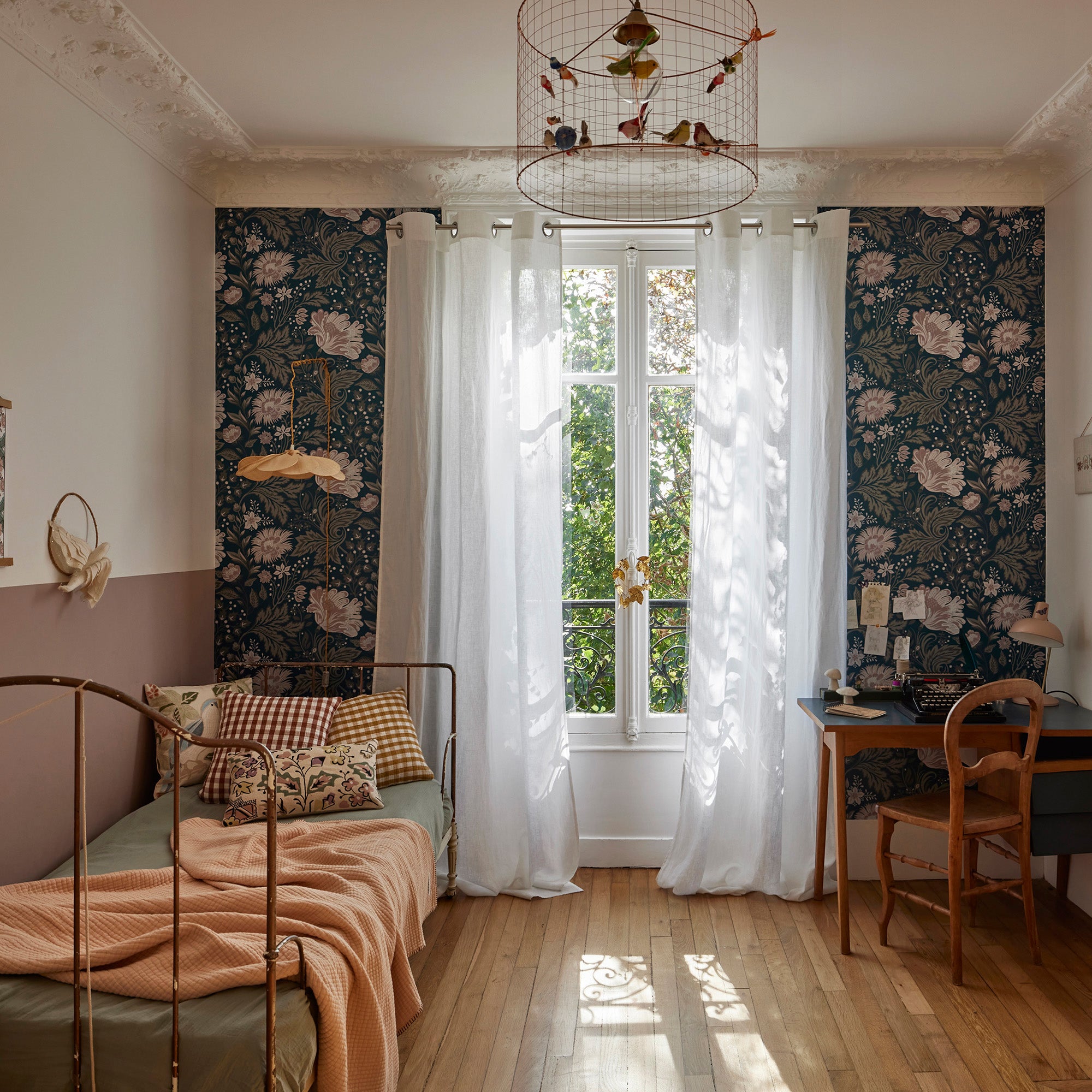
When the rod is attached 10 or 15 cm from the ceiling - or even directly to the ceiling - the curtain falls in a single swing of fabric, without visual interruption. The window seems bigger, the walls higher. The effect is immediate, without heavy work.
Conversely, a rod placed just above the frame 'cuts' the room into two horizontal zones and accentuates the low ceilings. This detail, often underestimated, nevertheless makes all the difference in a Haussmann apartment as in a recent pavilion.
The verticality of the curtain guides the eye upwards and perceptually raises the ceiling.
The window appears larger: the fabric extends well over each side of the frame.
Daylight seems more generous because the open curtain does not obscure any part of the glazing.
The room gains coherence: the curtain becomes an architectural element in its own right.
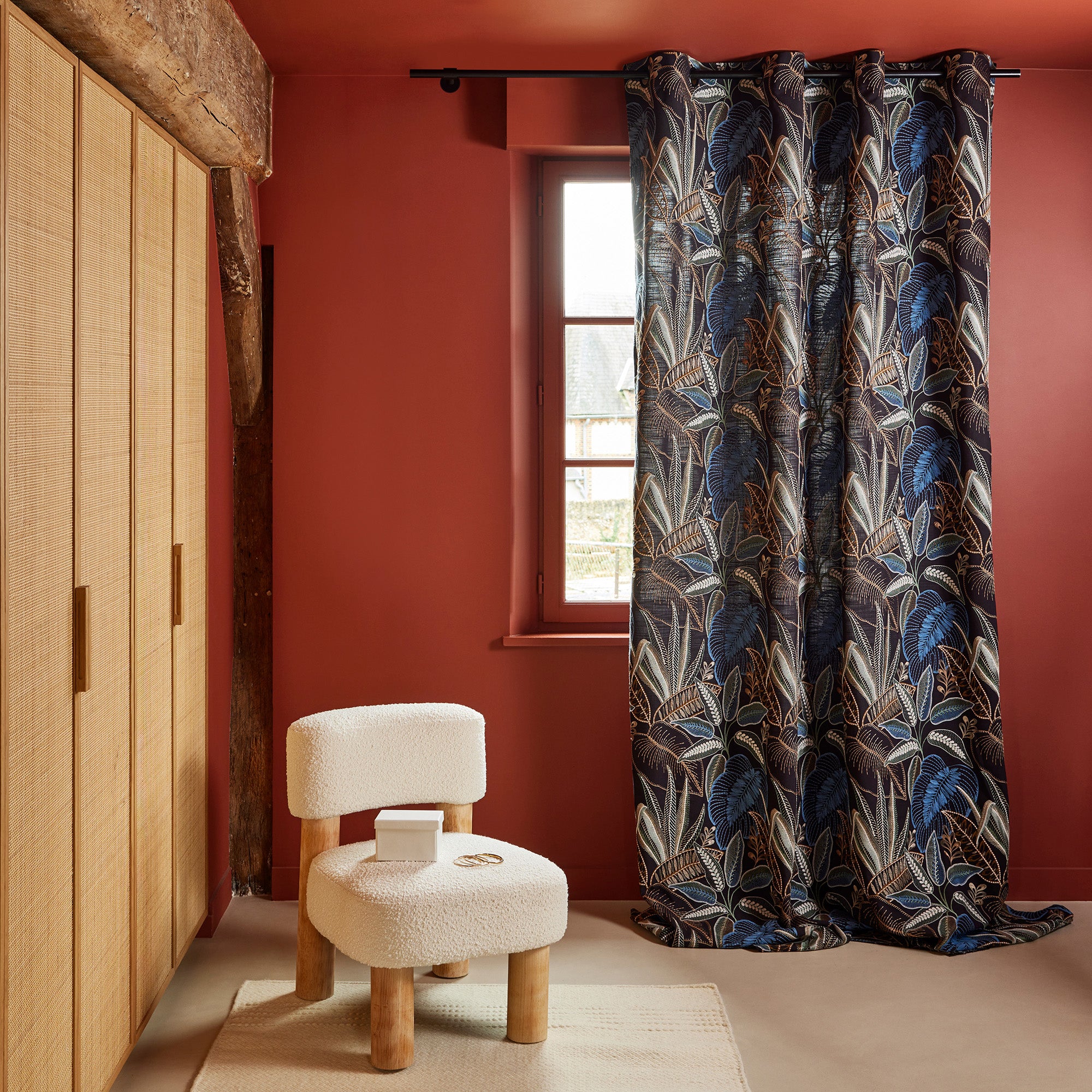
The effect is amplified with vertical patterned curtains or slightly gathered sheers.
What types of rods and rails are compatible with ceiling mounting?
There are three main families of systems suitable for installation at height. The choice depends on the desired style, the weight of the fabric and the configuration of the ceiling.
The aluminum ceiling curtain rail : the most discreet solution, it is fixed directly to the slab or under a false ceiling. Compatible with sliding panels or curtains with gathered tape. Ideal for a refined, Scandinavian or minimalist interior.
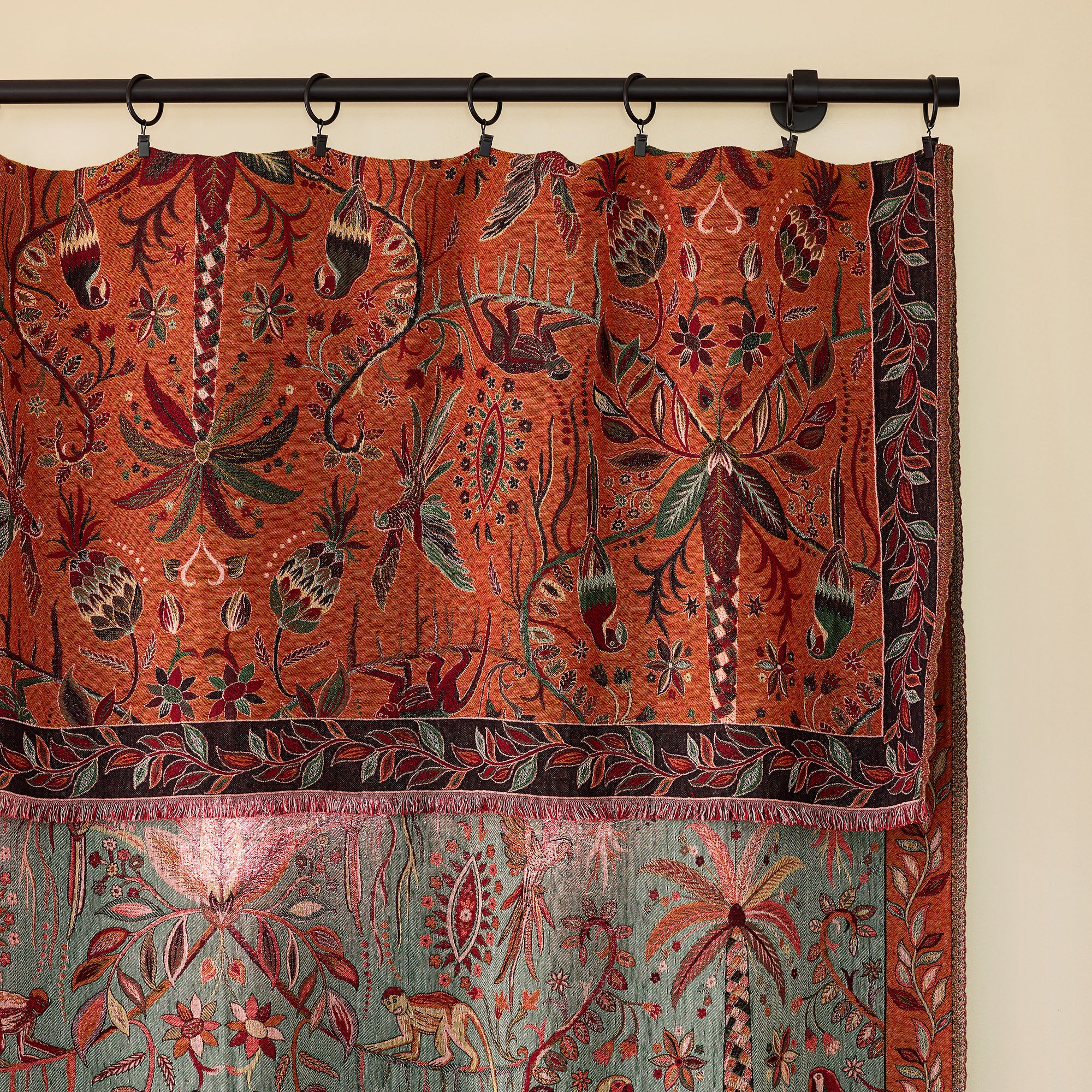
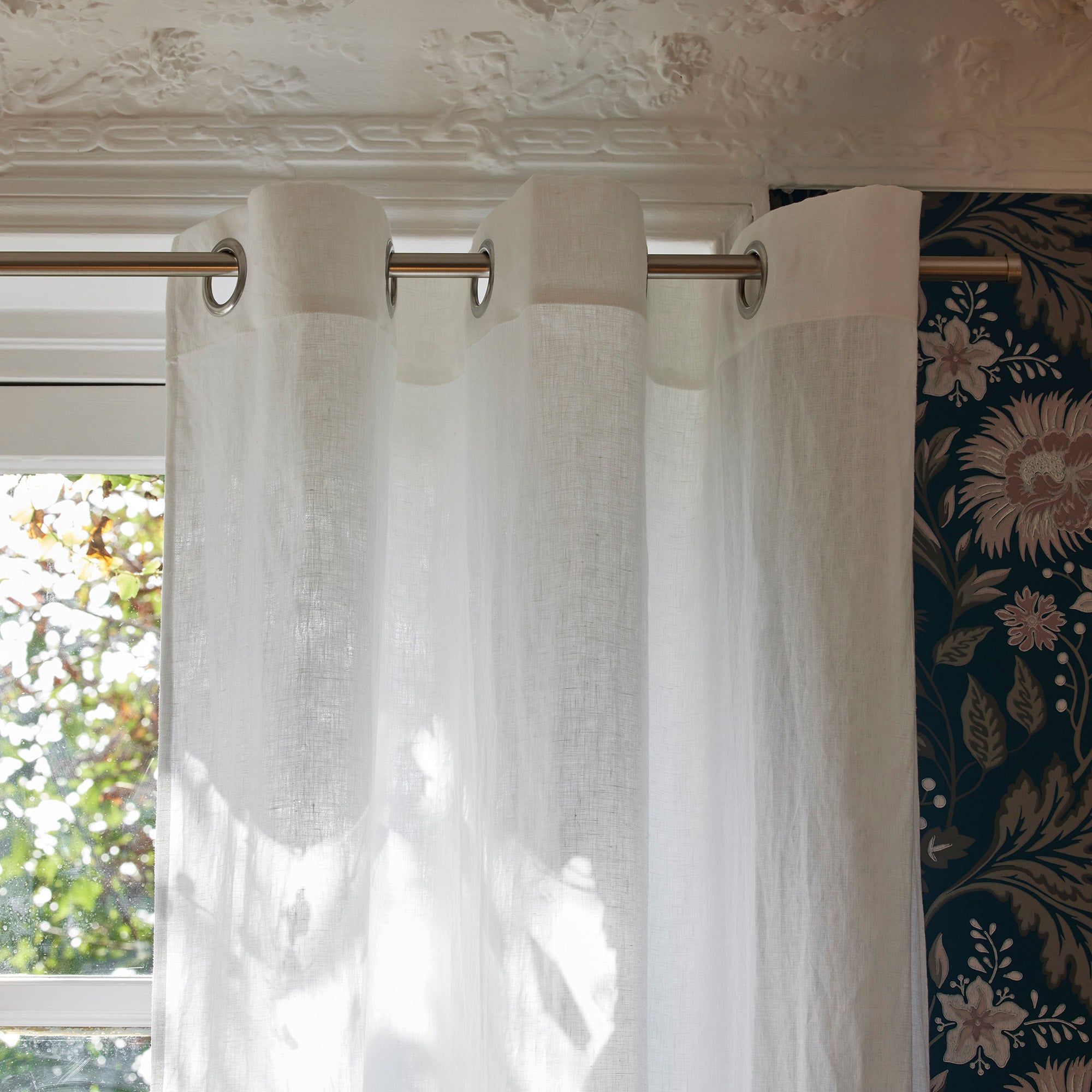
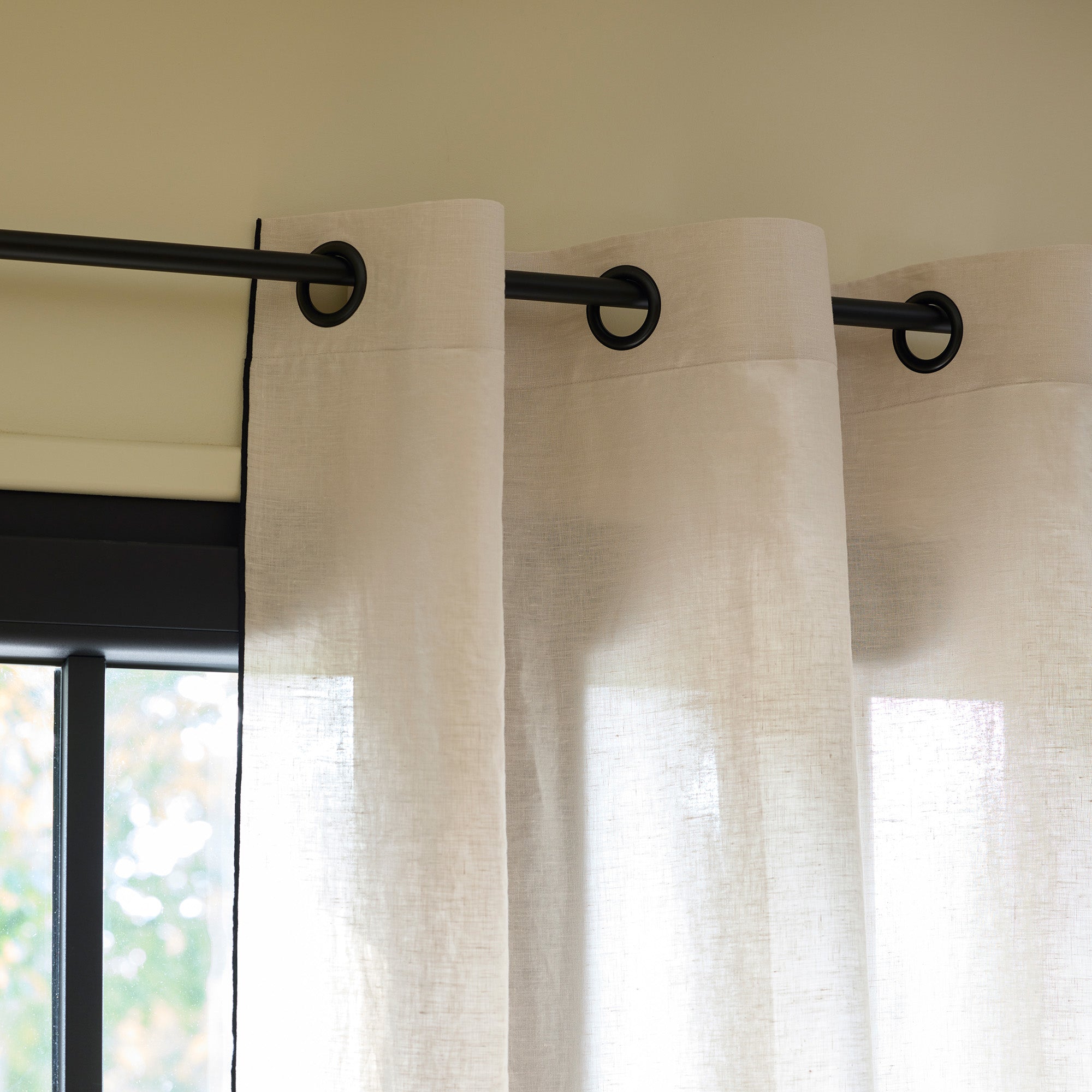
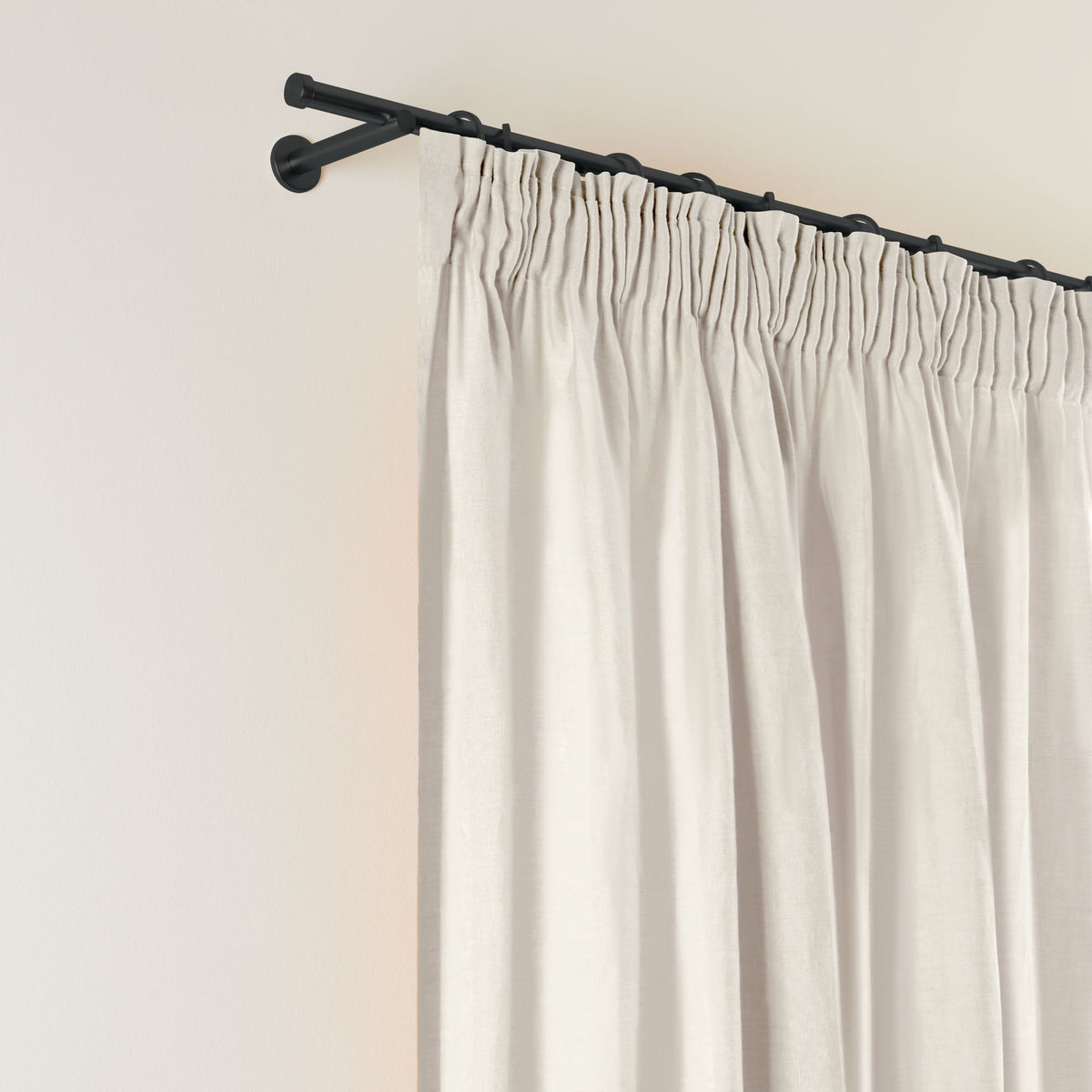
The round metal rod with ceiling supports : the supports here are oriented downwards from the ceiling. It accepts eyelets, loops and rings. Its visible appearance is assumed: choose brushed, gold or matte black metal for a decorative effect.
The double ceiling curtain rail : two superimposed rails allow you to combine a filtering curtain in the foreground and a blackout or thermal curtain in the background. Solution particularly appreciated in summer to manage both the heat of the day and the short nights.
Roller rails or silent sliders : for long lengths or heavy curtains (velvet, jacquard), rails equipped with rollers reduce friction and facilitate daily sliding.
For concrete ceilings, provide suitable expansion anchors. For plaster false ceilings, locate the supporting studs using a detector before attaching the loaded curtain rod support.
How to install a curtain rod on the ceiling: step-by-step guide
Installing a ceiling rod requires a little preparation but remains accessible with the right tools. Allow half a day for a standard window.
Measure the width to be covered : provide a rod extending 20 to 30 cm from each side of the frame. This width allows the open curtains not to obscure the glazing and accentuates the enlargement effect.
Determine the mounting height : on the direct ceiling for maximum effect, or 5-10 cm below if a molding or rail cover is desired. Draw a horizontal line in pencil using a spirit level.
Locate the supporting posts : use a structure detector. If the ceiling is solid concrete, Ø8 mm expansion plugs are sufficient.
Drill and quaver : drill at the support locations (spaced at a maximum of 60 cm to avoid sagging), insert the dowels, screw the supports.
Install the rod or rail : thread the eyelets, rings or rollers before clipping or fixing the bar. Check the horizontality one last time.
Adjust the length of the curtain : for an elegant drape, allow the bottom of the curtain to touch the parquet floor (0.5 to 1 cm clearance) or slightly exceed it by 3 to 5 cm for a more dramatic “pool” effect.
Hang and balance the folds : distribute the folds evenly, let the curtain fall for 24 hours so that it takes its final shape.
For complex configurations – bay window, recessed corner, roof window – Madura advisors in store or by video can study your project and direct you to the most suitable rail or rod.
What curtain length should I choose for a ceiling rod?
Height is the most critical element of a curtain attached to the ceiling. An approximate length cancels the desired visual effect.
Fall to the ground (ceiling height − 1 cm): clean and contemporary result, suitable for large living rooms.
Fall with slight breakage (+ 3 to 5 cm to the floor): soft folds at the foot of the curtain, more romantic and feminine effect.
Fall “pool” (+ 10 to 20 cm on the ground): fabric spread on the ground, very architectural, reserved for spaces without frequent traffic.
Never suspended in the void : a curtain that stops 10 cm from the ground cuts the verticality and betrays the enlargement effect.
At Madura, the home refinishing service adjusts the lengths after installation, which is particularly useful when the rod is fixed to the ceiling and the exact height is only known once the brackets are in place.
Double curtain rod on the ceiling: how to combine sheer curtains and blackout curtains this summer?
Summer 2026 confirms a strong trend: layering a sheer light and a blackout curtain on a double ceiling rail. This combination meets two simultaneous needs — filtering bright light from June to August during the day, blocking dawn from 5:30 a.m. to preserve sleep.
According to INSV — National Institute of Sleep and Vigilance, bedroom darkness is one of the most determining environmental parameters for sleep quality, especially during short summer nights. A blackout curtain on a ceiling rail eliminates the lateral light leaks generated by traditional wall mountings.
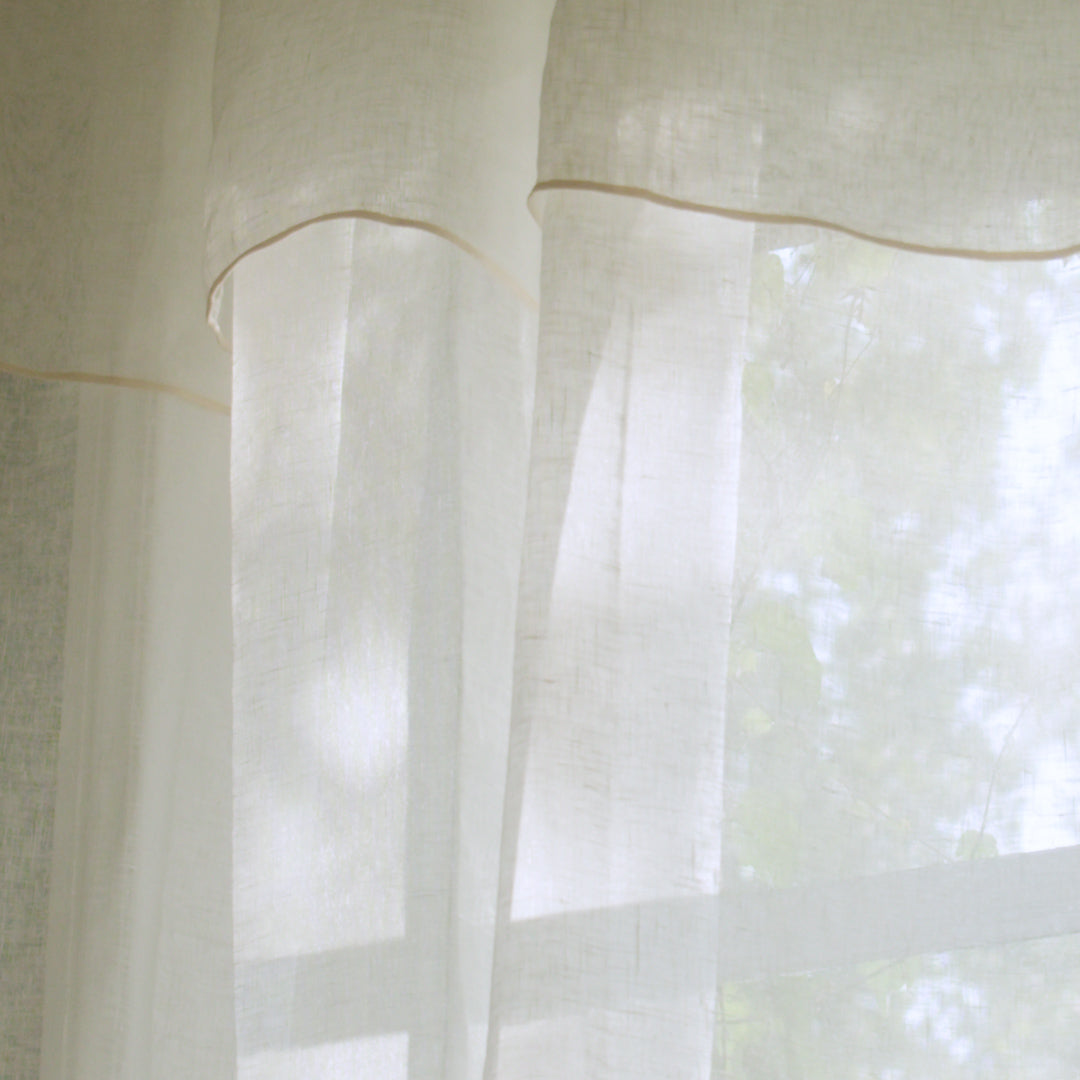
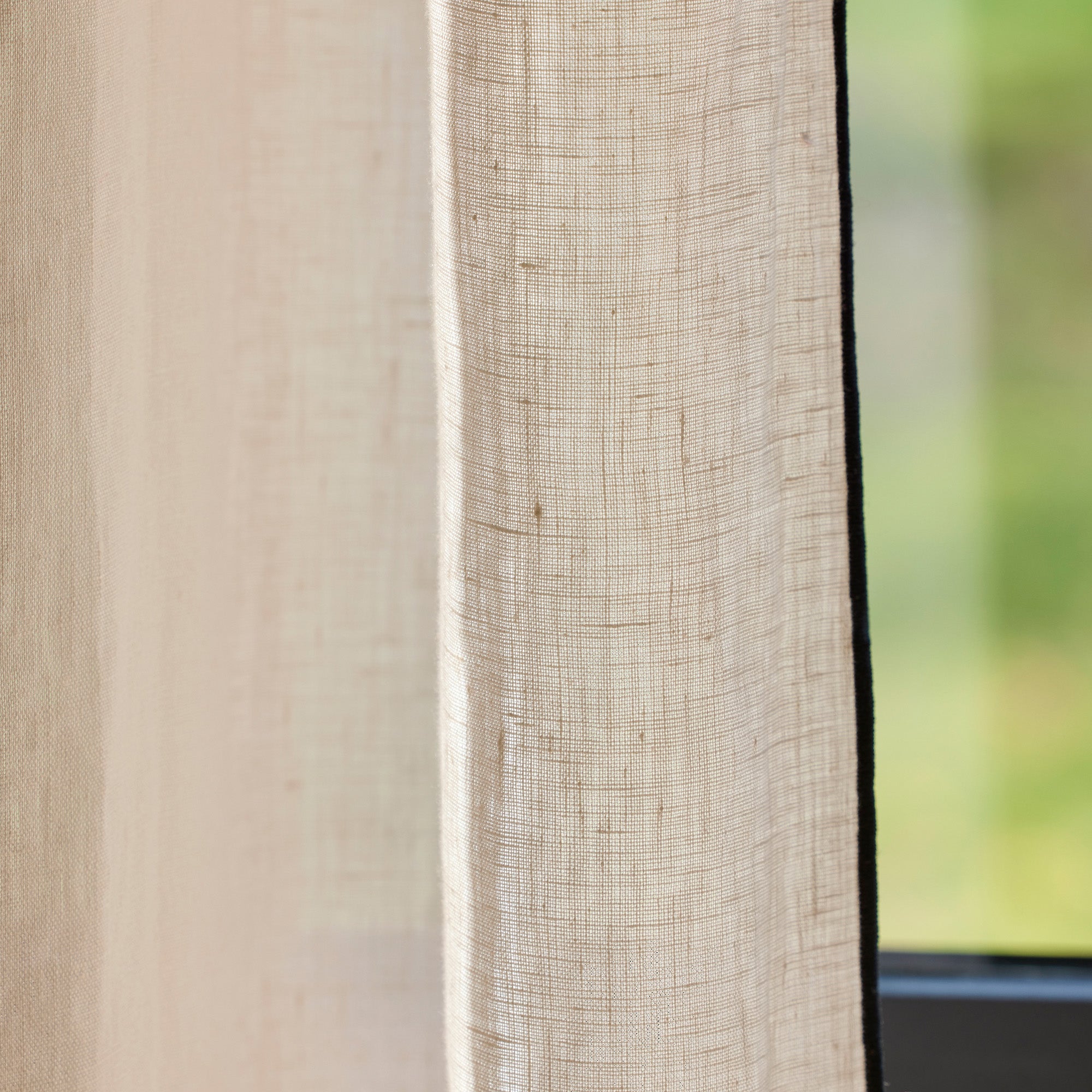
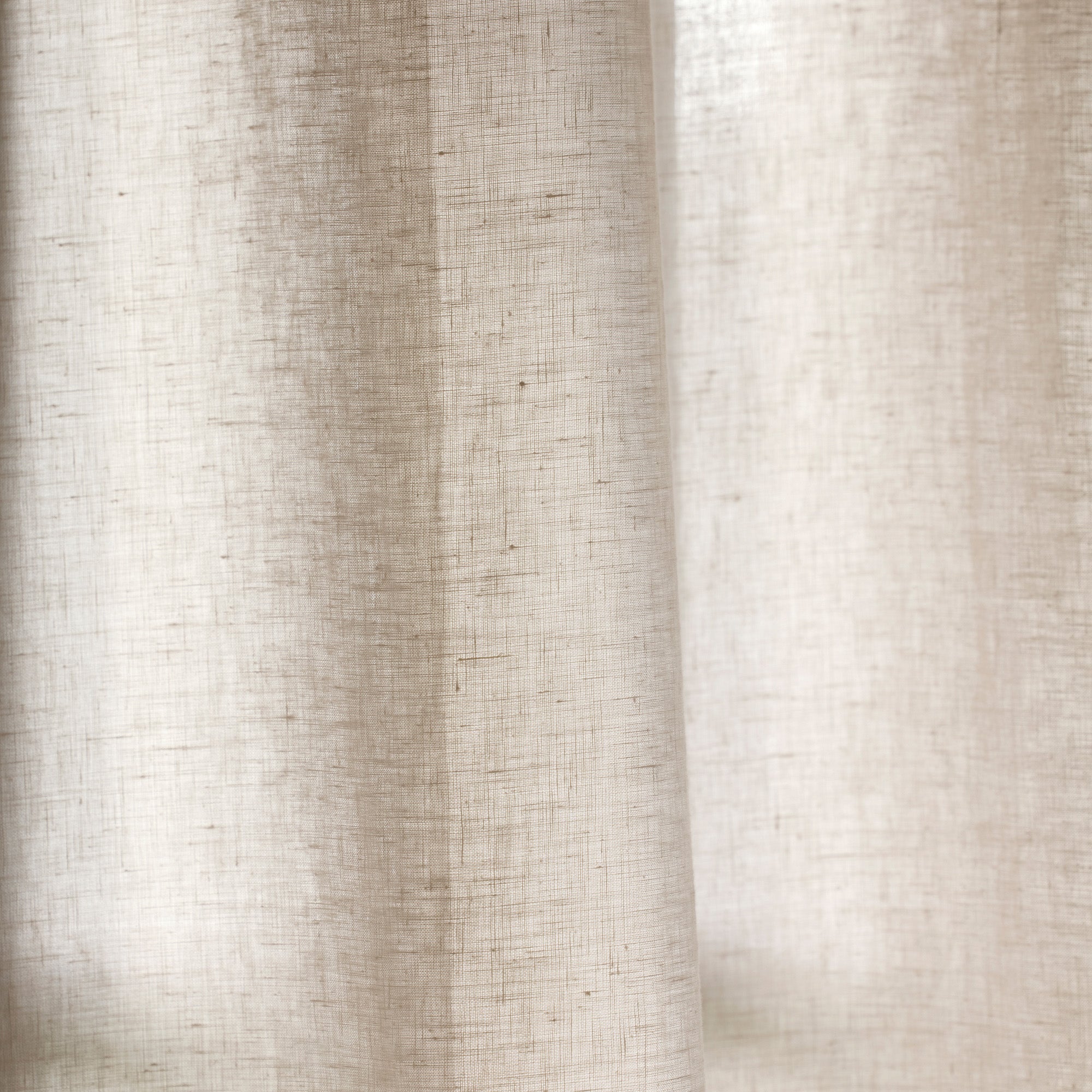
On the front rail (window side), opt for a filtering curtain in linen or light cotton: it diffuses golden light in the afternoon without overheating the room. On the rear rail (bedroom side), a blackout curtain blocks the light as soon as you pull it. Both operate independently depending on the time and light intensity.
Blackout curtain (rear rail): blocks most of the daylight, ideal for an adult bedroom.
Darkening curtain (rear rail): completely concealed, recommended for children's bedrooms or home cinemas.
Thermal option : in summer, a thermally lined curtain reflects solar heat and keeps the room cool — ADEME reminds that interior solar protection helps reduce air conditioning needs.
What materials and colors should you choose for a ceiling rod in summer 2026?
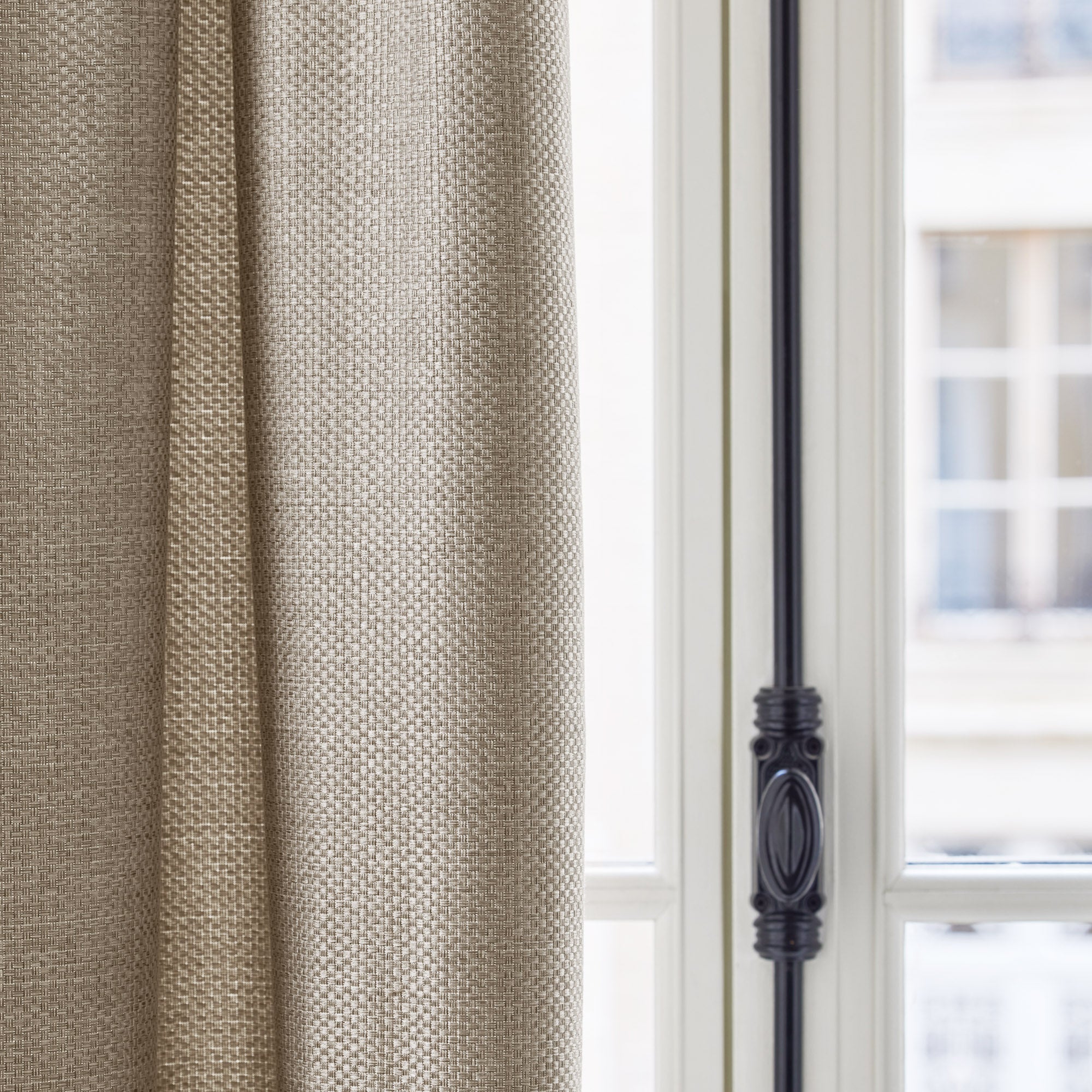
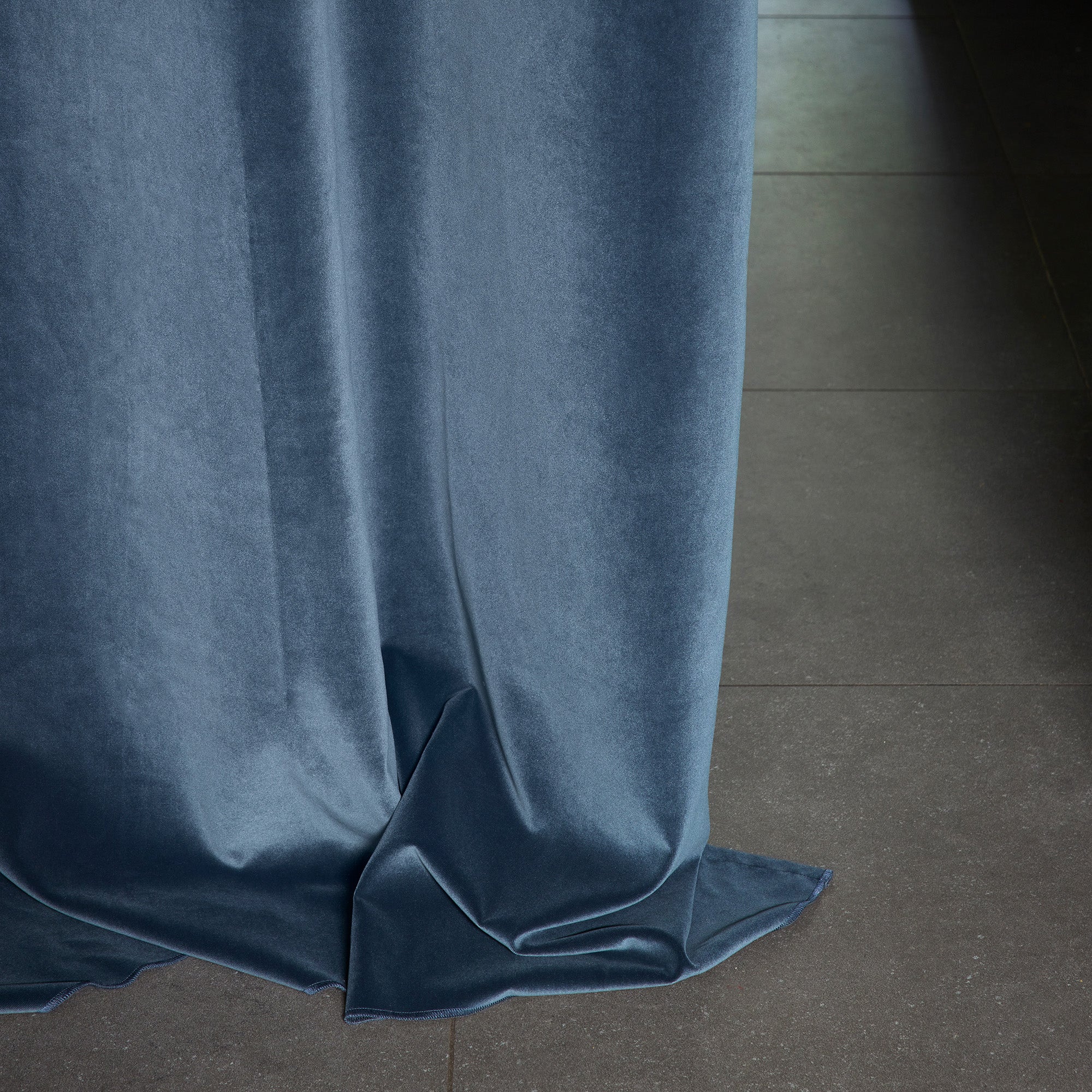
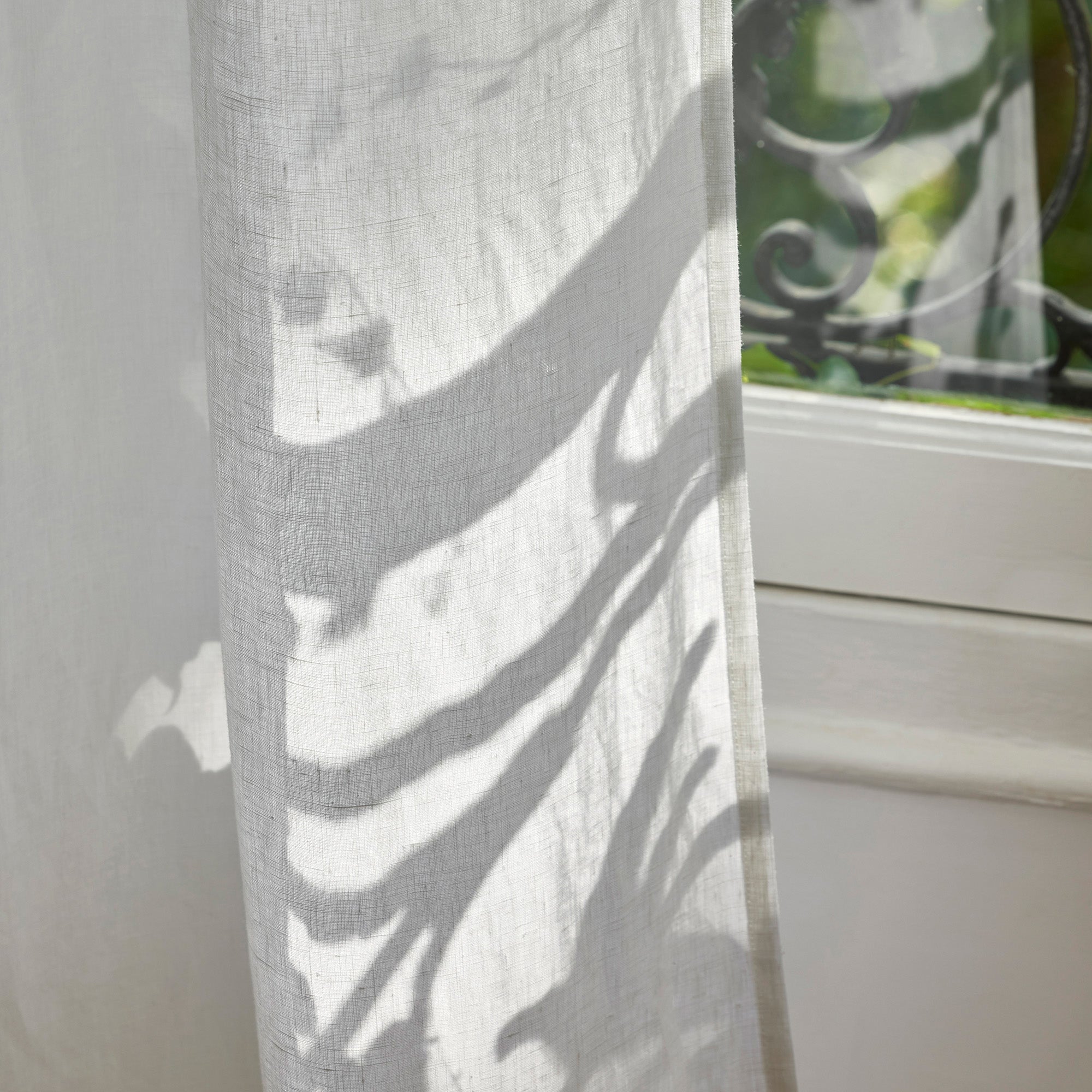
The high installation further highlights the quality of the fall. A dense and heavy material like velvet creates a majestic solid color; a light material like washed linen generates a soft and airy movement. The two effects are sought according to the decorative register.
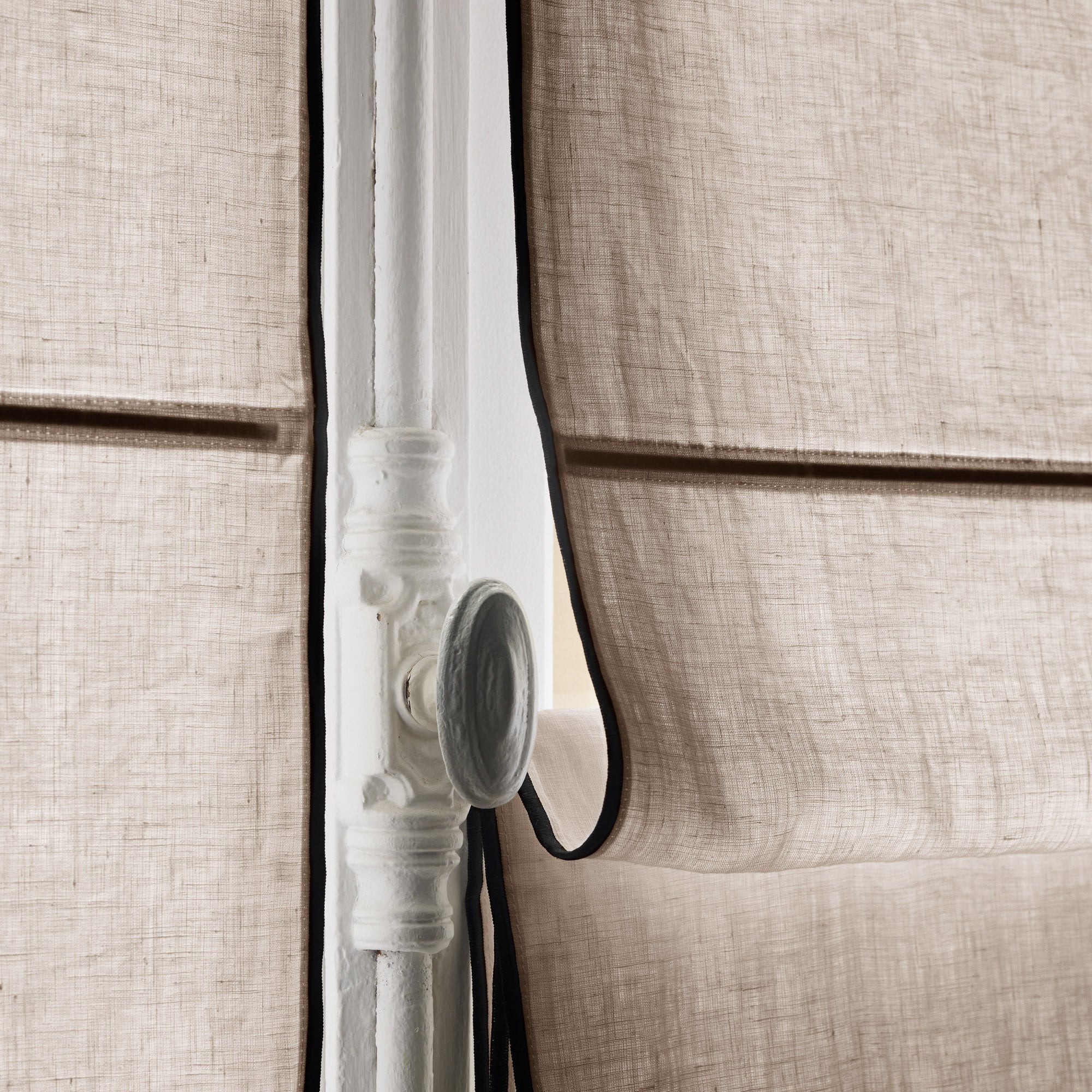
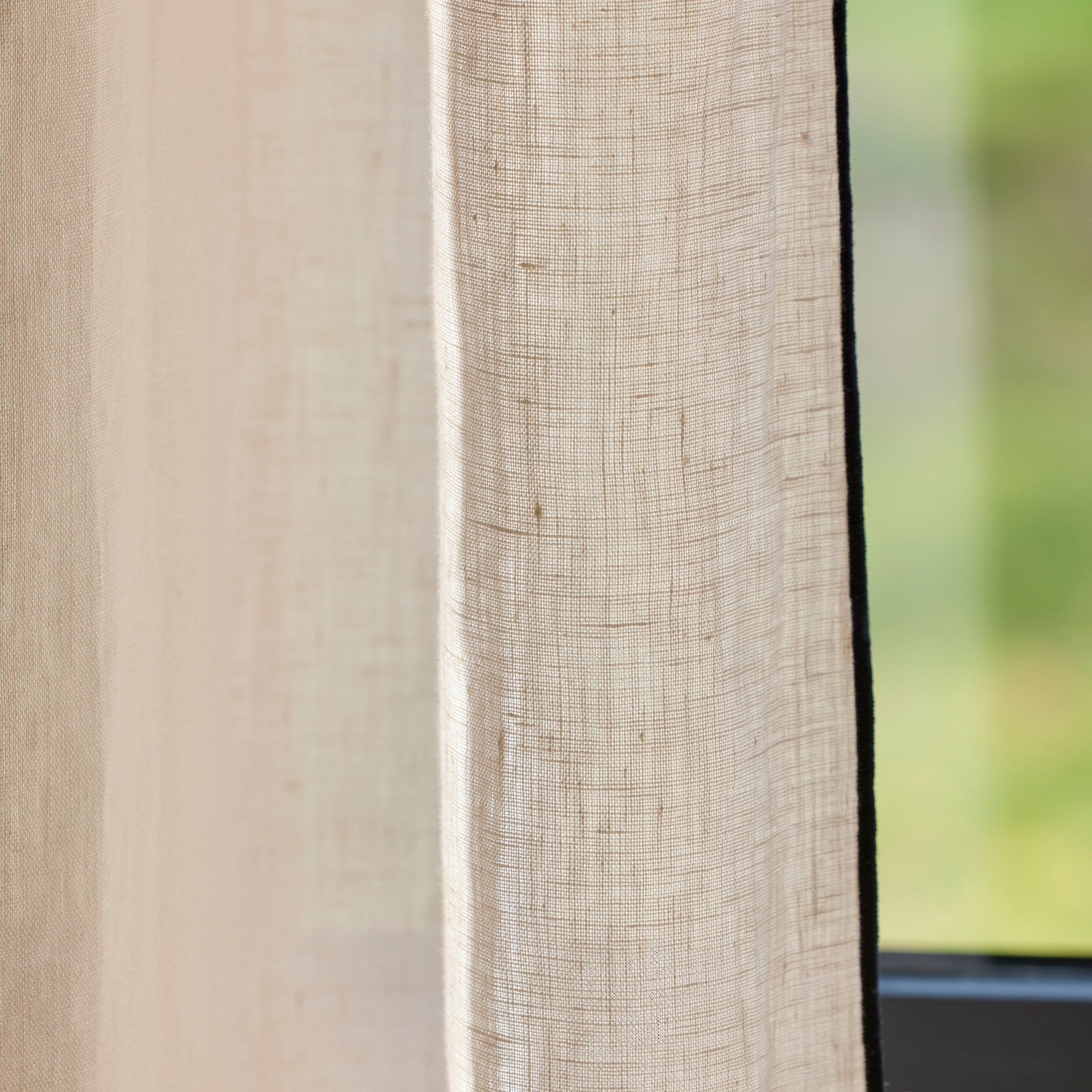
Slightly creased washed linen : natural fall, living textures, holiday spirit and plant materials — in harmony with the natural fiber rugs of the season.
Brushed or terry cotton : cocooning softness, ideal adult bedroom for summer nights.
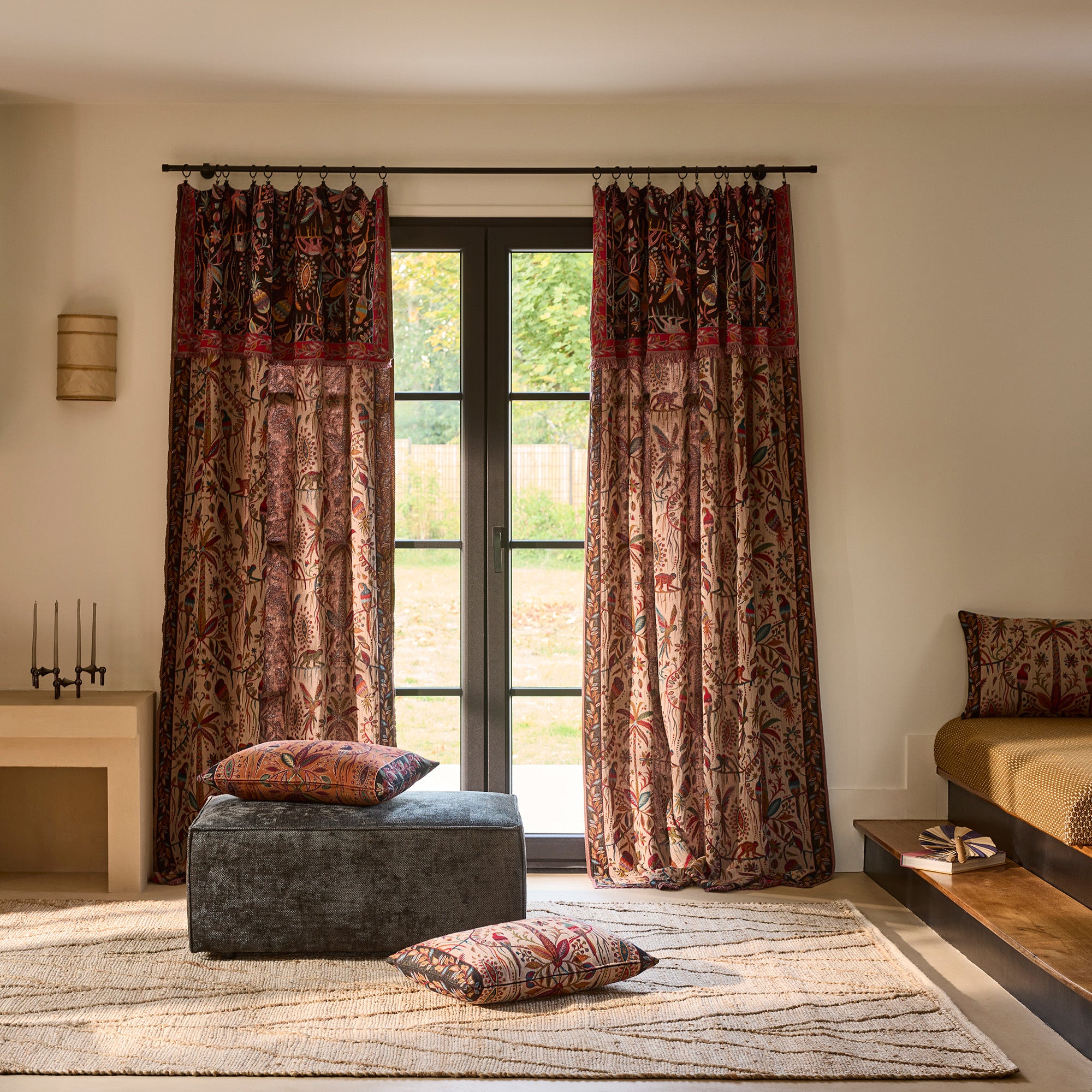
Jacquard : pattern woven into the weft, structures the fabric and gives it volume even without a large gather.
Velvet : depth and character, absorbs light — reserved for living rooms or bedrooms with a cozy atmosphere.
Tones of the season : off-white, ecru, sand and terracotta for bright spaces; khaki, cedar green and midnight blue for rooms with blackout drape.
According to IFTH — French Institute of Textiles and Clothing, plant fibers such as linen have a natural hygroscopicity which regulates ambient humidity, contributing to a feeling of freshness in summer. A functional advantage that adds to the aesthetics.
What mistakes should you avoid when installing a curtain rod on the ceiling?
Most disappointments are avoidable with a little anticipation. Here are the most common pitfalls observed by our Madura advisors.
Rod too short : not protruding sufficiently on each side of the chassis neutralizes the enlargement effect. Allow at least 20 cm of overhang per side.
Curtain too short : a length that does not reach the ground breaks the verticality and betrays the decorative intention.
Supports spaced too far apart : beyond 60 cm center distance, the rod bends under the weight of the fabric. Add central support.
Failing to locate the amounts : fixing in the plaster alone without a supporting structure leads to progressive tearing.
Confusing sifting and obscuring : a filtering curtain filters the light but does not block the summer dawn. For a bedroom, check the level of occultation carefully before purchasing.
Neglecting the gather : for a beautiful ceiling drape, allow 1.5 to 2 times the width of the fabric window. Insufficient gathering gives a flat and unattractive result.
Choosing a rail not suited to the weight of the fabric : a thin PVC rail does not support heavy velvet over 3 meters. Opt for an extruded aluminum profile for large widths.
Madura expertise: from advice to installation, for an uncompromising result
FAQ — Ceiling curtain rod
Find below the most frequently asked questions about installing and choosing a ceiling curtain rod.
At what height should you attach a curtain rod to the ceiling?
For maximum enlargement effect, attach the rod directly to the ceiling or 5-10 cm below if you wish to integrate a rail cover. The curtain should fall to the floor, ideally touching it at 0.5-1 cm or slightly exceeding it by 3 to 5 cm for an architectural look.
What is the difference between a ceiling curtain rail and a classic rod?
A ceiling curtain rail is fixed horizontally to the slab, it is discreet and suitable for long lengths. A classic rod is a visible round bar, placed on wall or ceiling supports. The rail is preferred for a refined result; the rod brings an assumed decorative character depending on the chosen finish.
Can we install a double curtain rod on the bedroom ceiling?
Yes, it's even the ideal configuration for summer. A double ceiling rail allows you to combine a filtering curtain during the day and a blackout or darkening curtain at night. The two rails operate independently, providing full control of the light depending on the time of day and your sleeping needs.
How many curtain rod supports should you provide for a ceiling?
A support must be provided every 60 cm maximum to prevent the rod from bending under the weight of the fabric. For a window 150 cm wide with 30 cm overhang on each side, count on a minimum of 4 fixing points distributed evenly over the total length.
Which curtain to choose for a ceiling rod in summer?
In summer, choose a light linen or cotton curtain during the day to filter solar heat without darkening the room. For nighttime, add a blackout curtain on a double track. Linen, hygroscopic, naturally regulates ambient humidity and contributes to a feeling of freshness in the bedroom.
Does Madura offer an installation or touch-up service for ceiling curtains?
Yes. Madura offers an in-home refinishing service to adjust lengths after installation, which is particularly useful for ceiling installations where the exact height is only known once the brackets are attached. Video advice is also available to prepare your project remotely.
Last updated: July 2026
By Laurine Didier
In charge of content and decoration advice at Madura.